| Record Information |
|---|
| Version | 2.0 |
|---|
| Creation Date | 2009-03-06 18:58:06 UTC |
|---|
| Update Date | 2014-12-24 20:21:08 UTC |
|---|
| Accession Number | T3D0117 |
|---|
| Identification |
|---|
| Common Name | Manganese |
|---|
| Class | Small Molecule |
|---|
| Description | Manganese is an essential trace nutrient in all forms of life. Physiologically, it. exists as an ion in the body. It is concentrated in cell mitochondria, mostly in the pituitary gland, liver, pancreas, kidney, and bone, influences the synthesis of mucopolysaccharides, stimulates hepatic synthesis of cholesterol and fatty acids, and is a cofactor in many enzymes, including arginase and alkaline phosphatase in the liver. |
|---|
| Compound Type | - Cosmetic Toxin
- Food Toxin
- Household Toxin
- Industrial/Workplace Toxin
- Inorganic Compound
- Manganese Compound
- Metabolite
- Metal
- Natural Compound
- Pollutant
|
|---|
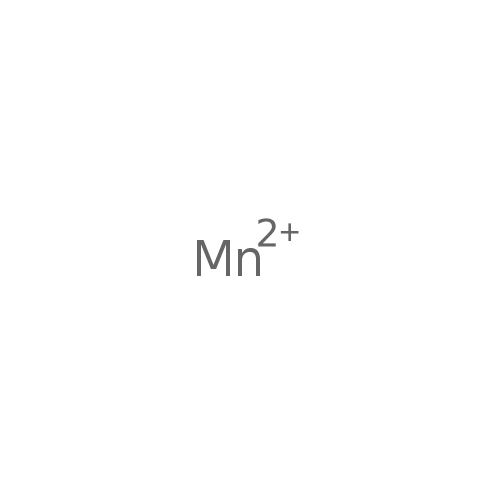
| Chemical Structure | |
|---|
| Synonyms | | Synonym | | Magnanese(2+) | | Manganese ion | | Manganese(2+) ion | | Manganese(II) | | Manganese(II) cation | | Manganese(II) ion | | Metallic manganese | | Mn(2+) | | Mn2+ |
|
|---|
| Chemical Formula | Mn |
|---|
| Average Molecular Mass | 54.937 g/mol |
|---|
| Monoisotopic Mass | 54.937 g/mol |
|---|
| CAS Registry Number | 7439-96-5 |
|---|
| IUPAC Name | manganese(2+) ion |
|---|
| Traditional Name | manganese(2+) ion |
|---|
| SMILES | [Mn++] |
|---|
| InChI Identifier | InChI=1S/Mn/q+2 |
|---|
| InChI Key | InChIKey=WAEMQWOKJMHJLA-UHFFFAOYSA-N |
|---|
| Chemical Taxonomy |
|---|
| Description | belongs to the class of inorganic compounds known as homogeneous transition metal compounds. These are inorganic compounds containing only metal atoms,with the largest atom being a transition metal atom. |
|---|
| Kingdom | Inorganic compounds |
|---|
| Super Class | Homogeneous metal compounds |
|---|
| Class | Homogeneous transition metal compounds |
|---|
| Sub Class | Not Available |
|---|
| Direct Parent | Homogeneous transition metal compounds |
|---|
| Alternative Parents | Not Available |
|---|
| Substituents | - Homogeneous transition metal
|
|---|
| Molecular Framework | Not Available |
|---|
| External Descriptors | |
|---|
| Biological Properties |
|---|
| Status | Detected and Not Quantified |
|---|
| Origin | Exogenous |
|---|
| Cellular Locations | |
|---|
| Biofluid Locations | Not Available |
|---|
| Tissue Locations | - Basal Ganglia
- Brain
- Central Nervous System
- Hair
- Liver
|
|---|
| Pathways | Not Available |
|---|
| Applications | Not Available |
|---|
| Biological Roles | |
|---|
| Chemical Roles | Not Available |
|---|
| Physical Properties |
|---|
| State | Solid |
|---|
| Appearance | White powder. |
|---|
| Experimental Properties | | Property | Value |
|---|
| Melting Point | 1244°C | | Boiling Point | 2095°C (3803°F) | | Solubility | Not Available | | LogP | Not Available |
|
|---|
| Predicted Properties | |
|---|
| Spectra |
|---|
| Spectra | | Spectrum Type | Description | Splash Key | Deposition Date | View |
|---|
| Predicted LC-MS/MS | Predicted LC-MS/MS Spectrum - 10V, Positive | splash10-0a4i-9000000000-6f3891a406ae3fe4f883 | 2015-09-14 | View Spectrum | | Predicted LC-MS/MS | Predicted LC-MS/MS Spectrum - 20V, Positive | splash10-0a4i-9000000000-6f3891a406ae3fe4f883 | 2015-09-14 | View Spectrum | | Predicted LC-MS/MS | Predicted LC-MS/MS Spectrum - 40V, Positive | splash10-0a4i-9000000000-6f3891a406ae3fe4f883 | 2015-09-14 | View Spectrum | | Predicted LC-MS/MS | Predicted LC-MS/MS Spectrum - 10V, Negative | splash10-0udi-9000000000-c3110d268939143a5f80 | 2015-09-15 | View Spectrum | | Predicted LC-MS/MS | Predicted LC-MS/MS Spectrum - 20V, Negative | splash10-0udi-9000000000-c3110d268939143a5f80 | 2015-09-15 | View Spectrum | | Predicted LC-MS/MS | Predicted LC-MS/MS Spectrum - 40V, Negative | splash10-0udi-9000000000-c3110d268939143a5f80 | 2015-09-15 | View Spectrum |
|
|---|
| Toxicity Profile |
|---|
| Route of Exposure | Oral (23) ; inhalation (23) |
|---|
| Mechanism of Toxicity | Manganese is a cellular toxicant that can impair transport systems, enzyme activities, and receptor functions. It primarily targets the central nervous system, particularily the globus pallidus of the basal ganglia. It is believed that the manganese ion, Mn(II), enhances the autoxidation or turnover of various intracellular catecholamines, leading to increased production of free radicals, reactive oxygen species, and other cytotoxic metabolites, along with a depletion of cellular antioxidant defense mechanisms, leading to oxidative damage and selective destruction of dopaminergic neurons. In addition to dopamine, manganese is thought to interact with other neurotransmitters, such as GABA and glutamate. Manganese overwhelms the manganese superoxide dismutase and produce oxidative damage. The neurotoxicity of Mn(II) has also been linked to its ability to substitute for Ca(II) under physiological conditions. It can enter mitochondria via the calcium uniporter and inhibit mitochondrial oxidative phosphorylation. It may also inhibit the efflux of Ca(II), which can result in a loss of mitochondrial membrane integrity. Mn(II) has been shown to inhibit mitochondrial aconitase activity to a significant level, altering amino acid metabolism and cellular iron homeostasis. (23) |
|---|
| Metabolism | Manganese is mainly absorbed via ingestion, but can also be inhaled. It binds to alpha-2-macroglobulin, albumin, or transferrin in the plasma and is distributed to the brain and all other mammalian tissues, though it tends to accumulate more in the liver, pancreas, and kidney. Manganese exists in a number of oxidation states and is believed to undergo changes in oxidation state within the body. Manganese oxidation state can influence tissue toxicokinetic behavior, and possibly toxicity. Manganese is excreted primarily in the faeces. (23) |
|---|
| Toxicity Values | LD50: 9 g/kg (Oral, Rat) (21) |
|---|
| Lethal Dose | Not Available |
|---|
| Carcinogenicity (IARC Classification) | No indication of carcinogenicity to humans (not listed by IARC). |
|---|
| Uses/Sources | Manganese is used principally in steel production to improve hardness, stiffness, and strength. It may also be used as an additive in gasoline to improve the octane rating of the gas. Manganese ions have various colors and are used industrially as pigments. (23, 24) |
|---|
| Minimum Risk Level | Chronic Inhalation: 0.0003 mg/m3 (22) |
|---|
| Health Effects | Manganese mainly affects the nervous system and may cause behavioral changes and other nervous system effects, which include movements that may become slow and clumsy. This combination of symptoms when sufficiently severe is referred to as “manganism”. High levels of manganese may also cause damage to the reproductive system. (23) |
|---|
| Symptoms | Manganese mainly affects the nervous system and may cause behavioral changes and other nervous system effects, which include movements that may become slow and clumsy. This combination of symptoms when sufficiently severe is referred to as “manganism”. (23) |
|---|
| Treatment | Not Available |
|---|
| Normal Concentrations |
|---|
| Not Available |
|---|
| Abnormal Concentrations |
|---|
| Not Available |
|---|
| External Links |
|---|
| DrugBank ID | Not Available |
|---|
| HMDB ID | HMDB01333 |
|---|
| PubChem Compound ID | 27854 |
|---|
| ChEMBL ID | Not Available |
|---|
| ChemSpider ID | 25916 |
|---|
| KEGG ID | C19610 |
|---|
| UniProt ID | Not Available |
|---|
| OMIM ID | 153550 , 173470 |
|---|
| ChEBI ID | 29035 |
|---|
| BioCyc ID | MN%2b3 |
|---|
| CTD ID | D008345 |
|---|
| Stitch ID | Manganese |
|---|
| PDB ID | MN |
|---|
| ACToR ID | 6475 |
|---|
| Wikipedia Link | Manganese |
|---|
| References |
|---|
| Synthesis Reference | Not Available |
|---|
| MSDS | Link |
|---|
| General References | - Ikeda S, Sera Y, Yoshida M, Ohshiro H, Uchino S, Oka Y, Lee KJ, Kotera A: Manganese deposits in patients with biliary atresia after hepatic porto-enterostomy. J Pediatr Surg. 2000 Mar;35(3):450-3. [10726687 ]
- Greger JL: Nutrition versus toxicology of manganese in humans: evaluation of potential biomarkers. Neurotoxicology. 1999 Apr-Jun;20(2-3):205-12. [10385884 ]
- Lander F, Kristiansen J, Lauritsen JM: Manganese exposure in foundry furnacemen and scrap recycling workers. Int Arch Occup Environ Health. 1999 Nov;72(8):546-50. [10592008 ]
- Mizoguchi N, Nishimura Y, Ono H, Sakura N: Manganese elevations in blood of children with congenital portosystemic shunts. Eur J Pediatr. 2001 Apr;160(4):247-50. [11317649 ]
- Woolf A, Wright R, Amarasiriwardena C, Bellinger D: A child with chronic manganese exposure from drinking water. Environ Health Perspect. 2002 Jun;110(6):613-6. [12055054 ]
- Ikeda S, Yamaguchi Y, Sera Y, Ohshiro H, Uchino S, Yamashita Y, Ogawa M: Manganese deposition in the globus pallidus in patients with biliary atresia. Transplantation. 2000 Jun 15;69(11):2339-43. [10868637 ]
- Wardle CA, Forbes A, Roberts NB, Jawhari AV, Shenkin A: Hypermanganesemia in long-term intravenous nutrition and chronic liver disease. JPEN J Parenter Enteral Nutr. 1999 Nov-Dec;23(6):350-5. [10574484 ]
- Mergler D, Baldwin M, Belanger S, Larribe F, Beuter A, Bowler R, Panisset M, Edwards R, de Geoffroy A, Sassine MP, Hudnell K: Manganese neurotoxicity, a continuum of dysfunction: results from a community based study. Neurotoxicology. 1999 Apr-Jun;20(2-3):327-42. [10385894 ]
- Butterworth RF: Hepatic encephalopathy. Alcohol Res Health. 2003;27(3):240-6. [15535452 ]
- Herynek V, Babis M, Trunecka P, Filip K, Vymazal J, Dezortova M, Hajek M: Chronic liver disease: relaxometry in the brain after liver transplantation. MAGMA. 2001 Mar;12(1):10-5. [11255087 ]
- Miranda M, Caballero L: [Chronic hepatic encephalopathy: the role of high serum manganese levels and its relation with basal ganglia lesions in nuclear magnetic resonance of the brain. Clinical case]. Rev Med Chil. 2001 Sep;129(9):1051-5. [11725469 ]
- Barceloux DG: Manganese. J Toxicol Clin Toxicol. 1999;37(2):293-307. [10382563 ]
- Bader M, Dietz MC, Ihrig A, Triebig G: Biomonitoring of manganese in blood, urine and axillary hair following low-dose exposure during the manufacture of dry cell batteries. Int Arch Occup Environ Health. 1999 Nov;72(8):521-7. [10592004 ]
- Kao HJ, Chen WH, Liu JS: Rapid progression of parkinsonism associated with an increase of blood manganese. Kaohsiung J Med Sci. 1999 May;15(5):297-301. [10375873 ]
- Melo TM, Larsen C, White LR, Aasly J, Sjobakk TE, Flaten TP, Sonnewald U, Syversen T: Manganese, copper, and zinc in cerebrospinal fluid from patients with multiple sclerosis. Biol Trace Elem Res. 2003 Summer;93(1-3):1-8. [12835484 ]
- Lees-Haley PR, Rohling ML, Langhinrichsen-Rohling J: A meta-analysis of the neuropsychological effects of occupational exposure to manganese. Clin Neuropsychol. 2006 Feb;20(1):90-107. [16393922 ]
- Sadek AH, Rauch R, Schulz PE: Parkinsonism due to manganism in a welder. Int J Toxicol. 2003 Sep-Oct;22(5):393-401. [14555414 ]
- Wang X, Li GJ, Zheng W: Upregulation of DMT1 expression in choroidal epithelia of the blood-CSF barrier following manganese exposure in vitro. Brain Res. 2006 Jun 30;1097(1):1-10. Epub 2006 May 26. [16729984 ]
- Takeda A: Manganese action in brain function. Brain Res Brain Res Rev. 2003 Jan;41(1):79-87. [12505649 ]
- Baldwin M, Mergler D, Larribe F, Belanger S, Tardif R, Bilodeau L, Hudnell K: Bioindicator and exposure data for a population based study of manganese. Neurotoxicology. 1999 Apr-Jun;20(2-3):343-53. [10385895 ]
- National Institute for Occupational Safety and Health (2002). RTECS: Registry of Toxic Effects of Chemical Substances.
- ATSDR - Agency for Toxic Substances and Disease Registry (2001). Minimal Risk Levels (MRLs) for Hazardous Substances. U.S. Public Health Service in collaboration with U.S. Environmental Protection Agency (EPA). [Link]
- ATSDR - Agency for Toxic Substances and Disease Registry (2008). Toxicological profile for manganese. U.S. Public Health Service in collaboration with U.S. Environmental Protection Agency (EPA). [Link]
- Wikipedia. Manganese. Last Updated 26 May 2009. [Link]
|
|---|
| Gene Regulation |
|---|
| Up-Regulated Genes | | Gene | Gene Symbol | Gene ID | Interaction | Chromosome | Details |
|---|
|
|---|
| Down-Regulated Genes | | Gene | Gene Symbol | Gene ID | Interaction | Chromosome | Details |
|---|
|
|---|