T3DB Logo

Showing toxin card for Nickel (T3D0053)

Legend: toxin field target field

Version 1.0
Creation Date 2009-03-06 18:57:59
Update Date 2010-03-18 21:52:18
Accession Number T3D0053
Name Nickel
Compound Type
  • Inorganic Compound
  • Metal
  • Nickel Compound
Description Nickel is a chemical compound with the atomic number 28. It is found abundantly in nature in laterite ore minerals, such as limonite, garnierite, and pentlandite. Pure nickel is mainly used to make alloys, which are found in items such as coins, jewelry, valves and heat exchangers. Nickel compounds are used for nickel plating, to color ceramics, to make some batteries, and as catalysts. Nickel also has a biological role, and is found in certain enzymes, including urease, hydrogenase, methylcoenzyme M reductase, and carbon monoxide dehydrogenase. (R097, R098)
Synonyms
  1. Fibrex
  2. Fibrex p
  3. Malleable nickel
  4. Metallic nickel
  5. Nichel [italian]
  6. Nickel compounds
  7. Nickel liquid
  8. Nickel dextrin complexes
  9. Nickel elemental
  10. Nickel elemental/metal
  11. Nickel metal
  12. Niquel
  13. Raney alloy
  14. Raney nickel
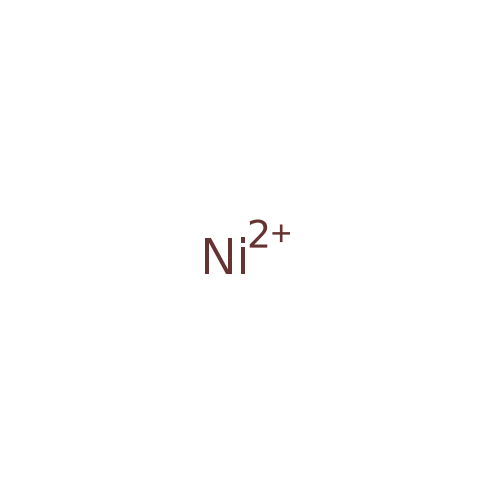
Chemical IUPAC Name nickel(2+) ion
Chemical Formula Ni
Chemical Structure Structure
CAS Registry Number 7440-02-0
InChI Identifier InChI=1S/Ni/q+2
InChI Key InChIKey=VEQPNABPJHWNSG-UHFFFAOYSA-N
PubChem Compound ID 935 Link Image
KEGG ID C00291 Link Image
UniProt ID Not Available
OMIM ID Not Available
ChEBI ID 28112 Link Image
BioCyc ID CPD-7425 Link Image
SuperToxic ID Not Available
CTD ID D009532 Link Image
Stitch ID Nickel Link Image
DrugBank ID Not Available
PDB ID Not Available
ACToR ID 946
Wikipedia Link http://en.wikipedia.org/wiki/Nickel Link Image
Monoisotopic Mass 57.935348
MOL File Show
PDB File Show
SDF File Show
SMILES [Ni++]
Appearance Silvery-white metallic solid.
Melting Point 1455 °C
Solubility Not Available
Predicted LogP 0.156
Route of Exposure Oral (R098) ; inhalation (R098) ; dermal (R098)
Mechanism of Action Nickel is known to substitute for other essential elements in certain enzmes, such as calcineurin. It is genotoxic, and some nickel compounds have been shown to promote cell proliferation. Nickel has a high affinity for chromatin proteins, particularly histones and protamines. The complexing of nickel ions with heterochromatin results in a number of alterations including condensation, DNA hypermethylation, gene silencing, and inhibition of histone acetylation, which have been shown to disturb gene expression. Nickel has also been shown to alter several transcription factors, including hypoxia-inducible transcription factor, activating transcription factor, and NF-KB transcription factor. There is also evidence that nickel ions inhibit DNA repair, either by directly inhibiting DNA repair enzymes or competing with zinc ions for binding to zinc-finger DNA binding proteins, resulting in structural changes in DNA that prevent repair enzymes from binding. Nickel ions can also complex with a number of cellular ligands including amino acids, peptides, and proteins resulting in the generation of oxygen radicals, which induce base damage, DNA strand breaks, and DNA protein crosslinks. (R098, R100)
Metabolism Nickel is absorbed mainly through the lungs and gastrointestinal tract. Once in the body it enters the bloodstream, where it binds to albumin, L-histidine, and ?2-macroglobulin. Nickel tends to accumulate in the lungs, thyroid, kidney, heart, and liver. Absorbed nickel is excreted in the urine, whereas unabsorbed nickel is excreted in the faeces. (R098)
Toxicity Values LD50: 250 mg/kg (Intraperitoneal, Rat) (R293)
Lethal Dose Not Available
Carcinogenicity (IARC Classification) 1, carcinogenic to humans (compounds) and 2B, possibly carcinogenic to humans (metal, alloys). (R264)
Uses/Sources Pure nickel is mainly used to make alloys, which are found in items such as coins, jewelry, valves and heat exchangers. Nickel compounds are used for nickel plating, to color ceramics, to make some batteries, and as catalysts. (R098)
Minimum Risk Level Intermediate Inhalation: 0.0002 mg/m3 (R260) Chronic Inhalation: 0.00009 mg/m3 (R260)
Health Effects The most common harmful health effect of nickel in humans is an allergic reaction. This usually manifests as a skin rash, although some people experience asthma attacks. Long term inhahation of nickel causes chronic bronchitis and reduced lung function, as well as damage to the naval cavity. Ingestion of excess nickel results in damage to the stomach, blood, liver, kidneys, and immune system, as well as having adverse effects on reproduction and development. (R098)
Symptoms Symptoms of nickel poisoning include headache, nausea, vomiting, dizziness, irritability, and difficulty sleeping, followed by chest pains, sweating, rapid heart beat, and a dry cough. (R099)
Treatment Excess exposure to nickel is usually handled by preventing further exposure and symptomatic treatment. Nickel poisoning may also be treated using chelation therapy with sodium diethyldithiocarbamate. (R099)
General References
  • R097 - Wikipedia. Nickel. Last Updated 22 March 2009.
  • R293 - National Institute for Occupational Safety and Health (2002). RTECS: Registry of Toxic Effects of Chemical Substances.
  • R264 - International Agency for Research on Cancer (2009). IARC Monographs on the Evaluation of Carcinogenic Risks to Humans.
  • R102 - Bal W, Jezowska-Bojczuk M, Kasprzak KS: Binding of nickel(II) and copper(II) to the N-terminal sequence of human protamine HP2. Chem Res Toxicol. 1997 Aug;10(8):906-14. [PubMed Link Image]
  • R099 - Redmond JC (2008). Nickel Poisoning. LoveToKnow.
  • R100 - King MM, Huang CY: Activation of calcineurin by nickel ions. Biochem Biophys Res Commun. 1983 Aug 12;114(3):955-61. [PubMed Link Image]
  • R101 - Zoroddu MA, Schinocca L, Kowalik-Jankowska T, Kozlowski H, Salnikow K, Costa M: Molecular mechanisms in nickel carcinogenesis: modeling Ni(II) binding site in histone H4. Environ Health Perspect. 2002 Oct;110 Suppl 5:719-23. [PubMed Link Image]
  • R104 - Cruz MT, Goncalo M, Figueiredo A, Carvalho AP, Duarte CB, Lopes MC: Contact sensitizer nickel sulfate activates the transcription factors NF-kB and AP-1 and increases the expression of nitric oxide synthase in a skin dendritic cell line. Exp Dermatol. 2004 Jan;13(1):18-26. [PubMed Link Image]
  • R098 - ATSDR - Agency for Toxic Substances and Disease Registry (2005). Toxicological profile for nickel. U.S. Public Health Service in collaboration with U.S. Environmental Protection Agency (EPA).
  • R260 - ATSDR - Agency for Toxic Substances and Disease Registry (2001). Minimal Risk Levels (MRLs) for Hazardous Substances. U.S. Public Health Service in collaboration with U.S. Environmental Protection Agency (EPA).
  • R105 - Salnikow K, Wang S, Costa M: Induction of activating transcription factor 1 by nickel and its role as a negative regulator of thrombospondin I gene expression. Cancer Res. 1997 Nov 15;57(22):5060-6. [PubMed Link Image]
  • R103 - Salnikow K, Davidson T, Zhang Q, Chen LC, Su W, Costa M: The involvement of hypoxia-inducible transcription factor-1-dependent pathway in nickel carcinogenesis. Cancer Res. 2003 Jul 1;63(13):3524-30. [PubMed Link Image]
Targets
  1. Calcineurin subunit B type 1
  2. Histone H4
  3. Histone H3.1
  4. Histone H3.1t
  5. Histone H3.3
  6. Protamine-2
  7. Histone H3.2
  8. Calcineurin subunit B type 2
  9. Serine/threonine-protein phosphatase 2B catalytic subunit alpha isoform
  10. Serine/threonine-protein phosphatase 2B catalytic subunit beta isoform
  11. Serine/threonine-protein phosphatase 2B catalytic subunit gamma isoform
  12. Protamine-3
  13. Sperm protamine-P1
  14. Histone H1.0
  15. Histone H1.1
  16. Histone H1.2
  17. Histone H1.3
  18. Histone H1.4
  19. Histone H1.5
  20. Histone H1oo
  21. Histone H1t
  22. Histone H1x
  23. Testis-specific H1 histone
  24. Histone H2A type 1
  25. Histone H2A type 1-A
  26. Histone H2A type 1-B/E
  27. Histone H2A type 1-C
  28. Histone H2A type 1-D
  29. Histone H2A type 1-H
  30. Histone H2A type 1-J
  31. Histone H2A type 2-A
  32. Histone H2A type 2-B
  33. Histone H2A type 2-C
  34. Histone H2A type 3
  35. Histone H2A-Bbd type 1
  36. Histone H2A-Bbd type 2/3
  37. Histone H2A.J
  38. Histone H2A.V
  39. Histone H2A.x
  40. Histone H2A.Z
  41. Histone H2B type 1-A
  42. Histone H2B type 1-B
  43. Histone H2B type 1-C/E/F/G/I
  44. Histone H2B type 1-D
  45. Histone H2B type 1-H
  46. Histone H2B type 1-J
  47. Histone H2B type 1-K
  48. Histone H2B type 1-L
  49. Histone H2B type 1-M
  50. Histone H2B type 1-N
  51. Histone H2B type 1-O
  52. Histone H2B type 2-E
  53. Histone H2B type 2-F
  54. Histone H2B type 3-B
  55. Histone H2B type F-M
  56. Histone H2B type F-S
  57. Histone H2B type W-T
  58. Histone H3-like
  59. Histone H3-like centromeric protein A
  60. Histone H4-like protein type G
  61. Putative histone H2B type 2-C
  62. Putative histone H2B type 2-D
  63. Alpha-ketoglutarate-dependent dioxygenase alkB homolog 3
  64. Lysine-specific demethylase 4A
  65. Egl nine homolog 2
  66. Lysine-specific demethylase 3A
  67. Egl nine homolog 1
  68. Egl nine homolog 3
  69. Alpha-ketoglutarate-dependent dioxygenase alkB homolog 2
Target 1 [top]
Target 1 ID 212
Target 1 Name Calcineurin subunit B type 1
Target 1 Mechanism of Action Nickel is known to substitute for other essential elements in certain enzmes, such as calcineurin. (R100)
Target 1 Description Regulatory subunit of calcineurin, a calcium-dependent, calmodulin stimulated protein phosphatase. Confers calcium sensitivity
Target 1 Synonyms
  1. Protein phosphatase 2B regulatory subunit 1; Protein phosphatase 3 regulatory subunit B alpha isoform 1
Target 1 Gene Name PPP3R1
Target 1 Protein Sequence >Calcineurin subunit B type 1
MGNEASYPLEMCSHFDADEIKRLGKRFKKLDLDNSGSLSVEEFMSLPELQQNPLVQRVID
IFDTDGNGEVDFKEFIEGVSQFSVKGDKEQKLRFAFRIYDMDKDGYISNGELFQVLKMMV
GNNLKDTQLQQIVDKTIINADKDGDGRISFEEFCAVVGGLDIHKKMVVDV
Target 1 Number of Residues 170
Target 1 Molecular Weight 19299.8
Target 1 Theoretical pI 4.40
Target 1 GO Classification
Function
binding
ion binding
cation binding
calcium ion binding
Process
Not Available
Component
Not Available
Target 1 General Function Involved in calcium ion binding
Target 1 Pathways REACT_578-Apoptosis;
Target 1 Reactions Not Available
Target 1 Signals
  • None
Target 1 Transmembrane Regions
  • None
Target 1 Essentiality Non Essential
Target 1 Domain Function PF00036:efhand
Target 1 GenBank ID Protein Not Available
Target 1 UniProtKB ID P63098 Link Image
Target 1 Cellular Location Not Available
Target 1 Gene Sequence >513 bp
ATGGGAAATGAGGCAAGTTATCCTTTGGAAATGTGCTCACACTTTGATGCGGATGAAATT
AAAAGGCTAGGAAAGAGATTTAAGAAGCTTGATTTGGACAATTCTGGTTCTTTGAGTGTG
GAAGAGTTCATGTCTCTGCCTGAGTTACAACAGAATCCTTTAGTACAGCGAGTAATAGAT
ATATTCGACACAGATGGGAATGGAGAAGTAGACTTTAAAGAATTCATTGAGGGCGTCTCT
CAGTTCAGTGTCAAAGGAGATAAGGAGCAGAAATTGAGGTTTGCTTTCCGTATCTATGAC
ATGGATAAAGATGGCTATATTTCCAATGGGGAACTCTTCCAGGTATTGAAGATGATGGTG
GGGAACAATCTGAAAGATACACAGTTACAGCAAATTGTAGACAAAACCATAATAAATGCA
GATAAGGATGGAGATGGAAGAATATCCTTTGAAGAATTCTGTGCTGTTGTAGGTGGCCTA
GATATCCACAAAAAGATGGTGGTAGATGTGTGA
Target 1 GenBank Gene ID Not Available
Target 1 GeneCard ID PPP3R1 Link Image
Target 1 GenAtlas ID PPP3R1 Link Image
Target 1 HGNC ID HGNC:9317 Link Image
Target 1 Chromosome Location Not Available
Target 1 Locus 2p15
Target 1 SNPs SNPJam Report Link Image
Target 1 Toxin References
  • R100 - King MM, Huang CY: Activation of calcineurin by nickel ions. Biochem Biophys Res Commun. 1983 Aug 12;114(3):955-61. [PubMed Link Image]
Target 1 General References 2558868; 15815621; 15489334; 8524402; 12218175; 12357034
Target 2 [top]
Target 2 ID 92
Target 2 Name Histone H4
Target 2 Mechanism of Action Nickel has a high affinity for chromatin proteins, particularly histones and protamines. The complexing of nickel ions with heterochromatin results in a number of alterations including condensation, DNA hypermethylation, gene silencing, and inhibition of histone acetylation, which have been shown to disturb gene expression. (R098)
Target 2 Description Core component of nucleosome. Nucleosomes wrap and compact DNA into chromatin, limiting DNA accessibility to the cellular machineries which require DNA as a template. Histones thereby play a central role in transcription regulation, DNA repair, DNA replication and chromosomal stability. DNA accessibility is regulated via a complex set of post-translational modifications of histones, also called histone code, and nucleosome remodeling
Target 2 Synonyms Not Available
Target 2 Gene Name HIST1H4A
Target 2 Protein Sequence >Histone H4
MSGRGKGGKGLGKGGAKRHRKVLRDNIQGITKPAIRRLARRGGVKRISGLIYEETRGVLK
VFLENVIRDAVTYTEHAKRKTVTAMDVVYALKRQGRTLYGFGG
Target 2 Number of Residues 103
Target 2 Molecular Weight 11367.3
Target 2 Theoretical pI 11.91
Target 2 GO Classification
Function
binding
nucleic acid binding
DNA binding
Process
cellular physiological process
cell organization and biogenesis
organelle organization and biogenesis
chromosome organization and biogenesis
chromosome organization and biogenesis (sensu Eukaryota)
physiological process
metabolism
macromolecule metabolism
protein metabolism
cellular protein metabolism
protein complex assembly
nucleosome assembly
Component
organelle
membrane-bound organelle
intracellular membrane-bound organelle
nucleus
protein complex
nucleosome
Target 2 General Function Chromatin structure and dynamics
Target 2 Pathways Not Available
Target 2 Reactions Not Available
Target 2 Signals
  • None
Target 2 Transmembrane Regions
  • None
Target 2 Essentiality Non Essential
Target 2 Domain Function PF00125:Histone
Target 2 GenBank ID Protein Not Available
Target 2 UniProtKB ID P62805 Link Image
Target 2 Cellular Location Nucleus
Target 2 Gene Sequence Not Available
Target 2 GenBank Gene ID Not Available
Target 2 GeneCard ID HIST1H4A Link Image
Target 2 GenAtlas ID HIST1H4A Link Image
Target 2 HGNC ID HGNC:4781 Link Image
Target 2 Chromosome Location Not Available
Target 2 Locus 6p21.3
Target 2 SNPs SNPJam Report Link Image
Target 2 Toxin References
  • R098 - ATSDR - Agency for Toxic Substances and Disease Registry (2005). Toxicological profile for nickel. U.S. Public Health Service in collaboration with U.S. Environmental Protection Agency (EPA).
Target 2 General References 6314274; 3035717; 1916825; 7626218; 9031620; 9439656; 9119399; 12408966; 8988030; 15527963
Target 3 [top]
Target 3 ID 252
Target 3 Name Histone H3.1
Target 3 Mechanism of Action Nickel has a high affinity for chromatin proteins, particularly histones and protamines. The complexing of nickel ions with heterochromatin results in a number of alterations including condensation, DNA hypermethylation, gene silencing, and inhibition of histone acetylation, which have been shown to disturb gene expression. (R098)
Target 3 Description Core component of nucleosome. Nucleosomes wrap and compact DNA into chromatin, limiting DNA accessibility to the cellular machineries which require DNA as a template. Histones thereby play a central role in transcription regulation, DNA repair, DNA replication and chromosomal stability. DNA accessibility is regulated via a complex set of post-translational modifications of histones, also called histone code, and nucleosome remodeling
Target 3 Synonyms
  1. H3/a; H3/b; H3/c; H3/d; H3/f; H3/h; H3/i; H3/j; H3/k; H3/l
Target 3 Gene Name HIST1H3A
Target 3 Protein Sequence >Histone H3.1
MARTKQTARKSTGGKAPRKQLATKAARKSAPATGGVKKPHRYRPGTVALREIRRYQKSTE
LLIRKLPFQRLVREIAQDFKTDLRFQSSAVMALQEACEAYLVGLFEDTNLCAIHAKRVTI
MPKDIQLARRIRGERA
Target 3 Number of Residues 136
Target 3 Molecular Weight 15403.9
Target 3 Theoretical pI 11.71
Target 3 GO Classification
Function
binding
nucleic acid binding
DNA binding
Process
cellular physiological process
cell organization and biogenesis
organelle organization and biogenesis
chromosome organization and biogenesis
chromosome organization and biogenesis (sensu Eukaryota)
physiological process
metabolism
macromolecule metabolism
protein metabolism
cellular protein metabolism
protein complex assembly
nucleosome assembly
Component
organelle
membrane-bound organelle
intracellular membrane-bound organelle
nucleus
protein complex
nucleosome
Target 3 General Function Chromatin structure and dynamics
Target 3 Pathways Not Available
Target 3 Reactions Not Available
Target 3 Signals
  • None
Target 3 Transmembrane Regions
  • None
Target 3 Essentiality Non Essential
Target 3 Domain Function PF00125:Histone
Target 3 GenBank ID Protein Not Available
Target 3 UniProtKB ID P68431 Link Image
Target 3 Cellular Location Nucleus
Target 3 Gene Sequence Not Available
Target 3 GenBank Gene ID Not Available
Target 3 GeneCard ID HIST1H3A Link Image
Target 3 GenAtlas ID HIST1H3A Link Image
Target 3 HGNC ID HGNC:4766 Link Image
Target 3 Chromosome Location Not Available
Target 3 Locus Not Available
Target 3 SNPs SNPJam Report Link Image
Target 3 Toxin References
  • R098 - ATSDR - Agency for Toxic Substances and Disease Registry (2005). Toxicological profile for nickel. U.S. Public Health Service in collaboration with U.S. Environmental Protection Agency (EPA).
Target 3 General References 6647026; 3013246; 1916825; 8227173; 9031620; 9119399; 9439656; 12408966; 14702039
Target 4 [top]
Target 4 ID 43
Target 4 Name Histone H3.1t
Target 4 Mechanism of Action Nickel has a high affinity for chromatin proteins, particularly histones and protamines. The complexing of nickel ions with heterochromatin results in a number of alterations including condensation, DNA hypermethylation, gene silencing, and inhibition of histone acetylation, which have been shown to disturb gene expression. (R098)
Target 4 Description Core component of nucleosome. Nucleosomes wrap and compact DNA into chromatin, limiting DNA accessibility to the cellular machineries which require DNA as a template. Histones thereby play a central role in transcription regulation, DNA repair, DNA replication and chromosomal stability. DNA accessibility is regulated via a complex set of post-translational modifications of histones, also called histone code, and nucleosome remodeling
Target 4 Synonyms
  1. H3t; H3/t; H3/g
Target 4 Gene Name HIST3H3
Target 4 Protein Sequence >Histone H3.1t
MARTKQTARKSTGGKAPRKQLATKVARKSAPATGGVKKPHRYRPGTVALREIRRYQKSTE
LLIRKLPFQRLMREIAQDFKTDLRFQSSAVMALQEACESYLVGLFEDTNLCVIHAKRVTI
MPKDIQLARRIRGERA
Target 4 Number of Residues 136
Target 4 Molecular Weight 15508.1
Target 4 Theoretical pI 11.71
Target 4 GO Classification
Function
binding
nucleic acid binding
DNA binding
Process
cellular physiological process
cell organization and biogenesis
organelle organization and biogenesis
chromosome organization and biogenesis
chromosome organization and biogenesis (sensu Eukaryota)
physiological process
metabolism
macromolecule metabolism
protein metabolism
cellular protein metabolism
protein complex assembly
nucleosome assembly
Component
organelle
membrane-bound organelle
intracellular membrane-bound organelle
nucleus
protein complex
nucleosome
Target 4 General Function Chromatin structure and dynamics
Target 4 Pathways Not Available
Target 4 Reactions Not Available
Target 4 Signals
  • None
Target 4 Transmembrane Regions
  • None
Target 4 Essentiality Non Essential
Target 4 Domain Function PF00125:Histone
Target 4 GenBank ID Protein Not Available
Target 4 UniProtKB ID Q16695 Link Image
Target 4 Cellular Location Nucleus
Target 4 Gene Sequence Not Available
Target 4 GenBank Gene ID Not Available
Target 4 GeneCard ID HIST3H3 Link Image
Target 4 GenAtlas ID HIST3H3 Link Image
Target 4 HGNC ID HGNC:4778 Link Image
Target 4 Chromosome Location Not Available
Target 4 Locus 1q42
Target 4 SNPs SNPJam Report Link Image
Target 4 Toxin References
  • R098 - ATSDR - Agency for Toxic Substances and Disease Registry (2005). Toxicological profile for nickel. U.S. Public Health Service in collaboration with U.S. Environmental Protection Agency (EPA).
Target 4 General References 8834248; 12408966; 16710414; 15489334; 15782174; 18691976
Target 5 [top]
Target 5 ID 76
Target 5 Name Histone H3.3
Target 5 Mechanism of Action Nickel has a high affinity for chromatin proteins, particularly histones and protamines. The complexing of nickel ions with heterochromatin results in a number of alterations including condensation, DNA hypermethylation, gene silencing, and inhibition of histone acetylation, which have been shown to disturb gene expression. (R098)
Target 5 Description Variant histone H3 which replaces conventional H3 in a wide range of nucleosomes in active genes. Constitutes the predominant form of histone H3 in non-dividing cells and is incorporated into chromatin independently of DNA synthesis. Deposited at sites of nucleosomal displacement throughout transcribed genes, suggesting that it represents an epigenetic imprint of transcriptionally active chromatin. Nucleosomes wrap and compact DNA into chromatin, limiting DNA accessibility to the cellular machineries which require DNA as a template. Histones thereby play a central role in transcription regulation, DNA repair, DNA replication and chromosomal stability. DNA accessibility is regulated via a complex set of post-translational modifications of histones, also called histone code, and nucleosome remodeling
Target 5 Synonyms Not Available
Target 5 Gene Name H3F3A
Target 5 Protein Sequence >Histone H3.3
MARTKQTARKSTGGKAPRKQLATKAARKSAPSTGGVKKPHRYRPGTVALREIRRYQKSTE
LLIRKLPFQRLVREIAQDFKTDLRFQSAAIGALQEASEAYLVGLFEDTNLCAIHAKRVTI
MPKDIQLARRIRGERA
Target 5 Number of Residues 136
Target 5 Molecular Weight 15327.7
Target 5 Theoretical pI 11.83
Target 5 GO Classification
Function
binding
nucleic acid binding
DNA binding
Process
cellular physiological process
cell organization and biogenesis
organelle organization and biogenesis
chromosome organization and biogenesis
chromosome organization and biogenesis (sensu Eukaryota)
physiological process
metabolism
macromolecule metabolism
protein metabolism
cellular protein metabolism
protein complex assembly
nucleosome assembly
Component
organelle
membrane-bound organelle
intracellular membrane-bound organelle
nucleus
protein complex
nucleosome
Target 5 General Function Chromatin structure and dynamics
Target 5 Pathways Not Available
Target 5 Reactions Not Available
Target 5 Signals
  • None
Target 5 Transmembrane Regions
  • None
Target 5 Essentiality Non Essential
Target 5 Domain Function PF00125:Histone
Target 5 GenBank ID Protein Not Available
Target 5 UniProtKB ID P84243 Link Image
Target 5 Cellular Location Nucleus
Target 5 Gene Sequence >411 bp
ATGGCTCGTACAAAGCAGACTGCCCGCAAATCGACCGGTGGTAAAGCACCCAGGAAGCAA
CTGGCTACAAAAGCCGCTCGCAAGAGTGCGCCCTCTACTGGAGGGGTGAAGAAACCTCAT
CGTTACAGGCCTGGTACTGTGGCGCTCCGTGAAATTAGACGTTATCAGAAGTCCACTGAA
CTTCTGATTCGCAAACTTCCCTTCCAGCGTCTGGTGCGAGAAATTGCTCAGGACTTTAAA
ACAGATCTGCGCTTCCAGAGCGCAGCTATCGGTGCTTTGCAGGAGGCAAGTGAGGCCTAT
CTGGTTGGCCTTTTTGAAGACACCAACCTGTGTGCTATCCATGCCAAACGTGTAACAATT
ATGCCAAAAGACATCCAGCTAGCACGCCGCATACGTGGAGAACGTGCTTAA
Target 5 GenBank Gene ID Not Available
Target 5 GeneCard ID H3F3A Link Image
Target 5 GenAtlas ID H3F3A Link Image
Target 5 HGNC ID HGNC:4764 Link Image
Target 5 Chromosome Location Not Available
Target 5 Locus 1q41
Target 5 SNPs SNPJam Report Link Image
Target 5 Toxin References
  • R098 - ATSDR - Agency for Toxic Substances and Disease Registry (2005). Toxicological profile for nickel. U.S. Public Health Service in collaboration with U.S. Environmental Protection Agency (EPA).
Target 5 General References 2859593; 3031613; 8586426; 15498874; 17974005; 16710414; 15489334; 7309716; 16185088; 10464286
Target 6 [top]
Target 6 ID 215
Target 6 Name Protamine-2
Target 6 Mechanism of Action Nickel has a high affinity for chromatin proteins, particularly histones and protamines. The complexing of nickel ions with heterochromatin results in a number of alterations including condensation, DNA hypermethylation, gene silencing, and inhibition of histone acetylation, which have been shown to disturb gene expression. (R098)
Target 6 Description Protamines substitute for histones in the chromatin of sperm during the haploid phase of spermatogenesis. They compact sperm DNA into a highly condensed, stable and inactive complex
Target 6 Synonyms
  1. Sperm protamine-P2; Sperm histone P2; Basic nuclear protein HPI1; Basic nuclear protein HPI2; Basic nuclear protein HPS1; Basic nuclear protein HPS2; Sperm histone HP4; Sperm protamine P4; Sperm histone HP2; Sperm protamine P2; P2'; Sperm histone HP3; Sperm protamine P3; P2''
Target 6 Gene Name PRM2
Target 6 Protein Sequence >Protamine-2
MVRYRVRSLSERSHEVYRQQLHGQEQGHHGQEEQGLSPEHVEVYERTHGQSHYRRRHCSR
RRLHRIHRRQHRSCRRRKRRSCRHRRRHRRGCRTRKRTCRRH
Target 6 Number of Residues 102
Target 6 Molecular Weight 13050.7
Target 6 Theoretical pI 12.39
Target 6 GO Classification
Function
binding
nucleic acid binding
DNA binding
Process
reproduction
sexual reproduction
gametogenesis
male gamete generation
spermatogenesis
physiological process
cellular physiological process
cell organization and biogenesis
organelle organization and biogenesis
chromosome organization and biogenesis
chromosome organization and biogenesis (sensu Eukaryota)
Component
organelle
membrane-bound organelle
intracellular membrane-bound organelle
nucleus
protein complex
nucleosome
Target 6 General Function Involved in DNA binding
Target 6 Pathways Not Available
Target 6 Reactions Not Available
Target 6 Signals
  • None
Target 6 Transmembrane Regions
  • None
Target 6 Essentiality Non Essential
Target 6 Domain Function PF00841:Protamine_P2
Target 6 GenBank ID Protein Not Available
Target 6 UniProtKB ID P04554 Link Image
Target 6 Cellular Location Nucleus
Target 6 Gene Sequence >309 bp
ATGGTCCGATACCGCGTGAGGAGCCTGAGCGAACGCTCGCACGAGGTGTACAGGCAGCAG
TTGCATGGGCAAGAGCAAGGACACCACGGCCAAGAGGAGCAAGGGCTGAGCCGTATGCAC
GTCGAGGTCTACGAGAGGACCCATGGCCAGTCTCAGTATAGGCGCAGACACTGCTCTCGA
AGGAGGCTGCACCGGATCCACAGGCGGCAGCATCGCTCCTGCAGAAGGCGCAAAAGACGC
TCCTGCAGGCACCGGAGGAGGCATCGCAGAGGCTGCAGAACCAGGAAGAGAACATGCAGA
AGGCACTAA
Target 6 GenBank Gene ID Not Available
Target 6 GeneCard ID PRM2 Link Image
Target 6 GenAtlas ID PRM2 Link Image
Target 6 HGNC ID HGNC:9448 Link Image
Target 6 Chromosome Location Chromosome:16
Target 6 Locus 16p13.2
Target 6 SNPs SNPJam Report Link Image
Target 6 Toxin References
  • R098 - ATSDR - Agency for Toxic Substances and Disease Registry (2005). Toxicological profile for nickel. U.S. Public Health Service in collaboration with U.S. Environmental Protection Agency (EPA).
Target 6 General References 3412906; 2081589; 7983046; 10659848; 15489334; 2384091; 8513794; 3403514; 3527226; 3956509
Target 7 [top]
Target 7 ID 253
Target 7 Name Histone H3.2
Target 7 Mechanism of Action Nickel has a high affinity for chromatin proteins, particularly histones and protamines. The complexing of nickel ions with heterochromatin results in a number of alterations including condensation, DNA hypermethylation, gene silencing, and inhibition of histone acetylation, which have been shown to disturb gene expression. (R098)
Target 7 Description Core component of nucleosome. Nucleosomes wrap and compact DNA into chromatin, limiting DNA accessibility to the cellular machineries which require DNA as a template. Histones thereby play a central role in transcription regulation, DNA repair, DNA replication and chromosomal stability. DNA accessibility is regulated via a complex set of post-translational modifications of histones, also called histone code, and nucleosome remodeling
Target 7 Synonyms
  1. H3/m; H3/o
Target 7 Gene Name HIST2H3A
Target 7 Protein Sequence >Histone H3.2
MARTKQTARKSTGGKAPRKQLATKAARKSAPATGGVKKPHRYRPGTVALREIRRYQKSTE
LLIRKLPFQRLVREIAQDFKTDLRFQSSAVMALQEASEAYLVGLFEDTNLCAIHAKRVTI
MPKDIQLARRIRGERA
Target 7 Number of Residues 136
Target 7 Molecular Weight 15387.9
Target 7 Theoretical pI 11.83
Target 7 GO Classification
Function
binding
nucleic acid binding
DNA binding
Process
cellular physiological process
cell organization and biogenesis
organelle organization and biogenesis
chromosome organization and biogenesis
chromosome organization and biogenesis (sensu Eukaryota)
physiological process
metabolism
macromolecule metabolism
protein metabolism
cellular protein metabolism
protein complex assembly
nucleosome assembly
Component
organelle
membrane-bound organelle
intracellular membrane-bound organelle
nucleus
protein complex
nucleosome
Target 7 General Function Chromatin structure and dynamics
Target 7 Pathways Not Available
Target 7 Reactions Not Available
Target 7 Signals
  • None
Target 7 Transmembrane Regions
  • None
Target 7 Essentiality Non Essential
Target 7 Domain Function PF00125:Histone
Target 7 GenBank ID Protein Not Available
Target 7 UniProtKB ID Q71DI3 Link Image
Target 7 Cellular Location Nucleus
Target 7 Gene Sequence >411 bp
ATGGCCCGTACTAAGCAGACTGCTCGCAAGTCGACCGGCGGCAAGGCCCCGAGGAAGCAG
CTGGCCACCAAGGCGGCCCGCAAGAGCGCGCCGGCCACGGGCGGGGTGAAGAAGCCGCAC
CGCTACCGGCCCGGCACCGTAGCCCTGCGGGAGATCCGGCGCTACCAGAAGTCCACGGAG
CTGCTGATCCGCAAGCTGCCCTTCCAGCGGCTGGTACGCGAGATCGCGCAGGACTTTAAG
ACGGACCTGCGCTTCCAGAGCTCGGCCGTGATGGCGCTGCAGGAGGCCAGCGAGGCCTAC
CTGGTGGGGCTGTTCGAAGACACGAACCTGTGCGCCATCCACGCCAAGCGCGTGACCATT
ATGCCCAAGGACATCCAGCTGGCCCGCCGCATCCGTGGAGAGCGGGCTTAA
Target 7 GenBank Gene ID Not Available
Target 7 GeneCard ID HIST2H3A Link Image
Target 7 GenAtlas ID HIST2H3A Link Image
Target 7 HGNC ID HGNC:20505 Link Image
Target 7 Chromosome Location Not Available
Target 7 Locus Not Available
Target 7 SNPs SNPJam Report Link Image
Target 7 Toxin References
  • R098 - ATSDR - Agency for Toxic Substances and Disease Registry (2005). Toxicological profile for nickel. U.S. Public Health Service in collaboration with U.S. Environmental Protection Agency (EPA).
Target 7 General References 12408966; 15527963; 16710414; 15489334; 16185088; 10464286; 7309716; 11242053; 11856369; 12560483
Target 8 [top]
Target 8 ID 124
Target 8 Name Calcineurin subunit B type 2
Target 8 Mechanism of Action Nickel is known to substitute for other essential elements in certain enzmes, such as calcineurin. (R100)
Target 8 Description Regulatory subunit of calcineurin, a calcium-dependent, calmodulin stimulated protein phosphatase. Confers calcium sensitivity (By similarity)
Target 8 Synonyms
  1. Protein phosphatase 2B regulatory subunit 2; Protein phosphatase 3 regulatory subunit B beta isoform; Calcineurin B-like protein; CBLP; CNBII
Target 8 Gene Name PPP3R2
Target 8 Protein Sequence >Calcineurin subunit B type 2
MGNEASYPAEMCSHFDNDEIKRLGRRFKKLDLDKSGSLSVEEFMSLPELRHNPLVRRVID
VFDTDGDGEVDFKEFILGTSQFSVKGDEEQKLRFAFSIYDMDKDGYISNGELFQVLKMMV
GNNLTDWQLQQLVDKTIIILDKDGDGKISFEEFSAVVRDLEIHKKLVLIV
Target 8 Number of Residues 170
Target 8 Molecular Weight 19533.1
Target 8 Theoretical pI 4.49
Target 8 GO Classification
Function
binding
ion binding
cation binding
calcium ion binding
Process
Not Available
Component
Not Available
Target 8 General Function Involved in calcium ion binding
Target 8 Pathways Not Available
Target 8 Reactions Not Available
Target 8 Signals
  • None
Target 8 Transmembrane Regions
  • None
Target 8 Essentiality Non Essential
Target 8 Domain Function PF00036:efhand
Target 8 GenBank ID Protein Not Available
Target 8 UniProtKB ID Q96LZ3 Link Image
Target 8 Cellular Location Not Available
Target 8 Gene Sequence >513 bp
ATGGGAAACGAGGCCAGTTACCCGGCGGAGATGTGCTCCCACTTTGACAATGATGAAATT
AAAAGGCTGGGCAGGAGGTTTAAGAAGTTGGACTTGGACAAATCAGGGTCTCTGAGCGTG
GAGGAGTTCATGTCCCTGCCGGAGCTGCGCCACAACCCGTTGGTGCGGCGAGTGATCGAC
GTCTTCGACACCGACGGTGATGGAGAAGTGGACTTCAAGGAATTCATCCTGGGGACCTCC
CAGTTCAGCGTCAAGGGCGACGAGGAGCAGAAGTTGAGGTTTGCGTTCAGCATTTACGAC
ATGGATAAAGATGGCTACATTTCCAACGGGGAGCTCTTCCAGGTGCTGAAGATGATGGTG
GGCAACAACCTGACGGACTGGCAGCTCCAGCAGCTGGTCGACAAAACCATCATCATCCTG
GACAAGGATGGCGATGGGAAGATATCCTTTGAGGAATTCAGTGCTGTGGTCAGAGACCTG
GAGATCCACAAGAAGCTGGTCCTCATCGTATGA
Target 8 GenBank Gene ID Not Available
Target 8 GeneCard ID PPP3R2 Link Image
Target 8 GenAtlas ID PPP3R2 Link Image
Target 8 HGNC ID HGNC:9318 Link Image
Target 8 Chromosome Location Not Available
Target 8 Locus Not Available
Target 8 SNPs SNPJam Report Link Image
Target 8 Toxin References
  • R100 - King MM, Huang CY: Activation of calcineurin by nickel ions. Biochem Biophys Res Commun. 1983 Aug 12;114(3):955-61. [PubMed Link Image]
Target 8 General References 14702039; 15489334
Target 9 [top]
Target 9 ID 383
Target 9 Name Serine/threonine-protein phosphatase 2B catalytic subunit alpha isoform
Target 9 Mechanism of Action Nickel is known to substitute for other essential elements in certain enzmes, such as calcineurin. (R100)
Target 9 Description Calcium-dependent, calmodulin-stimulated protein phosphatase. This subunit may have a role in the calmodulin activation of calcineurin. Dephosphorylates HSPB1 and SSH1
Target 9 Synonyms
  1. Calmodulin-dependent calcineurin A subunit alpha isoform; CAM-PRP catalytic subunit
Target 9 Gene Name PPP3CA
Target 9 Protein Sequence >Serine/threonine-protein phosphatase 2B catalytic subunit alpha isoform
MSEPKAIDPKLSTTDRVVKAVPFPPSHRLTAKEVFDNDGKPRVDILKAHLMKEGRLEESV
ALRIITEGASILRQEKNLLDIDAPVTVCGDIHGQFFDLMKLFEVGGSPANTRYLFLGDYV
DRGYFSIECVLYLWALKILYPKTLFLLRGNHECRHLTEYFTFKQECKIKYSERVYDACMD
AFDCLPLAALMNQQFLCVHGGLSPEINTLDDIRKLDRFKEPPAYGPMCDILWSDPLEDFG
NEKTQEHFTHNTVRGCSYFYSYPAVCEFLQHNNLLSILRAHEAQDAGYRMYRKSQTTGFP
SLITIFSAPNYLDVYNNKAAVLKYENNVMNIRQFNCSPHPYWLPNFMDVFTWSLPFVGEK
VTEMLVNVLNICSDDELGSEEDGFDGATAAARKEVIRNKIRAIGKMARVFSVLREESESV
LTLKGLTPTGMLPSGVLSGGKQTLQSATVEAIEADEAIKGFSPQHKITSFEEAKGLDRIN
ERMPPRRDAMPSDANLNSINKALTSETNGTDSNGSNSSNIQ
Target 9 Number of Residues 521
Target 9 Molecular Weight 58687.3
Target 9 Theoretical pI 5.66
Target 9 GO Classification
Function
catalytic activity
hydrolase activity
Process
Not Available
Component
Not Available
Target 9 General Function Involved in calcium ion binding
Target 9 Pathways Not Available
Target 9 Reactions Not Available
Target 9 Signals
  • None
Target 9 Transmembrane Regions
  • None
Target 9 Essentiality Non Essential
Target 9 Domain Function PF00149:Metallophos
Target 9 GenBank ID Protein Not Available
Target 9 UniProtKB ID Q08209 Link Image
Target 9 Cellular Location Nucleus (By similarity)
Target 9 Gene Sequence >1566 bp
ATGTCCGAGCCCAAGGCAATTGATCCCAAGTTGTCGACGACCGACAGGGTGGTGAAAGCT
GTTCCATTTCCTCCAAGTCACCGGCTTACAGCAAAAGAAGTGTTTGATAATGATGGAAAA
CCTCGTGTGGATATCTTAAAGGCGCATCTTATGAAGGAGGGAAGGCTGGAAGAGAGTGTT
GCATTGAGAATAATAACAGAGGGTGCATCAATTCTTCGACAGGAAAAAAATTTGCTGGAT
ATTGATGCGCCAGTCACTGTTTGTGGGGACATTCATGGACAATTCTTTGATTTGATGAAG
CTCTTTGAAGTCGGGGGATCTCCTGCCAACACTCGCTACCTCTTCTTAGGGGACTATGTT
GACAGAGGGTACTTCAGTATTGAATGTGTGCTGTATTTGTGGGCCTTGAAAATTCTCTAC
CCCAAAACACTGTTTTTACTTCGTGGAAATCATGAATGTAGACATCTAACAGAGTATTTC
ACATTTAAACAAGAATGTAAAATAAAGTATTCAGAACGAGTATATGATGCCTGTATGGAT
GCCTTTGACTGCCTTCCCCTGGCTGCCCTGATGAACCAACAGTTCCTGTGTGTGCATGGT
GGTTTGTCTCCAGAGATTAACACTTTAGATGATATCAGAAAATTAGACCGATTCAAAGAA
CCACCTGCATATGGACCTATGTGTGATATCCTGTGGTCAGACCCCCTGGAAGATTTTGGA
AATGAGAAGACTCAGGAACATTTCACTCACAACACAGTCAGGGGGTGTTCATACTTCTAC
AGTTACCCGGCTGTATGTGAATTCTTACAGCACAATAACTTGTTATCTATACTCCGAGCC
CACGAAGCCCAAGATGCAGGGTACCGCATGTACAGGAAAAGCCAAACAACAGGCTTCCCT
TCTCTAATTACAATTTTTTCAGCACCAAATTACTTAGATGTATACAATAACAAAGCTGCA
GTATTGAAGTATGAGAACAATGTTATGAATATCAGGCAATTCAACTGTTCTCCTCATCCA
TACTGGCTTCCAAATTTCATGGATGTTTTTACTTGGTCCCTTCCATTTGTTGGGGAAAAA
GTGACTGAGATGCTGGTAAATGTCCTCAACATCTGCTCAGATGATGAACTAGGGTCAGAA
GAAGATGGATTTGATGGTGCAACAGCTGCAGCCCGGAAAGAGGTGATAAGGAACAAGATC
CGAGCAATAGGCAAAATGGCCAGAGTGTTCTCAGTGCTCAGAGAAGAGAGTGAGAGTGTG
CTGACGCTGAAAGGCTTGACCCCAACTGGCATGCTCCCCAGCGGAGTACTTTCTGGAGGG
AAGCAAACCCTGCAAAGCGCTACTGTTGAGGCTATTGAGGCTGATGAAGCTATCAAAGGA
TTTTCACCACAACATAAGATCACTAGCTTCGAGGAAGCCAAGGGCTTAGACCGAATTAAT
GAGAGGATGCCGCCTCGCAGAGATGCCATGCCCTCTGACGCCAACCTTAACTCCATCAAC
AAGGCTCTCACCTCAGAGACTAACGGCACGGACAGCAATGGCAGTAATAGCAGCAATATT
CAGTGA
Target 9 GenBank Gene ID Not Available
Target 9 GeneCard ID PPP3CA Link Image
Target 9 GenAtlas ID PPP3CA Link Image
Target 9 HGNC ID HGNC:9314 Link Image
Target 9 Chromosome Location Not Available
Target 9 Locus 4q21-q24
Target 9 SNPs SNPJam Report Link Image
Target 9 Toxin References
  • R100 - King MM, Huang CY: Activation of calcineurin by nickel ions. Biochem Biophys Res Commun. 1983 Aug 12;114(3):955-61. [PubMed Link Image]
Target 9 General References 8392375; 17974005; 15489334; 11114196; 11842093; 15454081; 15671020; 8524402
Target 10 [top]
Target 10 ID 384
Target 10 Name Serine/threonine-protein phosphatase 2B catalytic subunit beta isoform
Target 10 Mechanism of Action Nickel is known to substitute for other essential elements in certain enzmes, such as calcineurin. (R100)
Target 10 Description Calcium-dependent, calmodulin-stimulated protein phosphatase. This subunit may have a role in the calmodulin activation of calcineurin
Target 10 Synonyms
  1. Calmodulin-dependent calcineurin A subunit beta isoform; CAM-PRP catalytic subunit
Target 10 Gene Name PPP3CB
Target 10 Protein Sequence >Serine/threonine-protein phosphatase 2B catalytic subunit beta isoform
MAAPEPARAAPPPPPPPPPPPGADRVVKAVPFPPTHRLTSEEVFDLDGIPRVDVLKNHLV
KEGRVDEEIALRIINEGAAILRREKTMIEVEAPITVCGDIHGQFFDLMKLFEVGGSPANT
RYLFLGDYVDRGYFSIECVLYLWVLKILYPSTLFLLRGNHECRHLTEYFTFKQECKIKYS
ERVYEACMEAFDSLPLAALLNQQFLCVHGGLSPEIHTLDDIRRLDRFKEPPAFGPMCDLL
WSDPSEDFGNEKSQEHFSHNTVRGCSYFYNYPAVCEFLQNNNLLSIIRAHEAQDAGYRMY
RKSQTTGFPSLITIFSAPNYLDVYNNKAAVLKYENNVMNIRQFNCSPHPYWLPNFMDVFT
WSLPFVGEKVTEMLVNVLSICSDDELMTEGEDQFDGSAAARKEIIRNKIRAIGKMARVFS
VLREESESVLTLKGLTPTGMLPSGVLAGGRQTLQSATVEAIEAEKAIRGFSPPHRICSFE
EAKGLDRINERMPPRKDAVQQDGFNSLNTAHATENHGTGNHTAQ
Target 10 Number of Residues 524
Target 10 Molecular Weight 59023.7
Target 10 Theoretical pI 5.75
Target 10 GO Classification
Function
catalytic activity
hydrolase activity
Process
Not Available
Component
Not Available
Target 10 General Function Involved in calcium ion binding
Target 10 Pathways Not Available
Target 10 Reactions Not Available
Target 10 Signals
  • None
Target 10 Transmembrane Regions
  • None
Target 10 Essentiality Non Essential
Target 10 Domain Function PF00149:Metallophos
Target 10 GenBank ID Protein Not Available
Target 10 UniProtKB ID P16298 Link Image
Target 10 Cellular Location Cytoplasmic
Target 10 Gene Sequence >1575 bp
ATGGCCGCCCCGGAGCCGGCCCGGGCTGCACCGCCCCCACCCCCGCCCCCGCCGCCCCCT
CCCGGGGCTGACCGCGTCGTCAAAGCTGTCCCTTTCCCCCCAACACATCGCTTGACATCT
GAAGAAGTATTTGATTTGGATGGGATACCCAGGGTTGATGTTCTGAAGAACCACTTGGTG
AAAGAAGGTCGAGTAGATGAAGAAATTGCGCTTAGAATTATCAATGAGGGTGCTGCCATC
CTTCGGAGAGAGAAAACCATGATAGAAGTAGAAGCTCCAATCACAGTGTGTGGTGACATC
CATGGCCAATTTTTTGATCTGATGAAACTTTTTGAAGTAGGAGGATCACCTGCTAATACA
CGATACCTTTTTCTTGGCGATTATGTGGACAGAGGTTATTTTAGTATAGAGTGTGTCTTA
TATTTATGGGTTCTGAAGATTCTATACCCAAGCACATTATTTCTTCTGAGAGGCAACCAT
GAATGCAGACACCTTACTGAATATTTTACCTTTAAGCAGGAATGTAAAATTAAGTATTCG
GAAAGAGTCTATGAAGCTTGTATGGAAGCTTTTGATAGTTTGCCTCTTGCTGCACTTTTA
AACCAACAGTTTCTTTGTGTTCATGGTGGACTTTCACCAGAAATACACACACTGGATGAT
ATTAGGAGATTAGATAGATTCAAAGAGCCACCTGCATTTGGACCAATGTGTGACTTGTTA
TGGTCCGATCCTTCTGAAGATTTTGGAAATGAAAAATCACAGGAACATTTTAGTCACAAT
ACAGTTCGAGGATGTTCTTATTTTTATAACTATCCAGCAGTGTGTGAATTTTTGCAAAAC
AATAATTTGTTATCGATTATTAGAGCTCATGAAGCTCAAGATGCAGGCTATAGAATGTAC
AGAAAAAGTCAAACTACAGGGTTCCCTTCATTAATAACAATTTTTTCGGCACCTAATTAC
TTAGATGTCTACAATAATAAAGCTGCTGTATTAAAGTATGAAAATAATGTGATGAATATT
CGACAGTTTAACTGTTCTCCACATCCTTACTGGTTGCCTAATTTTATGGATGTCTTCACG
TGGTCTTTACCGTTTGTTGGAGAAAAAGTGACAGAAATGTTGGTAAATGTTCTGAGTATT
TGCTCTGATGATGAACTAATGACTGAAGGTGAAGACCAGTTTGATGGTTCAGCTGCAGCC
CGGAAAGAAATCATAAGAAACAAAATTCGAGCAATTGGCAAGATGGCAAGAGTCTTCTCT
GTTCTCAGGGAGGAGAGTGAAAGTGTGCTGACACTCAAGGGCCTGACTCCCACAGGGATG
TTGCCTAGTGGAGTGTTAGCTGGAGGACGGCAGACCCTGCAAAGTGCCACAGTTGAGGCT
ATTGAGGCTGAAAAAGCAATACGAGGATTCTCTCCACCACATAGAATCTGCAGTTTTGAA
GAGGCAAAGGGTTTGGATAGGATCAATGAGAGAATGCCACCTCGGAAAGATGCTGTACAG
CAAGATGGTTTCAATTCTCTGAACACCGCACATGCCACTGAGAACCACGGGACGGGCAAC
CATACTGCCCAGTGA
Target 10 GenBank Gene ID Not Available
Target 10 GeneCard ID PPP3CB Link Image
Target 10 GenAtlas ID PPP3CB Link Image
Target 10 HGNC ID HGNC:9315 Link Image
Target 10 Chromosome Location Chromosome:10
Target 10 Locus 10q21-q22
Target 10 SNPs SNPJam Report Link Image
Target 10 Toxin References
  • R100 - King MM, Huang CY: Activation of calcineurin by nickel ions. Biochem Biophys Res Commun. 1983 Aug 12;114(3):955-61. [PubMed Link Image]
Target 10 General References 2556704; 1848109; 15164054
Target 11 [top]
Target 11 ID 385
Target 11 Name Serine/threonine-protein phosphatase 2B catalytic subunit gamma isoform
Target 11 Mechanism of Action Nickel is known to substitute for other essential elements in certain enzmes, such as calcineurin. (R100)
Target 11 Description Calcium-dependent, calmodulin-stimulated protein phosphatase. This subunit may have a role in the calmodulin activation of calcineurin
Target 11 Synonyms
  1. Calmodulin-dependent calcineurin A subunit gamma isoform; Calcineurin, testis-specific catalytic subunit; CAM-PRP catalytic subunit
Target 11 Gene Name PPP3CC
Target 11 Protein Sequence >Serine/threonine-protein phosphatase 2B catalytic subunit gamma isoform
MSGRRFHLSTTDRVIKAVPFPPTQRLTFKEVFENGKPKVDVLKNHLVKEGRLEEEVALKI
INDGAAILRQEKTMIEVDAPITVCGDIHGQFFDLMKLFEVGGSPSNTRYLFLGDYVDRGY
FSIECVLYLWSLKINHPKTLFLLRGNHECRHLTDYFTFKQECRIKYSEQVYDACMETFDC
LPLAALLNQQFLCVHGGMSPEITSLDDIRKLDRFTEPPAFGPVCDLLWSDPSEDYGNEKT
LEHYTHNTVRGCSYFYSYPAVCEFLQNNNLLSIIRAHEAQDAGYRMYRKSQATGFPSLIT
IFSAPNYLDVYNNKAAVLKYENNVMNIRQFNCSPHPYWLPNFMDVFTWSLPFVGEKVTEM
LVNVLNICSDDELISDDEAEGSTTVRKEIIRNKIRAIGKMARVFSILRQESESVLTLKGL
TPTGTLPLGVLSGGKQTIETATVEAVEAREAIRGFSLQHKIRSFEEARGLDRINERMPPR
KDSIHAGGPMKSVTSAHSHAAHRSDQGKKAHS
Target 11 Number of Residues 512
Target 11 Molecular Weight 58128.9
Target 11 Theoretical pI 6.97
Target 11 GO Classification
Function
catalytic activity
hydrolase activity
Process
Not Available
Component
Not Available
Target 11 General Function Signal transduction mechanisms
Target 11 Pathways REACT_578-Apoptosis;
Target 11 Reactions Not Available
Target 11 Signals
  • None
Target 11 Transmembrane Regions
  • None
Target 11 Essentiality Non Essential
Target 11 Domain Function PF00149:Metallophos
Target 11 GenBank ID Protein Not Available
Target 11 UniProtKB ID P48454 Link Image
Target 11 Cellular Location Cytoplasmic
Target 11 Gene Sequence >1509 bp
ATGTCCGGGAGGCGCTTCCACCTCTCCACCACCGACCGCGTCATCAAAGCTGTCCCCTTT
CCTCCAACCCAACGGCTTACTTTCAAGGAAGTATTTGAGAATGGGAAACCTAAAGTTGAT
GTTTTAAAAAACCATTTGGTAAAGGAAGGACGACTGGAAGAGGAAGTAGCCTTAAAGATA
ATCAATGATGGGGCTGCCATCCTGAGGCAAGAGAAGACTATGATAGAAGTAGATGCTCCA
ATCACAGTATGTGGTGATATTCATGGACAATTCTTTGACCTAATGAAGTTATTTGAAGTT
GGAGGATCACCTAGTAACACACGCTACCTCTTTCTGGGTGACTATGTGGACAGAGGCTAT
TTCAGTATAGAGTGTGTGCTGTATTTATGGAGTTTAAAGATTAATCATCCCAAAACATTG
TTTCTGCTTCGGGGAAATCATGAATGCAGGCATCTTACAGACTATTTCACCTTCAAACAG
GAATGTCGAATCAAATATTCGGAACAGGTGTATGATGCCTGTATGGAGACATTTGACTGT
CTTCCTCTTGCTGCCCTCTTAAACCAGCAGTTTCTCTGTGTACATGGAGGAATGTCACCT
GAAATTACTTCTTTAGATGACATTAGGAAATTAGACAGGTTTACGGAACCTCCCGCCTTT
GGACCTGTGTGTGACCTGCTTTGGTCTGATCCCTCAGAGGATTATGGCAATGAGAAGACC
TTGGAGCACTATACCCACAACACTGTCCGAGGGTGCTCTTATTTCTACAGTTACCCTGCA
GTTTGTGAATTTTTGCAGAACAATAATTTACTATCAATTATCAGAGCCCATGAAGCCCAA
GATGCTGGGTATCGAATGTACAGGAAGAGCCAAGCCACAGGCTTTCCATCACTTATTACA
ATTTTCTCTGCCCCCAATTACCTAGATGTCTATAACAATAAAGCTGCTGTGTTGAAATAT
GAAAACAATGTCATGAATATCAGGCAGTTTAACTGTTCTCCACACCCCTACTGGCTTCCA
AACTTTATGGATGTTTTCACATGGTCTTTGCCTTTTGTTGGGGAAAAAGTCACAGAGATG
CTGGTAAATGTGCTCAACATATGCTCTGATGACGAACTGATTTCTGATGATGAAGCAGAA
GGAAGCACTACAGTTCGTAAGGAGATCATCAGGAATAAGATCAGAGCCATTGGGAAGATG
GCACGGGTCTTTTCAATTCTTCGGCAAGAAAGTGAGAGTGTGCTGACTCTCAAGGGCCTG
ACTCCCACAGGCACACTCCCTCTGGGCGTCCTCTCAGGAGGCAAGCAGACTATCGAGACA
GCCATCAGAGGGTTCTCGCTTCAGCACAAGATCCGGAGTTTTGAAGAAGCGCGAGGTCTG
GACCGAATTAATGAGCGAATGCCACCCCGAAAGGATAGCATATACCCTGGTGGGCCAATG
AAATCTGTAACCTCAGCACACTCACATGCTGCGCACAGGAGCGACCAAGGGAAGAAAGCC
CATTCATGA
Target 11 GenBank Gene ID Not Available
Target 11 GeneCard ID PPP3CC Link Image
Target 11 GenAtlas ID PPP3CC Link Image
Target 11 HGNC ID HGNC:9316 Link Image
Target 11 Chromosome Location Not Available
Target 11 Locus 8p21.3
Target 11 SNPs SNPJam Report Link Image
Target 11 Toxin References
  • R100 - King MM, Huang CY: Activation of calcineurin by nickel ions. Biochem Biophys Res Commun. 1983 Aug 12;114(3):955-61. [PubMed Link Image]
Target 11 General References 1339277; 15489334
Target 12 [top]
Target 12 ID 396
Target 12 Name Protamine-3
Target 12 Mechanism of Action Nickel has a high affinity for chromatin proteins, particularly histones and protamines. The complexing of nickel ions with heterochromatin results in a number of alterations including condensation, DNA hypermethylation, gene silencing, and inhibition of histone acetylation, which have been shown to disturb gene expression. (R098)
Target 12 Description Protamines substitute for histones in the chromatin of sperm during the haploid phase of spermatogenesis. They compact sperm DNA into a highly condensed, stable and inactive complex (By similarity)
Target 12 Synonyms
  1. Sperm protamine P3
Target 12 Gene Name PRM3
Target 12 Protein Sequence >Protamine-3
MGSRCAKLNTGQSPGHSPGHSTGHGRGHESSMKKLMACVSQDNFSLSSAGEEEEEEEEEG
EEEEKEELPVQGKLLLLEPERQEEGQKDNAEAQQSPEPKQTPS
Target 12 Number of Residues 103
Target 12 Molecular Weight 11232.0
Target 12 Theoretical pI 4.24
Target 12 GO Classification
Function
Not Available
Process
Not Available
Component
Not Available
Target 12 General Function Involved in DNA binding
Target 12 Pathways Not Available
Target 12 Reactions Not Available
Target 12 Signals
  • None
Target 12 Transmembrane Regions
  • None
Target 12 Essentiality Non Essential
Target 12 Domain Function Not Available
Target 12 GenBank ID Protein Not Available
Target 12 UniProtKB ID Q9NNZ6 Link Image
Target 12 Cellular Location Nucleus (By similarity)
Target 12 Gene Sequence >312 bp
ATGGGTTCCCGCTGTGCCAAGCTCAACACAGGCCAGAGCCCAGGCCACAGCCCAGGCCAC
AGCACGGGCCATGGCCGGGGCCACGAATCCTCCATGAAAAAGCTCATGGCCTGTGTGAGT
CAGGATAACTTCTCCTTGTCATCAGCGGGCGAGGAAGAGGAGGAAGAGGAGGAGGAGGGG
GAAGAGGAGGAGAAAGAAGAGCTGCCGGTGCAGGGCAAGCTGCTGCTGCTGGAGCCTGAG
CGGCAGGAGGAGGGCCAGAAGGACAACGCCGAGGCCCAGCAGAGCCCCGAGCCCAAGCAG
ACACCCTCCTGA
Target 12 GenBank Gene ID Not Available
Target 12 GeneCard ID PRM3 Link Image
Target 12 GenAtlas ID PRM3 Link Image
Target 12 HGNC ID HGNC:13732 Link Image
Target 12 Chromosome Location Chromosome:16
Target 12 Locus 16p13.3
Target 12 SNPs SNPJam Report Link Image
Target 12 Toxin References
  • R098 - ATSDR - Agency for Toxic Substances and Disease Registry (2005). Toxicological profile for nickel. U.S. Public Health Service in collaboration with U.S. Environmental Protection Agency (EPA).
Target 12 General References 8720108
Target 13 [top]
Target 13 ID 395
Target 13 Name Sperm protamine-P1
Target 13 Mechanism of Action Nickel has a high affinity for chromatin proteins, particularly histones and protamines. The complexing of nickel ions with heterochromatin results in a number of alterations including condensation, DNA hypermethylation, gene silencing, and inhibition of histone acetylation, which have been shown to disturb gene expression. (R098)
Target 13 Description Protamines substitute for histones in the chromatin of sperm during the haploid phase of spermatogenesis. They compact sperm DNA into a highly condensed, stable and inactive complex
Target 13 Synonyms
  1. Cysteine-rich protamine
Target 13 Gene Name PRM1
Target 13 Protein Sequence >Sperm protamine-P1
MARYRCCRSQSRSRYYRQRQRSRRRRRRSCQTRRRAMRCCRPRYRPRCRRH
Target 13 Number of Residues 51
Target 13 Molecular Weight 6822.9
Target 13 Theoretical pI 12.57
Target 13 GO Classification
Function
binding
nucleic acid binding
DNA binding
Process
reproduction
sexual reproduction
gametogenesis
male gamete generation
spermatogenesis
physiological process
cellular physiological process
cell organization and biogenesis
organelle organization and biogenesis
chromosome organization and biogenesis
chromosome organization and biogenesis (sensu Eukaryota)
Component
organelle
membrane-bound organelle
intracellular membrane-bound organelle
nucleus
protein complex
nucleosome
Target 13 General Function Involved in DNA binding
Target 13 Pathways Not Available
Target 13 Reactions Not Available
Target 13 Signals
  • None
Target 13 Transmembrane Regions
  • None
Target 13 Essentiality Non Essential
Target 13 Domain Function PF00260:Protamine_P1
Target 13 GenBank ID Protein Not Available
Target 13 UniProtKB ID P04553 Link Image
Target 13 Cellular Location Nucleus
Target 13 Gene Sequence >156 bp
ATGGCCAGGTACAGATGCTGTCGCAGCCAGAGCCGGAGCAGATATTACCGCCAGAGACAA
AGAAGTCGCAGACGAAGGAGGCGGAGCTGCCAGACACGGAGGAGAGCCATGAGGTGCTGC
CGCCCCAGGTACAGACCGAGATGTAGAAGACACTAA
Target 13 GenBank Gene ID Not Available
Target 13 GeneCard ID PRM1 Link Image
Target 13 GenAtlas ID PRM1 Link Image
Target 13 HGNC ID HGNC:9447 Link Image
Target 13 Chromosome Location Chromosome:16
Target 13 Locus 16p13.2
Target 13 SNPs SNPJam Report Link Image
Target 13 Toxin References
  • R098 - ATSDR - Agency for Toxic Substances and Disease Registry (2005). Toxicological profile for nickel. U.S. Public Health Service in collaboration with U.S. Environmental Protection Agency (EPA).
Target 13 General References 2081589; 2613245; 3658707; 7983046; 8263493; 10659848; 15489334; 4027356; 3527226
Target 14 [top]
Target 14 ID 486
Target 14 Name Histone H1.0
Target 14 Mechanism of Action Nickel has a high affinity for chromatin proteins, particularly histones and protamines. The complexing of nickel ions with heterochromatin results in a number of alterations including condensation, DNA hypermethylation, gene silencing, and inhibition of histone acetylation, which have been shown to disturb gene expression. (R098)
Target 14 Description Histones H1 are necessary for the condensation of nucleosome chains into higher order structures. The H1F0 histones are found in cells that are in terminal stages of differentiation or that have low rates of cell division
Target 14 Synonyms
  1. Histone H1(0); Histone H1'
Target 14 Gene Name H1F0
Target 14 Protein Sequence >Histone H1.0
MTENSTSAPAAKPKRAKASKKSTDHPKYSDMIVAAIQAEKNRAGSSRQSIQKYIKSHYKV
GENADSQIKLSIKRLVTTGVLKQTKGVGASGSFRLAKSDEPKKSVAFKKTKKEIKKVATP
KKASKPKKAASKAPTKKPKATPVKKAKKKLAATPKKAKKPKTVKAKPVKASKPKKAKPVK
PKAKSSAKRAGKKK
Target 14 Number of Residues 194
Target 14 Molecular Weight 20862.8
Target 14 Theoretical pI 11.60
Target 14 GO Classification
Function
binding
nucleic acid binding
DNA binding
Process
physiological process
metabolism
macromolecule metabolism
protein metabolism
cellular protein metabolism
protein complex assembly
nucleosome assembly
Component
organelle
membrane-bound organelle
intracellular membrane-bound organelle
nucleus
protein complex
nucleosome
Target 14 General Function Cell wall/membrane/envelope biogenesis
Target 14 Pathways Not Available
Target 14 Reactions Not Available
Target 14 Signals
  • None
Target 14 Transmembrane Regions
  • None
Target 14 Essentiality Non Essential
Target 14 Domain Function PF00538:Linker_histone
Target 14 GenBank ID Protein Not Available
Target 14 UniProtKB ID P07305 Link Image
Target 14 Cellular Location Nucleus
Target 14 Gene Sequence >585 bp
ATGACCGAGAATTCCACGTCCGCCCCTGCGGCCAAGCCCAAGCGGGCCAAGGCCTCCAAG
AAGTCCACAGACCACCCCAAGTATTCAGACATGATCGTGGCTGCCATCCAGGCCGAGAAG
AACCGCGCTGGCTCCTCGCGCCAGTCCATTCAGAAGTATATCAAGAGCCACTACAAGGTG
GGTGAGAACGCTGACTCGCAGATCAAGTTGTCCATCAAGCGCCTGGTCACCACCGGTGTC
CTCAAGCAGACCAAAGGGGTGGGGGCCTCGGGGTCCTTCCGGCTAGCCAAGAGCGACGAA
CCCAAGAAGTCAGTGGCCTTCAAGAAGACCAAGAAGGAAATCAAGAAGGTAGCCACGCCA
AAGAAGGCATCCAAGCCCAAGAAGGCTGCCTCCAAAGCCCCAACCAAGAAACCCAAAGCC
ACCCCGGTCAAGAAGGCCAAGAAGAAGCTGGCTGCCACGCCCAAGAAAGCCAAAAAACCC
AAGACTGTCAAAGCCAAGCCGGTCAAGGCATCCAAGCCCAAAAAGGCCAAACCAGTGAAA
CCCAAAGCAAAGTCCAGTGCCAAGAGGGCCGGCAAGAAGAAGTGA
Target 14 GenBank Gene ID Not Available
Target 14 GeneCard ID H1F0 Link Image
Target 14 GenAtlas ID H1F0 Link Image
Target 14 HGNC ID HGNC:4714 Link Image
Target 14 Chromosome Location Chromosome:22
Target 14 Locus 22q13.1
Target 14 SNPs SNPJam Report Link Image
Target 14 Toxin References
  • R098 - ATSDR - Agency for Toxic Substances and Disease Registry (2005). Toxicological profile for nickel. U.S. Public Health Service in collaboration with U.S. Environmental Protection Agency (EPA).
Target 14 General References 3084796; 15461802; 10591208; 15489334; 18993075; 9582379; 17081983; 17525332; 19007248
Target 15 [top]
Target 15 ID 493
Target 15 Name Histone H1.1
Target 15 Mechanism of Action Nickel has a high affinity for chromatin proteins, particularly histones and protamines. The complexing of nickel ions with heterochromatin results in a number of alterations including condensation, DNA hypermethylation, gene silencing, and inhibition of histone acetylation, which have been shown to disturb gene expression. (R098)
Target 15 Description Histones H1 are necessary for the condensation of nucleosome chains into higher order structures
Target 15 Synonyms Not Available
Target 15 Gene Name HIST1H1A
Target 15 Protein Sequence >Histone H1.1
MSETVPPAPAASAAPEKPLAGKKAKKPAKAAAASKKKPAGPSVSELIVQAASSSKERGGV
SLAALKKALAAAGYDVEKNNSRIKLGIKSLVSKGTLVQTKGTGASGSFKLNKKASSVETK
PGASKVATKTKATGASKKLKKATGASKKSVKTPKKAKKPAATRKSSKNPKKPKTVKPKKV
AKSPAKAKAVKPKAAKARVTKPKTAKPKKAAPKKK
Target 15 Number of Residues 215
Target 15 Molecular Weight 21841.9
Target 15 Theoretical pI 11.76
Target 15 GO Classification
Function
binding
nucleic acid binding
DNA binding
Process
physiological process
metabolism
macromolecule metabolism
protein metabolism
cellular protein metabolism
protein complex assembly
nucleosome assembly
Component
organelle
membrane-bound organelle
intracellular membrane-bound organelle
nucleus
protein complex
nucleosome
Target 15 General Function Lipid transport and metabolism
Target 15 Pathways Not Available
Target 15 Reactions Not Available
Target 15 Signals
  • None
Target 15 Transmembrane Regions
  • None
Target 15 Essentiality Non Essential
Target 15 Domain Function PF00538:Linker_histone
Target 15 GenBank ID Protein Not Available
Target 15 UniProtKB ID Q02539 Link Image
Target 15 Cellular Location Nucleus
Target 15 Gene Sequence >648 bp
ATGTCTGAAACAGTGCCTCCCGCCCCCGCCGCTTCTGCTGCTCCTGAGAAACCTTTAGCT
GGCAAGAAGGCAAAGAAACCTGCTAAGGCTGCAGCAGCCTCCAAGAAAAAACCCGCTGGC
CCTTCCGTGTCAGAGCTGATCGTGCAGGCTGCTTCCTCCTCTAAGGAGCGTGGTGGTGTG
TCGTTGGCAGCTCTTAAAAAGGCGCTGGCGGCCGCAGGCTACGACGTGGAGAAGAACAAC
AGCCGCATTAAGCTGGGCATTAAGAGCCTGGTAAGCAAGGGAACGTTGGTGCAGACAAAG
GGTACCGGAGCCTCGGGTTCCTTCAAGCTCAACAAGAAGGCGTCCTCCGTGGAAACCAAG
CCCGGCGCCTCAAAGGTGGCTACAAAAACTAAGGCAACGGGTGCATCTAAAAAGCTCAAA
AAGGCCACGGGGGCTAGCAAAAAGAGCGTCAAGACTCCGAAAAAGGCTAAAAAGCCTGCG
GCAACAAGGAAATCCTCCAAGAATCCAAAAAAACCCAAAACTGTAAAGCCCAAGAAAGTA
GCTAAAAGCCCTGCTAAAGCTAAGGCTGTAAAACCCAAGGCGGCCAAGGCTAGGGTGACG
AAGCCAAAGACTGCCAAACCCAAGAAAGCGGCACCCAAGAAAAAGTAA
Target 15 GenBank Gene ID Not Available
Target 15 GeneCard ID HIST1H1A Link Image
Target 15 GenAtlas ID HIST1H1A Link Image
Target 15 HGNC ID HGNC:4715 Link Image
Target 15 Chromosome Location Not Available
Target 15 Locus 6p21.3
Target 15 SNPs SNPJam Report Link Image
Target 15 Toxin References
  • R098 - ATSDR - Agency for Toxic Substances and Disease Registry (2005). Toxicological profile for nickel. U.S. Public Health Service in collaboration with U.S. Environmental Protection Agency (EPA).
Target 15 General References 2759094; 12408966; 15489334; 17287340
Target 16 [top]
Target 16 ID 487
Target 16 Name Histone H1.2
Target 16 Mechanism of Action Nickel has a high affinity for chromatin proteins, particularly histones and protamines. The complexing of nickel ions with heterochromatin results in a number of alterations including condensation, DNA hypermethylation, gene silencing, and inhibition of histone acetylation, which have been shown to disturb gene expression. (R098)
Target 16 Description Histones H1 are necessary for the condensation of nucleosome chains into higher order structures
Target 16 Synonyms
  1. Histone H1d
Target 16 Gene Name HIST1H1C
Target 16 Protein Sequence >Histone H1.2
MSETAPAAPAAAPPAEKAPVKKKAAKKAGGTPRKASGPPVSELITKAVAASKERSGVSLA
ALKKALAAAGYDVEKNNSRIKLGLKSLVSKGTLVQTKGTGASGSFKLNKKAASGEAKPKV
KKAGGTKPKKPVGAAKKPKKAAGGATPKKSAKKTPKKAKKPAAATVTKKVAKSPKKAKVA
KPKKAAKSAAKAVKPKAAKPKVVKPKKAAPKKK
Target 16 Number of Residues 213
Target 16 Molecular Weight 21364.6
Target 16 Theoretical pI 11.71
Target 16 GO Classification
Function
binding
nucleic acid binding
DNA binding
Process
physiological process
metabolism
macromolecule metabolism
protein metabolism
cellular protein metabolism
protein complex assembly
nucleosome assembly
Component
organelle
membrane-bound organelle
intracellular membrane-bound organelle
nucleus
protein complex
nucleosome
Target 16 General Function Lipid transport and metabolism
Target 16 Pathways Not Available
Target 16 Reactions Not Available
Target 16 Signals
  • None
Target 16 Transmembrane Regions
  • None
Target 16 Essentiality Non Essential
Target 16 Domain Function PF00538:Linker_histone
Target 16 GenBank ID Protein Not Available
Target 16 UniProtKB ID P16403 Link Image
Target 16 Cellular Location Nucleus
Target 16 Gene Sequence Not Available
Target 16 GenBank Gene ID Not Available
Target 16 GeneCard ID HIST1H1C Link Image
Target 16 GenAtlas ID HIST1H1C Link Image
Target 16 HGNC ID HGNC:4716 Link Image
Target 16 Chromosome Location Not Available
Target 16 Locus 6p21.3
Target 16 SNPs SNPJam Report Link Image
Target 16 Toxin References
  • R098 - ATSDR - Agency for Toxic Substances and Disease Registry (2005). Toxicological profile for nickel. U.S. Public Health Service in collaboration with U.S. Environmental Protection Agency (EPA).
Target 16 General References 2759094; 12408966; 15489334; 2613692; 17081983; 17924679; 17287340; 17370265
Target 17 [top]
Target 17 ID 490
Target 17 Name Histone H1.3
Target 17 Mechanism of Action Nickel has a high affinity for chromatin proteins, particularly histones and protamines. The complexing of nickel ions with heterochromatin results in a number of alterations including condensation, DNA hypermethylation, gene silencing, and inhibition of histone acetylation, which have been shown to disturb gene expression. (R098)
Target 17 Description Histones H1 are necessary for the condensation of nucleosome chains into higher order structures
Target 17 Synonyms
  1. Histone H1c
Target 17 Gene Name HIST1H1D
Target 17 Protein Sequence >Histone H1.3
MSETAPLAPTIPAPAEKTPVKKKAKKAGATAGKRKASGPPVSELITKAVAASKERSGVSL
AALKKALAAAGYDVEKNNSRIKLGLKSLVSKGTLVQTKGTGASGSFKLNKKAASGEGKPK
AKKAGAAKPRKPAGAAKKPKKVAGAATPKKSIKKTPKKVKKPATAAGTKKVAKSAKKVKT
PQPKKAAKSPAKAKAPKPKAAKPKSGKPKVTKAKKAAPKKK
Target 17 Number of Residues 221
Target 17 Molecular Weight 22349.7
Target 17 Theoretical pI 11.79
Target 17 GO Classification
Function
binding
nucleic acid binding
DNA binding
Process
physiological process
metabolism
macromolecule metabolism
protein metabolism
cellular protein metabolism
protein complex assembly
nucleosome assembly
Component
organelle
membrane-bound organelle
intracellular membrane-bound organelle
nucleus
protein complex
nucleosome
Target 17 General Function Lipid transport and metabolism
Target 17 Pathways Not Available
Target 17 Reactions Not Available
Target 17 Signals
  • None
Target 17 Transmembrane Regions
  • None
Target 17 Essentiality Non Essential
Target 17 Domain Function PF00538:Linker_histone
Target 17 GenBank ID Protein Not Available
Target 17 UniProtKB ID P16402 Link Image
Target 17 Cellular Location Nucleus
Target 17 Gene Sequence >666 bp
ATGTCGGAGACTGCTCCACTTGCTCCTACCATTCCTGCACCCGCAGAAAAAACACCTGTG
AAGAAAAAGGCGAAGAAGGCAGGCGCAACTGCTGGGAAACGCAAAGCATCCGGACCCCCA
GTATCTGAGCTTATCACCAAGGCAGTGGCAGCTTCTAAGGAGCGCAGCGGCGTTTCTCTG
GCCGCGCTTAAGAAAGCGCTTGCGGCTGCCGGCTACGATGTAGAAAAAAACAACAGCCGT
ATCAAGCTTGGCCTCAAGAGCTTGGTGAGCAAAGGTACCCTGGTGCAGACCAAAGGTACC
GGTGCTTCTGGCTCCTTCAAACTCAACAAGAAAGCGGCTTCCGGGGAAGGCAAACCCAAG
GCCAAAAAGGCTGGCGCAGCCAAGCCTAGGAAGCCTGCTGGGGCAGCCAAGAAGCCCAAG
AAGGTGGCTGGCGCCGCTACCCCGAAGAAAAGCATCAAAAAGACTCCTAAGAAGGTAAAG
AAGCCAGCAACCGCTGCTGGGACCAAGAAAGTGGCCAAGAGTGCGAAAAAGGTGAAAACA
CCTCAGCCAAAAAAAGCTGCCAAGAGTCCAGCTAAGGCCAAAGCCCCTAAGCCCAAGGCG
GCCAAGCCTAAGTCGGGGAAGCCGAAGGTTACAAAGGCAAAGAAGGCAGCTCCGAAGAAA
AAGTGA
Target 17 GenBank Gene ID Not Available
Target 17 GeneCard ID HIST1H1D Link Image
Target 17 GenAtlas ID HIST1H1D Link Image
Target 17 HGNC ID HGNC:4717 Link Image
Target 17 Chromosome Location Not Available
Target 17 Locus 6p21.3
Target 17 SNPs SNPJam Report Link Image
Target 17 Toxin References
  • R098 - ATSDR - Agency for Toxic Substances and Disease Registry (2005). Toxicological profile for nickel. U.S. Public Health Service in collaboration with U.S. Environmental Protection Agency (EPA).
Target 17 General References 1916825; 12408966; 14574404; 15489334; 2613692; 17081983; 17287340; 19367720; 18669648
Target 18 [top]
Target 18 ID 488
Target 18 Name Histone H1.4
Target 18 Mechanism of Action Nickel has a high affinity for chromatin proteins, particularly histones and protamines. The complexing of nickel ions with heterochromatin results in a number of alterations including condensation, DNA hypermethylation, gene silencing, and inhibition of histone acetylation, which have been shown to disturb gene expression. (R098)
Target 18 Description Histones H1 are necessary for the condensation of nucleosome chains into higher order structures
Target 18 Synonyms
  1. Histone H1b
Target 18 Gene Name HIST1H1E
Target 18 Protein Sequence >Histone H1.4
MSETAPAAPAAPAPAEKTPVKKKARKSAGAAKRKASGPPVSELITKAVAASKERSGVSLA
ALKKALAAAGYDVEKNNSRIKLGLKSLVSKGTLVQTKGTGASGSFKLNKKAASGEAKPKA
KKAGAAKAKKPAGAAKKPKKATGAATPKKSAKKTPKKAKKPAAAAGAKKAKSPKKAKAAK
PKKAPKSPAKAKAVKPKAAKPKTAKPKAAKPKKAAAKKK
Target 18 Number of Residues 219
Target 18 Molecular Weight 21865.0
Target 18 Theoretical pI 11.80
Target 18 GO Classification
Function
binding
nucleic acid binding
DNA binding
Process
physiological process
metabolism
macromolecule metabolism
protein metabolism
cellular protein metabolism
protein complex assembly
nucleosome assembly
Component
organelle
membrane-bound organelle
intracellular membrane-bound organelle
nucleus
protein complex
nucleosome
Target 18 General Function Lipid transport and metabolism
Target 18 Pathways Not Available
Target 18 Reactions Not Available
Target 18 Signals
  • None
Target 18 Transmembrane Regions
  • None
Target 18 Essentiality Non Essential
Target 18 Domain Function PF00538:Linker_histone
Target 18 GenBank ID Protein Not Available
Target 18 UniProtKB ID P10412 Link Image
Target 18 Cellular Location Nucleus
Target 18 Gene Sequence >660 bp
ATGTCCGAGACTGCGCCTGCCGCGCCCGCTGCTCCGGCCCCTGCCGAGAAGACTCCCGTG
AAGAAGAAGGCCCGCAAGTCTGCAGGTGCGGCCAAGCGCAAAGCGTCTGGGCCCCCGGTG
TCCGAGCTCATTACTAAAGCTGTTGCCGCCTCCAAGGAGCGCAGCGGCGTATCTTTGGCC
GCTCTCAAGAAAGCGCTGGCAGCCGCTGGCTATGACGTGGAGAAGAACAACAGCCGCATC
AAGCTGGGTCTCAAGAGCCTGGTGAGCAAGGGCACCCTGGTGCAGACCAAGGGCACCGGC
GCGTCGGGTTCCTTCAAACTCAACAAGAAGGCGGCCTCTGGGGAAGCCAAGCCTAAGGCT
AAAAAGGCAGGCGCGGCCAAGGCCAAGAAGCCAGCAGGAGCGGCGAAGAAGCCCAAGAAG
GCGACGGGGGCGGCCACCCCCAAGAAGAGCGCCAAGAAGACCCCAAAGAAGGCGAAGAAG
CCGGCTGCAGCTGCTGGAGCCAAAAAAGCGAAAAGCCCGAAAAAGGCGAAAGCAGCCAAG
CCAAAAAAGGCGCCCAAGAGCCCAGCGAAGGCCAAAGCAGTTAAACCCAAGGCGGCTAAA
CCAAAGACCGCCAAGCCCAAGGCAGCCAAGCCAAAGAAGGCGGCAGCCAAGAAAAAGTAG
Target 18 GenBank Gene ID Not Available
Target 18 GeneCard ID HIST1H1E Link Image
Target 18 GenAtlas ID HIST1H1E Link Image
Target 18 HGNC ID HGNC:4718 Link Image
Target 18 Chromosome Location Not Available
Target 18 Locus Not Available
Target 18 SNPs SNPJam Report Link Image
Target 18 Toxin References
  • R098 - ATSDR - Agency for Toxic Substances and Disease Registry (2005). Toxicological profile for nickel. U.S. Public Health Service in collaboration with U.S. Environmental Protection Agency (EPA).
Target 18 General References 1916825; 12408966; 14574404; 15489334; 3782055; 17081983; 17924679; 17287340; 19007248; 18691976
Target 19 [top]
Target 19 ID 489
Target 19 Name Histone H1.5
Target 19 Mechanism of Action Nickel has a high affinity for chromatin proteins, particularly histones and protamines. The complexing of nickel ions with heterochromatin results in a number of alterations including condensation, DNA hypermethylation, gene silencing, and inhibition of histone acetylation, which have been shown to disturb gene expression. (R098)
Target 19 Description Histones H1 are necessary for the condensation of nucleosome chains into higher order structures
Target 19 Synonyms
  1. Histone H1a
Target 19 Gene Name HIST1H1B
Target 19 Protein Sequence >Histone H1.5
MSETAPAETATPAPVEKSPAKKKATKKAAGAGAAKRKATGPPVSELITKAVAASKERNGL
SLAALKKALAAGGYDVEKNNSRIKLGLKSLVSKGTLVQTKGTGASGSFKLNKKAASGEAK
PKAKKAGAAKAKKPAGATPKKAKKAAGAKKAVKKTPKKAKKPAAAGVKKVAKSPKKAKAA
AKPKKATKSPAKPKAVKPKAAKPKAAKPKAAKPKAAKAKKAAAKKK
Target 19 Number of Residues 226
Target 19 Molecular Weight 22579.9
Target 19 Theoretical pI 11.69
Target 19 GO Classification
Function
binding
nucleic acid binding
DNA binding
Process
physiological process
metabolism
macromolecule metabolism
protein metabolism
cellular protein metabolism
protein complex assembly
nucleosome assembly
Component
organelle
membrane-bound organelle
intracellular membrane-bound organelle
nucleus
protein complex
nucleosome
Target 19 General Function Lipid transport and metabolism
Target 19 Pathways Not Available
Target 19 Reactions Not Available
Target 19 Signals
  • None
Target 19 Transmembrane Regions
  • None
Target 19 Essentiality Non Essential
Target 19 Domain Function PF00538:Linker_histone
Target 19 GenBank ID Protein Not Available
Target 19 UniProtKB ID P16401 Link Image
Target 19 Cellular Location Nucleus
Target 19 Gene Sequence >681 bp
ATGTCGGAAACCGCTCCTGCCGAGACAGCCACCCCGGCGCCGGTGGAGAAATCCCCGGCT
AAGAAGAAGGCAACTAAGAAGGCTGCCGGCGCCGGCGCTGCTAAGCGCAAAGCGACGGGG
CCCCCAGTCTCAGAGCTGATCACCAAGGCTGTGGCTGCTTCTAAGGAGCGCAATGGGCTT
TCTTTGGCAGCCCTTAAGAAGGCCTTAGCGGCCGGTGGCTACGACGTGGAGAAGAATAAC
AGCCGCATTAAGCTGGGCCTCAAGAGCTTGGTGAGCAAGGGCACCCTGGTGCAGACCAAG
GGCACTGGTGCTTCTGGCTCCTTTAAACTCAACAAGAAGGCGGCCTCCGGGGAAGCCAAG
CCCAAAGCCAAGAAGGCAGGCGCCGCTAAAGCTAAGAAGCCCGCGGGGGCCACGCCTAAG
AAGGCCAAGAAGGCTGCAGGGGCGAAAAAGGCAGTGAAGAAGACTCCGAAGAAGGCGAAG
AAGCCCGCGGCGGCTGGCGTCAAAAAGGTGGCGAAGAGCCCTAAGAAGGCCAAGGCCGCT
GCCAAACCGAAAAAGGCAACCAAGAGTCCTGCCAAGCCCAAGGCAGTTAAGCCGAAGGCG
GCAAAGCCCAAAGCCGCTAAGCCCAAAGCAGCAAAACCTAAAGCTGCAAAGGCCAAGAAG
GCGGCTGCCAAAAAGAAGTAG
Target 19 GenBank Gene ID Not Available
Target 19 GeneCard ID HIST1H1B Link Image
Target 19 GenAtlas ID HIST1H1B Link Image
Target 19 HGNC ID HGNC:4719 Link Image
Target 19 Chromosome Location Not Available
Target 19 Locus 6p22-p21.3
Target 19 SNPs SNPJam Report Link Image
Target 19 Toxin References
  • R098 - ATSDR - Agency for Toxic Substances and Disease Registry (2005). Toxicological profile for nickel. U.S. Public Health Service in collaboration with U.S. Environmental Protection Agency (EPA).
Target 19 General References 9031620; 12408966; 14574404; 15489334; 2613692; 16083285; 17081983; 17287340; 19007248
Target 20 [top]
Target 20 ID 495
Target 20 Name Histone H1oo
Target 20 Mechanism of Action Nickel has a high affinity for chromatin proteins, particularly histones and protamines. The complexing of nickel ions with heterochromatin results in a number of alterations including condensation, DNA hypermethylation, gene silencing, and inhibition of histone acetylation, which have been shown to disturb gene expression. (R098)
Target 20 Description May play a key role in the control of gene expression during oogenesis and early embryogenesis, presumably through the perturbation of chromatin structure. Essential for meiotic maturation of germinal vesicle-stage oocytes. The somatic type linker histone H1c is rapidly replaced by H1oo in a donor nucleus transplanted into an oocyte. The greater mobility of H1oo as compared to H1c may contribute to this rapid replacement and increased instability of the embryonic chromatin structure. The rapid replacement of H1c with H1oo may play an important role in nuclear remodeling (By similarity)
Target 20 Synonyms
  1. Oocyte-specific histone H1; Oocyte-specific linker histone H1; osH1
Target 20 Gene Name H1FOO
Target 20 Protein Sequence >Histone H1oo
MAPGSVTSDISPSSTSTAGSSRSPESEKPGPSHGGVPPGGPSHSSLPVGRRHPPVLRMVL
EALQAGEQRRGTSVAAIKLYILHKYPTVDVLRFKYLLKQALATGMRRGLLARPLNSKARG
ATGSFKLVPKHKKKIQPRKMAPATAPRRAGEAKGKGPKKPSEAKEDPPNVGKVKKAAKRP
AKVQKPPPKPGAATEKARKQGGAAKDTRAQSGEARKVPPKPDKAMRAPSSAGGLSRKAKA
KGSRSSQGDAEAYRKTKAESKSSKPTASKVKNGAASPTKKKVVAKAKAPKAGQGPNTKAA
APAKGSGSKVVPAHLSRKTEAPKGPRKAGLPIKASSSKVSSQRAEA
Target 20 Number of Residues 346
Target 20 Molecular Weight 35813.2
Target 20 Theoretical pI 11.90
Target 20 GO Classification
Function
binding
nucleic acid binding
DNA binding
Process
physiological process
metabolism
macromolecule metabolism
protein metabolism
cellular protein metabolism
protein complex assembly
nucleosome assembly
Component
organelle
membrane-bound organelle
intracellular membrane-bound organelle
nucleus
protein complex
nucleosome
Target 20 General Function Lipid transport and metabolism
Target 20 Pathways Not Available
Target 20 Reactions Not Available
Target 20 Signals
  • None
Target 20 Transmembrane Regions
  • None
Target 20 Essentiality Non Essential
Target 20 Domain Function PF00538:Linker_histone
Target 20 GenBank ID Protein Not Available
Target 20 UniProtKB ID Q8IZA3 Link Image
Target 20 Cellular Location Cytoplasm (By similarity). Nucleus (By similarity)
Target 20 Gene Sequence >1041 bp
ATGGCTCCTGGGAGCGTCACCAGCGACATCTCACCCTCCTCGACTTCCACAGCAGGATCA
TCCAGGTCTCCTGAATCTGAAAAGCCAGGCCCGAGCCACGGCGGTGTCCCACCAGGAGGC
CCGAGCCACAGCAGCCTCCCGGTGGGACGCCGCCACCCCCCGGTGCTACGCATGGTGCTG
GAGGCGCTGCAGGCTGGGGAGCAGCGCCGGGGCACGTCGGTGGCAGCTATCAAGCTCTAC
ATCCTGCACAAGTACCCAACAGTGGACGTCCTCCGCTTCAAGTACCTGCTGAAGCAGGCG
CTGGCCACTGGCATGCGCCGTGGCCTCCTCGCCAGGCCCCTCAACTCCAAAGCCAGGGGG
GCCACTGGCAGCTTCAAATTAGTTCCCAAGCACAAGAAGAAAATCCAGCCCAGGAAGATG
GCCCCCGCGACGGCTCCCAGGAGAGCGGGTGAGGCCAAGGGGAAGGGCCCCAAGAAACCA
AGTGAGGCCAAGGAGGACCCTCCCAACGTGGGCAAGGTGAAAAAGGCAGCCAAGAGGCCA
GCAAAGGTGCAGAAGCCTCCTCCCAAGCCAGGCGCAGCCACAGAGAAGGCTCGCAAGCAA
GGCGGCGCGGCCAAGGACACCAGGGCACAGTCGGGAGAGGCTAGGAAGGTGCCCCCCAAG
CCAGACAAGGCCATGCGGGCACCTTCCAGTGCTGGTGGGCTCAGCAGGAAGGCAAAGGCC
AAAGGCAGCAGGAGCAGCCAAGGAGATGCTGAGGCCTACAGGAAAACCAAAGCTGAGAGT
AAGAGTTCAAAACCCACGGCCAGCAAGGTCAAGAATGGTGCTGCTTCCCCGACCAAAAAG
AAGGTGGTGGCCAAGGCCAAGGCCCCTAAAGCTGGGCAGGGGCCAAACACCAAGGCTGCT
GCTCCTGCTAAGGGCAGTGGGTCCAAGGTGGTACCTGCACATTTGTCCAGGAAGACAGAG
GCCCCCAAGGGCCCTAGAAAGGCTGGGCTGCCCATCAAGGCCTCATCATCCAAAGTGTCC
AGCCAGAGGGCTGAAGCTTAG
Target 20 GenBank Gene ID Not Available
Target 20 GeneCard ID H1FOO Link Image
Target 20 GenAtlas ID H1FOO Link Image
Target 20 HGNC ID HGNC:18463 Link Image
Target 20 Chromosome Location Not Available
Target 20 Locus 3q21.3
Target 20 SNPs SNPJam Report Link Image
Target 20 Toxin References
  • R098 - ATSDR - Agency for Toxic Substances and Disease Registry (2005). Toxicological profile for nickel. U.S. Public Health Service in collaboration with U.S. Environmental Protection Agency (EPA).
Target 20 General References 12711322; 15489334
Target 21 [top]
Target 21 ID 491
Target 21 Name Histone H1t
Target 21 Mechanism of Action Nickel has a high affinity for chromatin proteins, particularly histones and protamines. The complexing of nickel ions with heterochromatin results in a number of alterations including condensation, DNA hypermethylation, gene silencing, and inhibition of histone acetylation, which have been shown to disturb gene expression. (R098)
Target 21 Description Histones H1 are necessary for the condensation of nucleosome chains into higher order structures
Target 21 Synonyms
  1. Testicular H1 histone
Target 21 Gene Name HIST1H1T
Target 21 Protein Sequence >Histone H1t
MSETVPAASASAGVAAMEKLPTKKRGRKPAGLISASRKVPNLSVSKLITEALSVSQERVG
MSLVALKKALAAAGYDVEKNNSRIKLSLKSLVNKGILVQTRGTGASGSFKLSKKVIPKST
RSKAKKSVSAKTKKLVLSRDSKSPKTAKTNKRAKKPRATTPKTVRSGRKAKGAKGKQQQK
SPVKARASKSKLTQHHEVNVRKATSKK
Target 21 Number of Residues 207
Target 21 Molecular Weight 22018.8
Target 21 Theoretical pI 12.28
Target 21 GO Classification
Function
binding
nucleic acid binding
DNA binding
Process
physiological process
metabolism
macromolecule metabolism
protein metabolism
cellular protein metabolism
protein complex assembly
nucleosome assembly
Component
organelle
membrane-bound organelle
intracellular membrane-bound organelle
nucleus
protein complex
nucleosome
Target 21 General Function Involved in DNA binding
Target 21 Pathways Not Available
Target 21 Reactions Not Available
Target 21 Signals
  • None
Target 21 Transmembrane Regions
  • None
Target 21 Essentiality Non Essential
Target 21 Domain Function PF00538:Linker_histone
Target 21 GenBank ID Protein Not Available
Target 21 UniProtKB ID P22492 Link Image
Target 21 Cellular Location Nucleus
Target 21 Gene Sequence >624 bp
ATGTCTGAAACCGTGCCTGCAGCTTCTGCCAGTGCTGGTGTAGCCGCTATGGAGAAACTT
CCAACCAAGAAGCGAGGGAGGAAGCCGGCTGGCTTGATAAGTGCAAGTCGCAAAGTGCCG
AACCTCTCTGTGTCCAAGTTGATCACCGAGGCCCTTTCAGTGTCACAGGAACGAGTAGGT
ATGTCTTTGGTTGCGCTCAAGAAGGCATTGGCCGCTGCTGGCTACGACGTAGAGAAGAAT
AACAGCCGCATCAAACTGTCCCTCAAGAGCTTAGTGAACAAGGGAATCCTGGTGCAAACC
AGGGGTACTGGTGCTTCCGGTTCCTTTAAGCTTAGTAAGAAGGTGATTCCTAAATCTACC
AGAAGCAAGGCTAAAAAGTCAGTTTCTGCCAAGACCAAGAAGCTGGTTTTATCCAGGGAC
TCCAAGTCACCAAAGACTGCTAAAACCAATAAGAGAGCCAAGAAGCCGAGAGCGACAACT
CCTAAAACTGTTAGGAGCGGGAGAAAGGCTAAAGGAGCCAAGGGTAAGCAACAGCAGAAG
AGCCCAGTGAAGGCAAGGGCTTCGAAGTCAAAATTGACCCAACATCATGAAGTTAATGTT
AGAAAGGCCACATCTAAGAAGTAA
Target 21 GenBank Gene ID Not Available
Target 21 GeneCard ID HIST1H1T Link Image
Target 21 GenAtlas ID HIST1H1T Link Image
Target 21 HGNC ID HGNC:4720 Link Image
Target 21 Chromosome Location Not Available
Target 21 Locus 6p21.3
Target 21 SNPs SNPJam Report Link Image
Target 21 Toxin References
  • R098 - ATSDR - Agency for Toxic Substances and Disease Registry (2005). Toxicological profile for nickel. U.S. Public Health Service in collaboration with U.S. Environmental Protection Agency (EPA).
Target 21 General References 1889752; 8175896; 12408966; 15489334; 17081983
Target 22 [top]
Target 22 ID 492
Target 22 Name Histone H1x
Target 22 Mechanism of Action Nickel has a high affinity for chromatin proteins, particularly histones and protamines. The complexing of nickel ions with heterochromatin results in a number of alterations including condensation, DNA hypermethylation, gene silencing, and inhibition of histone acetylation, which have been shown to disturb gene expression. (R098)
Target 22 Description Histones H1 are necessary for the condensation of nucleosome chains into higher order structures
Target 22 Synonyms Not Available
Target 22 Gene Name H1FX
Target 22 Protein Sequence >Histone H1x
MSVELEEALPVTTAEGMAKKVTKAGGSAALSPSKKRKNSKKKNQPGKYSQLVVETIRRLG
ERNGSSLAKIYTEAKKVPWFDQQNGRTYLKYSIKALVQNDTLLQVKGTGANGSFKLNRKK
LEGGGERRGAPAAATAPAPTAHKAKKAAPGAAGSRRADKKPARGQKPEQRSHKKGAGAKK
DKGGKAKKTAAAGGKKVKKAAKPSVPKVPKGRK
Target 22 Number of Residues 213
Target 22 Molecular Weight 22487.0
Target 22 Theoretical pI 11.49
Target 22 GO Classification
Function
binding
nucleic acid binding
DNA binding
Process
physiological process
metabolism
macromolecule metabolism
protein metabolism
cellular protein metabolism
protein complex assembly
nucleosome assembly
Component
organelle
membrane-bound organelle
intracellular membrane-bound organelle
nucleus
protein complex
nucleosome
Target 22 General Function Involved in DNA binding
Target 22 Pathways Not Available
Target 22 Reactions Not Available
Target 22 Signals
  • None
Target 22 Transmembrane Regions
  • None
Target 22 Essentiality Non Essential
Target 22 Domain Function PF00538:Linker_histone
Target 22 GenBank ID Protein Not Available
Target 22 UniProtKB ID Q92522 Link Image
Target 22 Cellular Location Nucleus
Target 22 Gene Sequence >642 bp
ATGTCCGTGGAGCTCGAGGAGGCCCTGCCAGTGACGACCGCCGAGGGAATGGCCAAGAAG
GTGACCAAGGCTGGCGGCTCGGCGGCGTTGTCCCCATCTAAGAAGAGGAAGAATAGCAAG
AAGAAGAACCAGCCGGGCAAGTACAGCCAGCTGGTGGTGGAGACCATCCGTAGGCTGGGC
GAGCGCAACGGCTCGTCGCTGGCCAAGATCTACACCGAGGCCAAGAAGGTTCCGTGGTTC
GACCAGCAGAATGGGCGCACCTACCTCAAGTACTCGATCAAGGCGCTGGTGCAGAACGAC
ACGCTTCTGCAGGTGAAGGGCACCGGCGCCAACGGTTCCTTCAAGCTCAACCGCAAGAAG
CTGGAGGGCGGCGGGGAGCGGCGCGGAGCCCCGGCGGCCGCCACCGCCCCGGCCCCCACC
GCGCACAAAGCGAAGAAGGCAGCCCCGGGCGCGGCCGGCTCCCGGCGCGCGGACAAGAAG
CCCGCCAGGGGCCAGAAGCCGGAGCAGCGCTCGCACAAGAAGGGCGCTGGCGCCAAGAAG
GACAAAGGCGGCAAGGCCAAGAAGACGGCGGCCGCCGGGGGCAAGAAGGTGAAGAAGGCG
GCCAAGCCCAGCGTCCCCAAAGTGCCCAAGGGCCGCAAGTGA
Target 22 GenBank Gene ID Not Available
Target 22 GeneCard ID H1FX Link Image
Target 22 GenAtlas ID H1FX Link Image
Target 22 HGNC ID HGNC:4722 Link Image
Target 22 Chromosome Location Not Available
Target 22 Locus 3q21.3
Target 22 SNPs SNPJam Report Link Image
Target 22 Toxin References
  • R098 - ATSDR - Agency for Toxic Substances and Disease Registry (2005). Toxicological profile for nickel. U.S. Public Health Service in collaboration with U.S. Environmental Protection Agency (EPA).
Target 22 General References 8964515; 15489334; 15302935; 17081983; 17924679; 17287340; 19007248; 18669648
Target 23 [top]
Target 23 ID 494
Target 23 Name Testis-specific H1 histone
Target 23 Mechanism of Action Nickel has a high affinity for chromatin proteins, particularly histones and protamines. The complexing of nickel ions with heterochromatin results in a number of alterations including condensation, DNA hypermethylation, gene silencing, and inhibition of histone acetylation, which have been shown to disturb gene expression. (R098)
Target 23 Description Essential for normal spermatogenesis and male fertility. Required for proper cell restructuring and DNA condensation during the elongation phase of spermiogenesis. Involved in the histone- protamine transition of sperm chromatin and the subsequent production of functional sperm. Binds both double-stranded and single-stranded DNA, ATP and protamine-1 (By similarity)
Target 23 Synonyms
  1. Haploid germ cell-specific nuclear protein 1; Histone H1t2
Target 23 Gene Name H1FNT
Target 23 Protein Sequence >Testis-specific H1 histone
MEQALTGEAQSRWPRRGGSGAMAEAPGPSGESRGHSATQLPAEKTVGGPSRGCSSSVLRV
SQLVLQAISTHKGLTLAALKKELRNAGYEVRRKSGRHEAPRGQAKATLLRVSGSDAAGYF
RVWKVPKPRRKPGRARQEEGTRAPWRTPAAPRSSRRRRQPLRKAARKAREVWRRNARAKA
KANARARRTRRARPRAKEPPCARAKEEAGATAADEGRGQAVKEDTTPRSGKDKRRSSKPR
EEKQEPKKPAQRTIQ
Target 23 Number of Residues 255
Target 23 Molecular Weight 28115.7
Target 23 Theoretical pI 12.29
Target 23 GO Classification
Function
Not Available
Process
Not Available
Component
Not Available
Target 23 General Function Involved in ATP binding
Target 23 Pathways Not Available
Target 23 Reactions Not Available
Target 23 Signals
  • None
Target 23 Transmembrane Regions
  • None
Target 23 Essentiality Non Essential
Target 23 Domain Function Not Available
Target 23 GenBank ID Protein Not Available
Target 23 UniProtKB ID Q75WM6 Link Image
Target 23 Cellular Location Nucleus (By similarity)
Target 23 Gene Sequence >768 bp
ATGGAACAGGCCTTGACTGGTGAGGCCCAAAGCCGGTGGCCCCGCAGAGGCGGGAGTGGG
GCCATGGCTGAGGCGCCTGGGCCCAGTGGCGAATCCCGAGGACACTCAGCCACTCAGCTG
CCAGCGGAAAAAACTGTCGGGGGACCATCGAGGGGCTGCTCAAGCTCCGTGCTCAGAGTG
TCCCAGTTGGTGCTCCAGGCCATCTCCACTCACAAAGGGCTGACTCTGGCAGCTCTCAAG
AAGGAGCTCCGAAACGCCGGCTACGAAGTGCGCAGGAAGAGCGGCCGCCACGAAGCGCCC
AGGGGGCAGGCCAAGGCCACGCTCCTCCGGGTCAGCGGCAGCGACGCCGCCGGCTACTTC
AGGGTCTGGAAGGTTCCCAAGCCCAGGAGAAAGCCGGGACGCGCGAGGCAAGAGGAGGGC
ACGCGCGCTCCCTGGAGGACCCCAGCCGCGCCCCGGAGCTCCCGGAGGCGCCGCCAGCCC
CTTCGCAAGGCGGCCAGGAAGGCCAGAGAAGTGTGGAGACGGAACGCGAGGGCGAAAGCC
AAGGCCAATGCCAGGGCGAGGAGGACCAGGAGGGCAAGGCCGAGAGCCAAGGAGCCGCCG
TGTGCCAGAGCCAAGGAGGAAGCGGGAGCGACAGCGGCAGACGAGGGGCGAGGACAGGCC
GTGAAGGAAGACACCACGCCGAGGTCAGGGAAGGACAAGAGGCGAAGCTCCAAGCCCAGG
GAAGAGAAGCAGGAGCCCAAGAAGCCCGCACAGCGGACCATCCAGTAG
Target 23 GenBank Gene ID Not Available
Target 23 GeneCard ID H1FNT Link Image
Target 23 GenAtlas ID H1FNT Link Image
Target 23 HGNC ID HGNC:24893 Link Image
Target 23 Chromosome Location Chromosome:12
Target 23 Locus 12q13.11
Target 23 SNPs SNPJam Report Link Image
Target 23 Toxin References
  • R098 - ATSDR - Agency for Toxic Substances and Disease Registry (2005). Toxicological profile for nickel. U.S. Public Health Service in collaboration with U.S. Environmental Protection Agency (EPA).
Target 23 General References 16541075; 15489334; 16533358; 15710904
Target 24 [top]
Target 24 ID 500
Target 24 Name Histone H2A type 1
Target 24 Mechanism of Action Nickel has a high affinity for chromatin proteins, particularly histones and protamines. The complexing of nickel ions with heterochromatin results in a number of alterations including condensation, DNA hypermethylation, gene silencing, and inhibition of histone acetylation, which have been shown to disturb gene expression. (R098)
Target 24 Description Core component of nucleosome. Nucleosomes wrap and compact DNA into chromatin, limiting DNA accessibility to the cellular machineries which require DNA as a template. Histones thereby play a central role in transcription regulation, DNA repair, DNA replication and chromosomal stability. DNA accessibility is regulated via a complex set of post-translational modifications of histones, also called histone code, and nucleosome remodeling
Target 24 Synonyms
  1. H2A.1; H2A/p
Target 24 Gene Name HIST1H2AG
Target 24 Protein Sequence >Histone H2A type 1
MSGRGKQGGKARAKAKTRSSRAGLQFPVGRVHRLLRKGNYAERVGAGAPVYLAAVLEYLT
AEILELAGNAARDNKKTRIIPRHLQLAIRNDEELNKLLGKVTIAQGGVLPNIQAVLLPKK
TESHHKAKGK
Target 24 Number of Residues 130
Target 24 Molecular Weight 14091.4
Target 24 Theoretical pI 11.55
Target 24 GO Classification
Function
binding
nucleic acid binding
DNA binding
Process
cellular physiological process
cell organization and biogenesis
organelle organization and biogenesis
chromosome organization and biogenesis
chromosome organization and biogenesis (sensu Eukaryota)
physiological process
metabolism
macromolecule metabolism
protein metabolism
cellular protein metabolism
protein complex assembly
nucleosome assembly
Component
organelle
membrane-bound organelle
intracellular membrane-bound organelle
nucleus
protein complex
nucleosome
Target 24 General Function Involved in DNA binding
Target 24 Pathways Not Available
Target 24 Reactions Not Available
Target 24 Signals
  • None
Target 24 Transmembrane Regions
  • None
Target 24 Essentiality Non Essential
Target 24 Domain Function PF00125:Histone
Target 24 GenBank ID Protein Not Available
Target 24 UniProtKB ID P0C0S8 Link Image
Target 24 Cellular Location Nucleus
Target 24 Gene Sequence >393 bp
ATGTCTGGACGTGGCAAGCAGGGAGGCAAAGCCCGCGCTAAGGCCAAGACTCGCTCTTCT
AGGGCCGGTCTCCAGTTCCCCGTGGGCCGAGTGCACCGCCTGCTCCGCAAAGGCAACTAT
GCCGAGCGGGTCGGGGCCGGCGCGCCGGTGTATCTGGCAGCGGTGCTGGAGTACCTGACC
GCCGAGATCCTGGAACTGGCGGGCAACGCGGCCCGCGACAACAAGAAGACCCGCATCATC
CCGCGTCATCTCCAACTGGCCATCCGCAACGACGAGGAGCTCAACAAGCTGCTGGGCAAA
GTCACCATCGCACAGGGCGGTGTCCTGCCCAACATTCAGGCCGTGCTACTGCCCAAAAAG
ACTGAGAGCCACCACAAGGCGAAGGGCAAGTAA
Target 24 GenBank Gene ID Not Available
Target 24 GeneCard ID HIST1H2AG Link Image
Target 24 GenAtlas ID HIST1H2AG Link Image
Target 24 HGNC ID HGNC:4737 Link Image
Target 24 Chromosome Location Not Available
Target 24 Locus Not Available
Target 24 SNPs SNPJam Report Link Image
Target 24 Toxin References
  • R098 - ATSDR - Agency for Toxic Substances and Disease Registry (2005). Toxicological profile for nickel. U.S. Public Health Service in collaboration with U.S. Environmental Protection Agency (EPA).
Target 24 General References 9439656; 10064132; 1768865; 8179821; 12408966; 14574404; 15489334; 7410338; 11709551; 15078818
Target 25 [top]
Target 25 ID 504
Target 25 Name Histone H2A type 1-A
Target 25 Mechanism of Action Nickel has a high affinity for chromatin proteins, particularly histones and protamines. The complexing of nickel ions with heterochromatin results in a number of alterations including condensation, DNA hypermethylation, gene silencing, and inhibition of histone acetylation, which have been shown to disturb gene expression. (R098)
Target 25 Description Core component of nucleosome. Nucleosomes wrap and compact DNA into chromatin, limiting DNA accessibility to the cellular machineries which require DNA as a template. Histones thereby play a central role in transcription regulation, DNA repair, DNA replication and chromosomal stability. DNA accessibility is regulated via a complex set of post-translational modifications of histones, also called histone code, and nucleosome remodeling
Target 25 Synonyms
  1. H2A/r
Target 25 Gene Name HIST1H2AA
Target 25 Protein Sequence >Histone H2A type 1-A
MSGRGKQGGKARAKSKSRSSRAGLQFPVGRIHRLLRKGNYAERIGAGAPVYLAAVLEYLT
AEILELAGNASRDNKKTRIIPRHLQLAIRNDEELNKLLGGVTIAQGGVLPNIQAVLLPKK
TESHHHKAQSK
Target 25 Number of Residues 131
Target 25 Molecular Weight 14233.4
Target 25 Theoretical pI 11.50
Target 25 GO Classification
Function
binding
nucleic acid binding
DNA binding
Process
cellular physiological process
cell organization and biogenesis
organelle organization and biogenesis
chromosome organization and biogenesis
chromosome organization and biogenesis (sensu Eukaryota)
physiological process
metabolism
macromolecule metabolism
protein metabolism
cellular protein metabolism
protein complex assembly
nucleosome assembly
Component
organelle
membrane-bound organelle
intracellular membrane-bound organelle
nucleus
protein complex
nucleosome
Target 25 General Function Involved in DNA binding
Target 25 Pathways Not Available
Target 25 Reactions Not Available
Target 25 Signals
  • None
Target 25 Transmembrane Regions
  • None
Target 25 Essentiality Non Essential
Target 25 Domain Function PF00125:Histone
Target 25 GenBank ID Protein Not Available
Target 25 UniProtKB ID Q96QV6 Link Image
Target 25 Cellular Location Nucleus
Target 25 Gene Sequence >396 bp
ATGTCTGGACGAGGGAAGCAGGGAGGAAAAGCACGCGCCAAGTCTAAGTCTCGCTCTTCT
AGAGCGGGTTTGCAGTTTCCCGTAGGCCGGATCCATCGTCTGCTTCGTAAGGGAAACTAT
GCAGAGCGGATAGGGGCAGGCGCACCAGTGTATTTGGCGGCAGTGTTAGAGTATCTCACA
GCAGAAATCCTTGAGCTGGCAGGCAATGCGTCTCGCGATAACAAAAAAACTCGCATTATT
CCCCGCCACCTGCAGCTAGCGATCCGCAATGATGAGGAACTCAATAAGCTTTTGGGCGGC
GTGACCATTGCCCAGGGCGGAGTCCTGCCTAACATTCAGGCAGTGCTGCTGCCCAAGAAG
ACTGAGAGTCACCACCATAAAGCCCAAAGCAAGTAA
Target 25 GenBank Gene ID Not Available
Target 25 GeneCard ID HIST1H2AA Link Image
Target 25 GenAtlas ID HIST1H2AA Link Image
Target 25 HGNC ID HGNC:18729 Link Image
Target 25 Chromosome Location Not Available
Target 25 Locus Not Available
Target 25 SNPs SNPJam Report Link Image
Target 25 Toxin References
  • R098 - ATSDR - Agency for Toxic Substances and Disease Registry (2005). Toxicological profile for nickel. U.S. Public Health Service in collaboration with U.S. Environmental Protection Agency (EPA).
Target 25 General References 12408966; 14574404; 15489334; 15078818; 15010469; 15386022; 15823041; 16359901; 16702407; 18001824
Target 26 [top]
Target 26 ID 496
Target 26 Name Histone H2A type 1-B/E
Target 26 Mechanism of Action Nickel has a high affinity for chromatin proteins, particularly histones and protamines. The complexing of nickel ions with heterochromatin results in a number of alterations including condensation, DNA hypermethylation, gene silencing, and inhibition of histone acetylation, which have been shown to disturb gene expression. (R098)
Target 26 Description Core component of nucleosome. Nucleosomes wrap and compact DNA into chromatin, limiting DNA accessibility to the cellular machineries which require DNA as a template. Histones thereby play a central role in transcription regulation, DNA repair, DNA replication and chromosomal stability. DNA accessibility is regulated via a complex set of post-translational modifications of histones, also called histone code, and nucleosome remodeling
Target 26 Synonyms
  1. H2A/m; H2A.2; H2A/a
Target 26 Gene Name HIST1H2AB
Target 26 Protein Sequence >Histone H2A type 1-B/E
MSGRGKQGGKARAKAKTRSSRAGLQFPVGRVHRLLRKGNYSERVGAGAPVYLAAVLEYLT
AEILELAGNAARDNKKTRIIPRHLQLAIRNDEELNKLLGRVTIAQGGVLPNIQAVLLPKK
TESHHKAKGK
Target 26 Number of Residues 130
Target 26 Molecular Weight 14135.4
Target 26 Theoretical pI 11.66
Target 26 GO Classification
Function
binding
nucleic acid binding
DNA binding
Process
cellular physiological process
cell organization and biogenesis
organelle organization and biogenesis
chromosome organization and biogenesis
chromosome organization and biogenesis (sensu Eukaryota)
physiological process
metabolism
macromolecule metabolism
protein metabolism
cellular protein metabolism
protein complex assembly
nucleosome assembly
Component
organelle
membrane-bound organelle
intracellular membrane-bound organelle
nucleus
protein complex
nucleosome
Target 26 General Function Involved in DNA binding
Target 26 Pathways Not Available
Target 26 Reactions Not Available
Target 26 Signals
  • None
Target 26 Transmembrane Regions
  • None
Target 26 Essentiality Non Essential
Target 26 Domain Function PF00125:Histone
Target 26 GenBank ID Protein Not Available
Target 26 UniProtKB ID P04908 Link Image
Target 26 Cellular Location Nucleus
Target 26 Gene Sequence >393 bp
ATGTCTGGACGTGGAAAGCAAGGCGGCAAAGCTCGGGCAAAAGCTAAAACGCGTTCTTCC
AGGGCCGGTCTTCAGTTTCCAGTTGGCCGTGTGCACCGCCTCCTCCGCAAAGGCAACTAC
TCCGAACGAGTCGGGGCCGGCGCTCCAGTGTACCTGGCAGCGGTGCTGGAATATCTGACG
GCCGAGATCTTAGAGCTAGCTGGCAACGCGGCTCGCGACAATAAGAAGACCCGCATCATC
CCGCGCCACCTGCAGCTAGCCATCCGCAACGACGAGGAGCTAAATAAGCTTCTAGGTCGC
GTGACCATCGCGCAGGGCGGTGTCCTGCCCAACATCCAGGCCGTATTGCTGCCTAAGAAG
ACGGAGAGCCACCATAAGGCCAAGGGCAAGTGA
Target 26 GenBank Gene ID Not Available
Target 26 GeneCard ID HIST1H2AB Link Image
Target 26 GenAtlas ID HIST1H2AB Link Image
Target 26 HGNC ID HGNC:4734 Link Image
Target 26 Chromosome Location Not Available
Target 26 Locus Not Available
Target 26 SNPs SNPJam Report Link Image
Target 26 Toxin References
  • R098 - ATSDR - Agency for Toxic Substances and Disease Registry (2005). Toxicological profile for nickel. U.S. Public Health Service in collaboration with U.S. Environmental Protection Agency (EPA).
Target 26 General References 6647026; 1916825; 9439656; 12408966; 14574404; 15489334; 15078818; 15010469; 15386022; 11709551
Target 27 [top]
Target 27 ID 497
Target 27 Name Histone H2A type 1-C
Target 27 Mechanism of Action Nickel has a high affinity for chromatin proteins, particularly histones and protamines. The complexing of nickel ions with heterochromatin results in a number of alterations including condensation, DNA hypermethylation, gene silencing, and inhibition of histone acetylation, which have been shown to disturb gene expression. (R098)
Target 27 Description Core component of nucleosome. Nucleosomes wrap and compact DNA into chromatin, limiting DNA accessibility to the cellular machineries which require DNA as a template. Histones thereby play a central role in transcription regulation, DNA repair, DNA replication and chromosomal stability. DNA accessibility is regulated via a complex set of post-translational modifications of histones, also called histone code, and nucleosome remodeling
Target 27 Synonyms
  1. H2A/l
Target 27 Gene Name HIST1H2AC
Target 27 Protein Sequence >Histone H2A type 1-C
MSGRGKQGGKARAKAKSRSSRAGLQFPVGRVHRLLRKGNYAERVGAGAPVYLAAVLEYLT
AEILELAGNAARDNKKTRIIPRHLQLAIRNDEELNKLLGRVTIAQGGVLPNIQAVLLPKK
TESHHKAKGK
Target 27 Number of Residues 130
Target 27 Molecular Weight 14105.4
Target 27 Theoretical pI 11.66
Target 27 GO Classification
Function
binding
nucleic acid binding
DNA binding
Process
cellular physiological process
cell organization and biogenesis
organelle organization and biogenesis
chromosome organization and biogenesis
chromosome organization and biogenesis (sensu Eukaryota)
physiological process
metabolism
macromolecule metabolism
protein metabolism
cellular protein metabolism
protein complex assembly
nucleosome assembly
Component
organelle
membrane-bound organelle
intracellular membrane-bound organelle
nucleus
protein complex
nucleosome
Target 27 General Function Involved in DNA binding
Target 27 Pathways Not Available
Target 27 Reactions Not Available
Target 27 Signals
  • None
Target 27 Transmembrane Regions
  • None
Target 27 Essentiality Non Essential
Target 27 Domain Function PF00125:Histone
Target 27 GenBank ID Protein Not Available
Target 27 UniProtKB ID Q93077 Link Image
Target 27 Cellular Location Nucleus
Target 27 Gene Sequence >393 bp
ATGTCTGGACGTGGTAAGCAAGGAGGCAAAGCTCGCGCCAAAGCGAAATCCCGCTCTTCT
CGCGCTGGTCTCCAGTTCCCGGTGGGCCGAGTGCACCGCCTGCTCCGTAAAGGCAACTAC
GCAGAGCGGGTTGGGGCAGGCGCGCCGGTGTACCTGGCGGCGGTGTTAGAGTACCTGACC
GCCGAGATCCTGGAGCTGGCCGGCAACGCGGCTCGCGACAACAAGAAGACTCGCATCATC
CCGCGCCACTTGCAGCTGGCCATCCGCAACGACGAGGAGCTCAACAAACTGCTAGGCCGG
GTGACCATTGCTCAGGGCGGCGTCCTTCCTAACATCCAGGCCGTGCTTCTGCCTAAGAAG
ACCGAGAGTCACCACAAGGCCAAGGGCAAGTGA
Target 27 GenBank Gene ID Not Available
Target 27 GeneCard ID HIST1H2AC Link Image
Target 27 GenAtlas ID HIST1H2AC Link Image
Target 27 HGNC ID HGNC:4733 Link Image
Target 27 Chromosome Location Not Available
Target 27 Locus Not Available
Target 27 SNPs SNPJam Report Link Image
Target 27 Toxin References
  • R098 - ATSDR - Agency for Toxic Substances and Disease Registry (2005). Toxicological profile for nickel. U.S. Public Health Service in collaboration with U.S. Environmental Protection Agency (EPA).
Target 27 General References 9119399; 9149941; 12408966; 15489334; 15078818; 15010469; 15386022; 15823041; 16359901; 16702407
Target 28 [top]
Target 28 ID 498
Target 28 Name Histone H2A type 1-D
Target 28 Mechanism of Action Nickel has a high affinity for chromatin proteins, particularly histones and protamines. The complexing of nickel ions with heterochromatin results in a number of alterations including condensation, DNA hypermethylation, gene silencing, and inhibition of histone acetylation, which have been shown to disturb gene expression. (R098)
Target 28 Description Core component of nucleosome. Nucleosomes wrap and compact DNA into chromatin, limiting DNA accessibility to the cellular machineries which require DNA as a template. Histones thereby play a central role in transcription regulation, DNA repair, DNA replication and chromosomal stability. DNA accessibility is regulated via a complex set of post-translational modifications of histones, also called histone code, and nucleosome remodeling
Target 28 Synonyms
  1. H2A.3; H2A/g
Target 28 Gene Name HIST1H2AD
Target 28 Protein Sequence >Histone H2A type 1-D
MSGRGKQGGKARAKAKTRSSRAGLQFPVGRVHRLLRKGNYSERVGAGAPVYLAAVLEYLT
AEILELAGNAARDNKKTRIIPRHLQLAIRNDEELNKLLGKVTIAQGGVLPNIQAVLLPKK
TESHHKAKGK
Target 28 Number of Residues 130
Target 28 Molecular Weight 14107.4
Target 28 Theoretical pI 11.55
Target 28 GO Classification
Function
binding
nucleic acid binding
DNA binding
Process
cellular physiological process
cell organization and biogenesis
organelle organization and biogenesis
chromosome organization and biogenesis
chromosome organization and biogenesis (sensu Eukaryota)
physiological process
metabolism
macromolecule metabolism
protein metabolism
cellular protein metabolism
protein complex assembly
nucleosome assembly
Component
organelle
membrane-bound organelle
intracellular membrane-bound organelle
nucleus
protein complex
nucleosome
Target 28 General Function Involved in DNA binding
Target 28 Pathways Not Available
Target 28 Reactions Not Available
Target 28 Signals
  • None
Target 28 Transmembrane Regions
  • None
Target 28 Essentiality Non Essential
Target 28 Domain Function PF00125:Histone
Target 28 GenBank ID Protein Not Available
Target 28 UniProtKB ID P20671 Link Image
Target 28 Cellular Location Nucleus
Target 28 Gene Sequence Not Available
Target 28 GenBank Gene ID Not Available
Target 28 GeneCard ID HIST1H2AD Link Image
Target 28 GenAtlas ID HIST1H2AD Link Image
Target 28 HGNC ID HGNC:4729 Link Image
Target 28 Chromosome Location Not Available
Target 28 Locus Not Available
Target 28 SNPs SNPJam Report Link Image
Target 28 Toxin References
  • R098 - ATSDR - Agency for Toxic Substances and Disease Registry (2005). Toxicological profile for nickel. U.S. Public Health Service in collaboration with U.S. Environmental Protection Agency (EPA).
Target 28 General References 2587222; 9119399; 12408966; 14574404; 15489334; 15078818; 15010469; 15386022; 15823041
Target 29 [top]
Target 29 ID 505
Target 29 Name Histone H2A type 1-H
Target 29 Mechanism of Action Nickel has a high affinity for chromatin proteins, particularly histones and protamines. The complexing of nickel ions with heterochromatin results in a number of alterations including condensation, DNA hypermethylation, gene silencing, and inhibition of histone acetylation, which have been shown to disturb gene expression. (R098)
Target 29 Description Core component of nucleosome. Nucleosomes wrap and compact DNA into chromatin, limiting DNA accessibility to the cellular machineries which require DNA as a template. Histones thereby play a central role in transcription regulation, DNA repair, DNA replication and chromosomal stability. DNA accessibility is regulated via a complex set of post-translational modifications of histones, also called histone code, and nucleosome remodeling
Target 29 Synonyms
  1. H2A/s
Target 29 Gene Name HIST1H2AH
Target 29 Protein Sequence >Histone H2A type 1-H
MSGRGKQGGKARAKAKTRSSRAGLQFPVGRVHRLLRKGNYAERVGAGAPVYLAAVLEYLT
AEILELAGNAARDNKKTRIIPRHLQLAIRNDEELNKLLGKVTIAQGGVLPNIQAVLLPKK
TESHHKAK
Target 29 Number of Residues 128
Target 29 Molecular Weight 13906.1
Target 29 Theoretical pI 11.53
Target 29 GO Classification
Function
binding
nucleic acid binding
DNA binding
Process
cellular physiological process
cell organization and biogenesis
organelle organization and biogenesis
chromosome organization and biogenesis
chromosome organization and biogenesis (sensu Eukaryota)
physiological process
metabolism
macromolecule metabolism
protein metabolism
cellular protein metabolism
protein complex assembly
nucleosome assembly
Component
organelle
membrane-bound organelle
intracellular membrane-bound organelle
nucleus
protein complex
nucleosome
Target 29 General Function Involved in DNA binding
Target 29 Pathways Not Available
Target 29 Reactions Not Available
Target 29 Signals
  • None
Target 29 Transmembrane Regions
  • None
Target 29 Essentiality Non Essential
Target 29 Domain Function PF00125:Histone
Target 29 GenBank ID Protein Not Available
Target 29 UniProtKB ID Q96KK5 Link Image
Target 29 Cellular Location Nucleus
Target 29 Gene Sequence >387 bp
ATGTCTGGACGTGGCAAGCAAGGCGGTAAAGCTCGCGCCAAGGCCAAGACCCGCTCTTCT
CGGGCTGGGCTTCAGTTCCCCGTGGGCCGAGTGCACCGCCTGCTCCGCAAGGGTAATTAT
GCCGAGCGGGTTGGAGCCGGCGCGCCAGTGTACCTGGCTGCGGTGCTGGAGTACCTGACC
GCTGAGATCCTGGAGCTGGCTGGCAATGCGGCCCGCGACAACAAGAAGACCCGTATCATC
CCGCGTCACCTCCAACTGGCCATCCGCAACGACGAGGAGCTCAACAAGCTGCTGGGCAAA
GTCACCATCGCGCAGGGTGGTGTCTTGCCCAATATCCAGGCCGTGCTGCTGCCTAAGAAG
ACTGAGAGCCACCATAAGGCCAAATAA
Target 29 GenBank Gene ID Not Available
Target 29 GeneCard ID HIST1H2AH Link Image
Target 29 GenAtlas ID HIST1H2AH Link Image
Target 29 HGNC ID HGNC:13671 Link Image
Target 29 Chromosome Location Not Available
Target 29 Locus Not Available
Target 29 SNPs SNPJam Report Link Image
Target 29 Toxin References
  • R098 - ATSDR - Agency for Toxic Substances and Disease Registry (2005). Toxicological profile for nickel. U.S. Public Health Service in collaboration with U.S. Environmental Protection Agency (EPA).
Target 29 General References 12408966; 14574404; 15489334; 15078818; 15010469; 15386022; 15823041; 16359901; 16702407; 16319397
Target 30 [top]
Target 30 ID 499
Target 30 Name Histone H2A type 1-J
Target 30 Mechanism of Action Nickel has a high affinity for chromatin proteins, particularly histones and protamines. The complexing of nickel ions with heterochromatin results in a number of alterations including condensation, DNA hypermethylation, gene silencing, and inhibition of histone acetylation, which have been shown to disturb gene expression. (R098)
Target 30 Description Core component of nucleosome. Nucleosomes wrap and compact DNA into chromatin, limiting DNA accessibility to the cellular machineries which require DNA as a template. Histones thereby play a central role in transcription regulation, DNA repair, DNA replication and chromosomal stability. DNA accessibility is regulated via a complex set of post-translational modifications of histones, also called histone code, and nucleosome remodeling
Target 30 Synonyms
  1. H2A/e
Target 30 Gene Name HIST1H2AJ
Target 30 Protein Sequence >Histone H2A type 1-J
MSGRGKQGGKARAKAKTRSSRAGLQFPVGRVHRLLRKGNYAERVGAGAPVYLAAVLEYLT
AEILELAGNAARDNKKTRIIPRHLQLAIRNDEELNKLLGKVTIAQGGVLPNIQAVLLPKK
TESHHKTK
Target 30 Number of Residues 128
Target 30 Molecular Weight 13936.2
Target 30 Theoretical pI 11.53
Target 30 GO Classification
Function
binding
nucleic acid binding
DNA binding
Process
cellular physiological process
cell organization and biogenesis
organelle organization and biogenesis
chromosome organization and biogenesis
chromosome organization and biogenesis (sensu Eukaryota)
physiological process
metabolism
macromolecule metabolism
protein metabolism
cellular protein metabolism
protein complex assembly
nucleosome assembly
Component
organelle
membrane-bound organelle
intracellular membrane-bound organelle
nucleus
protein complex
nucleosome
Target 30 General Function Involved in DNA binding
Target 30 Pathways Not Available
Target 30 Reactions Not Available
Target 30 Signals
  • None
Target 30 Transmembrane Regions
  • None
Target 30 Essentiality Non Essential
Target 30 Domain Function PF00125:Histone
Target 30 GenBank ID Protein Not Available
Target 30 UniProtKB ID Q99878 Link Image
Target 30 Cellular Location Nucleus
Target 30 Gene Sequence Not Available
Target 30 GenBank Gene ID Not Available
Target 30 GeneCard ID HIST1H2AJ Link Image
Target 30 GenAtlas ID HIST1H2AJ Link Image
Target 30 HGNC ID HGNC:4727 Link Image
Target 30 Chromosome Location Not Available
Target 30 Locus Not Available
Target 30 SNPs SNPJam Report Link Image
Target 30 Toxin References
  • R098 - ATSDR - Agency for Toxic Substances and Disease Registry (2005). Toxicological profile for nickel. U.S. Public Health Service in collaboration with U.S. Environmental Protection Agency (EPA).
Target 30 General References 9439656; 12408966; 14574404; 15489334; 15078818; 15010469; 15386022; 15823041; 16359901; 16702407
Target 31 [top]
Target 31 ID 501
Target 31 Name Histone H2A type 2-A
Target 31 Mechanism of Action Nickel has a high affinity for chromatin proteins, particularly histones and protamines. The complexing of nickel ions with heterochromatin results in a number of alterations including condensation, DNA hypermethylation, gene silencing, and inhibition of histone acetylation, which have been shown to disturb gene expression. (R098)
Target 31 Description Core component of nucleosome. Nucleosomes wrap and compact DNA into chromatin, limiting DNA accessibility to the cellular machineries which require DNA as a template. Histones thereby play a central role in transcription regulation, DNA repair, DNA replication and chromosomal stability. DNA accessibility is regulated via a complex set of post-translational modifications of histones, also called histone code, and nucleosome remodeling
Target 31 Synonyms
  1. H2A.2; H2A/o
Target 31 Gene Name HIST2H2AA3
Target 31 Protein Sequence >Histone H2A type 2-A
MSGRGKQGGKARAKAKSRSSRAGLQFPVGRVHRLLRKGNYAERVGAGAPVYMAAVLEYLT
AEILELAGNAARDNKKTRIIPRHLQLAIRNDEELNKLLGKVTIAQGGVLPNIQAVLLPKK
TESHHKAKGK
Target 31 Number of Residues 130
Target 31 Molecular Weight 14095.4
Target 31 Theoretical pI 11.55
Target 31 GO Classification
Function
binding
nucleic acid binding
DNA binding
Process
cellular physiological process
cell organization and biogenesis
organelle organization and biogenesis
chromosome organization and biogenesis
chromosome organization and biogenesis (sensu Eukaryota)
physiological process
metabolism
macromolecule metabolism
protein metabolism
cellular protein metabolism
protein complex assembly
nucleosome assembly
Component
organelle
membrane-bound organelle
intracellular membrane-bound organelle
nucleus
protein complex
nucleosome
Target 31 General Function Involved in DNA binding
Target 31 Pathways Not Available
Target 31 Reactions Not Available
Target 31 Signals
  • None
Target 31 Transmembrane Regions
  • None
Target 31 Essentiality Non Essential
Target 31 Domain Function PF00125:Histone
Target 31 GenBank ID Protein Not Available
Target 31 UniProtKB ID Q6FI13 Link Image
Target 31 Cellular Location Nucleus
Target 31 Gene Sequence >393 bp
ATGTCTGGTCGTGGCAAGCAAGGAGGCAAGGCCCGCGCCAAGGCCAAGTCGCGCTCGTCC
CGCGCTGGCCTTCAGTTCCCGGTAGGGCGAGTGCATCGCTTGCTGCGCAAAGGCAACTAC
GCGGAGCGAGTGGGGGCCGGCGCGCCCGTCTACATGGCTGCGGTCCTCGAGTATCTGACC
GCCGAGATCCTGGAGCTGGCGGGCAACGCGGCTCGGGACAACAAGAAGACGCGCATCATC
CCTCGTCACCTCCAGCTGGCCATCCGCAACGACGAGGAACTGAACAAGCTGCTGGGCAAA
GTCACCATCGCCCAGGGCGGCGTCTTGCCTAACATCCAGGCCGTACTGCTCCCTAAGAAG
ACGGAGAGTCACCACAAGGCAAAGGGCAAGTGA
Target 31 GenBank Gene ID Not Available
Target 31 GeneCard ID HIST2H2AA3 Link Image
Target 31 GenAtlas ID HIST2H2AA3 Link Image
Target 31 HGNC ID HGNC:4736 Link Image
Target 31 Chromosome Location Not Available
Target 31 Locus Not Available
Target 31 SNPs SNPJam Report Link Image
Target 31 Toxin References
  • R098 - ATSDR - Agency for Toxic Substances and Disease Registry (2005). Toxicological profile for nickel. U.S. Public Health Service in collaboration with U.S. Environmental Protection Agency (EPA).
Target 31 General References 8179821; 12408966; 14702039; 16710414; 15489334; 15078818; 15010469; 15386022
Target 32 [top]
Target 32 ID 506
Target 32 Name Histone H2A type 2-B
Target 32 Mechanism of Action Nickel has a high affinity for chromatin proteins, particularly histones and protamines. The complexing of nickel ions with heterochromatin results in a number of alterations including condensation, DNA hypermethylation, gene silencing, and inhibition of histone acetylation, which have been shown to disturb gene expression. (R098)
Target 32 Description Core component of nucleosome. Nucleosomes wrap and compact DNA into chromatin, limiting DNA accessibility to the cellular machineries which require DNA as a template. Histones thereby play a central role in transcription regulation, DNA repair, DNA replication and chromosomal stability. DNA accessibility is regulated via a complex set of post-translational modifications of histones, also called histone code, and nucleosome remodeling
Target 32 Synonyms Not Available
Target 32 Gene Name HIST2H2AB
Target 32 Protein Sequence >Histone H2A type 2-B
MSGRGKQGGKARAKAKSRSSRAGLQFPVGRVHRLLRKGNYAERVGAGAPVYLAAVLEYLT
AEILELAGNAARDNKKTRIIPRHLQLAVRNDEELNKLLGGVTIAQGGVLPNIQAVLLPKK
TESHKPGKNK
Target 32 Number of Residues 130
Target 32 Molecular Weight 13995.2
Target 32 Theoretical pI 11.53
Target 32 GO Classification
Function
binding
nucleic acid binding
DNA binding
Process
cellular physiological process
cell organization and biogenesis
organelle organization and biogenesis
chromosome organization and biogenesis
chromosome organization and biogenesis (sensu Eukaryota)
physiological process
metabolism
macromolecule metabolism
protein metabolism
cellular protein metabolism
protein complex assembly
nucleosome assembly
Component
organelle
membrane-bound organelle
intracellular membrane-bound organelle
nucleus
protein complex
nucleosome
Target 32 General Function Involved in DNA binding
Target 32 Pathways Not Available
Target 32 Reactions Not Available
Target 32 Signals
  • None
Target 32 Transmembrane Regions
  • None
Target 32 Essentiality Non Essential
Target 32 Domain Function PF00125:Histone
Target 32 GenBank ID Protein Not Available
Target 32 UniProtKB ID Q8IUE6 Link Image
Target 32 Cellular Location Nucleus
Target 32 Gene Sequence >393 bp
ATGTCAGGACGCGGAAAGCAGGGAGGCAAGGCCCGCGCTAAGGCCAAGTCGCGCTCGTCC
CGCGCTGGTCTCCAGTTCCCGGTGGGGCGAGTGCACCGCTTGCTGCGCAAAGGCAACTAC
GCGGAGCGGGTCGGGGCAGGCGCCCCGGTGTACCTGGCGGCGGTCCTCGAGTACCTGACC
GCGGAAATTCTGGAGCTGGCGGGCAACGCGGCTCGGGACAACAAGAAGACGCGCATCATC
CCTCGCCATCTGCAACTAGCCGTGAGGAATGACGAAGAGCTCAACAAGTTACTCGGGGGT
GTCACCATTGCCCAGGGCGGCGTCTTGCCCAATATCCAGGCTGTCCTGTTGCCCAAGAAA
ACGGAGAGTCACAAGCCTGGCAAGAACAAGTAA
Target 32 GenBank Gene ID Not Available
Target 32 GeneCard ID HIST2H2AB Link Image
Target 32 GenAtlas ID HIST2H2AB Link Image
Target 32 HGNC ID HGNC:20508 Link Image
Target 32 Chromosome Location Not Available
Target 32 Locus Not Available
Target 32 SNPs SNPJam Report Link Image
Target 32 Toxin References
  • R098 - ATSDR - Agency for Toxic Substances and Disease Registry (2005). Toxicological profile for nickel. U.S. Public Health Service in collaboration with U.S. Environmental Protection Agency (EPA).
Target 32 General References 12408966; 16710414; 15078818; 15010469; 15386022; 15823041; 16359901; 16702407; 18001824; 18001825
Target 33 [top]
Target 33 ID 502
Target 33 Name Histone H2A type 2-C
Target 33 Mechanism of Action Nickel has a high affinity for chromatin proteins, particularly histones and protamines. The complexing of nickel ions with heterochromatin results in a number of alterations including condensation, DNA hypermethylation, gene silencing, and inhibition of histone acetylation, which have been shown to disturb gene expression. (R098)
Target 33 Description Core component of nucleosome. Nucleosomes wrap and compact DNA into chromatin, limiting DNA accessibility to the cellular machineries which require DNA as a template. Histones thereby play a central role in transcription regulation, DNA repair, DNA replication and chromosomal stability. DNA accessibility is regulated via a complex set of post-translational modifications of histones, also called histone code, and nucleosome remodeling
Target 33 Synonyms
  1. H2A-GL101; H2A/q
Target 33 Gene Name HIST2H2AC
Target 33 Protein Sequence >Histone H2A type 2-C
MSGRGKQGGKARAKAKSRSSRAGLQFPVGRVHRLLRKGNYAERVGAGAPVYMAAVLEYLT
AEILELAGNAARDNKKTRIIPRHLQLAIRNDEELNKLLGKVTIAQGGVLPNIQAVLLPKK
TESHKAKSK
Target 33 Number of Residues 129
Target 33 Molecular Weight 13988.3
Target 33 Theoretical pI 11.55
Target 33 GO Classification
Function
binding
nucleic acid binding
DNA binding
Process
cellular physiological process
cell organization and biogenesis
organelle organization and biogenesis
chromosome organization and biogenesis
chromosome organization and biogenesis (sensu Eukaryota)
physiological process
metabolism
macromolecule metabolism
protein metabolism
cellular protein metabolism
protein complex assembly
nucleosome assembly
Component
organelle
membrane-bound organelle
intracellular membrane-bound organelle
nucleus
protein complex
nucleosome
Target 33 General Function Involved in DNA binding
Target 33 Pathways Not Available
Target 33 Reactions Not Available
Target 33 Signals
  • None
Target 33 Transmembrane Regions
  • None
Target 33 Essentiality Non Essential
Target 33 Domain Function PF00125:Histone
Target 33 GenBank ID Protein Not Available
Target 33 UniProtKB ID Q16777 Link Image
Target 33 Cellular Location Nucleus
Target 33 Gene Sequence >390 bp
ATGTCTGGTCGTGGCAAACAAGGAGGCAAGGCCCGCGCCAAGGCCAAGTCGCGCTCGTCC
CGCGCTGGCCTCCAGTTCCCGGTAGGGCGAGTGCACCGCTTGCTGCGCAAAGGCAACTAC
GCGGAGCGGGTGGGGGCCGGCGCGCCCGTCTACATGGCGGCGGTCCTCGAGTACCTGACC
GCCGAGATCCTGGAGCTGGCGGGCAACGCGGCTCGGGACAACAAGAAGACGCGCATCATC
CCTCGTCACCTCCAGCTGGCCATCCGCAACGACGAGGAACTGAACAAGCTGCTGGGCAAA
GTCACCATCGCCCAGGGCGGCGTTTTGCCTAACATCCAGGCCGTTCTGTTACCAAAGAAA
ACCGAAAGCCACAAAGCCAAAAGCAAATAA
Target 33 GenBank Gene ID Not Available
Target 33 GeneCard ID HIST2H2AC Link Image
Target 33 GenAtlas ID HIST2H2AC Link Image
Target 33 HGNC ID HGNC:4738 Link Image
Target 33 Chromosome Location Not Available
Target 33 Locus Not Available
Target 33 SNPs SNPJam Report Link Image
Target 33 Toxin References
  • R098 - ATSDR - Agency for Toxic Substances and Disease Registry (2005). Toxicological profile for nickel. U.S. Public Health Service in collaboration with U.S. Environmental Protection Agency (EPA).
Target 33 General References 12408966; 15527963; 16710414; 15489334; 1469070; 15078818; 15010469; 15386022; 15823041; 16359901
Target 34 [top]
Target 34 ID 507
Target 34 Name Histone H2A type 3
Target 34 Mechanism of Action Nickel has a high affinity for chromatin proteins, particularly histones and protamines. The complexing of nickel ions with heterochromatin results in a number of alterations including condensation, DNA hypermethylation, gene silencing, and inhibition of histone acetylation, which have been shown to disturb gene expression. (R098)
Target 34 Description Core component of nucleosome. Nucleosomes wrap and compact DNA into chromatin, limiting DNA accessibility to the cellular machineries which require DNA as a template. Histones thereby play a central role in transcription regulation, DNA repair, DNA replication and chromosomal stability. DNA accessibility is regulated via a complex set of post-translational modifications of histones, also called histone code, and nucleosome remodeling
Target 34 Synonyms Not Available
Target 34 Gene Name HIST3H2A
Target 34 Protein Sequence >Histone H2A type 3
MSGRGKQGGKARAKAKSRSSRAGLQFPVGRVHRLLRKGNYSERVGAGAPVYLAAVLEYLT
AEILELAGNAARDNKKTRIIPRHLQLAIRNDEELNKLLGRVTIAQGGVLPNIQAVLLPKK
TESHHKAKGK
Target 34 Number of Residues 130
Target 34 Molecular Weight 14121.4
Target 34 Theoretical pI 11.66
Target 34 GO Classification
Function
binding
nucleic acid binding
DNA binding
Process
cellular physiological process
cell organization and biogenesis
organelle organization and biogenesis
chromosome organization and biogenesis
chromosome organization and biogenesis (sensu Eukaryota)
physiological process
metabolism
macromolecule metabolism
protein metabolism
cellular protein metabolism
protein complex assembly
nucleosome assembly
Component
organelle
membrane-bound organelle
intracellular membrane-bound organelle
nucleus
protein complex
nucleosome
Target 34 General Function Involved in DNA binding
Target 34 Pathways Not Available
Target 34 Reactions Not Available
Target 34 Signals
  • None
Target 34 Transmembrane Regions
  • None
Target 34 Essentiality Non Essential
Target 34 Domain Function PF00125:Histone
Target 34 GenBank ID Protein Not Available
Target 34 UniProtKB ID Q7L7L0 Link Image
Target 34 Cellular Location Nucleus
Target 34 Gene Sequence Not Available
Target 34 GenBank Gene ID Not Available
Target 34 GeneCard ID HIST3H2A Link Image
Target 34 GenAtlas ID HIST3H2A Link Image
Target 34 HGNC ID HGNC:20507 Link Image
Target 34 Chromosome Location Not Available
Target 34 Locus 1q42.13
Target 34 SNPs SNPJam Report Link Image
Target 34 Toxin References
  • R098 - ATSDR - Agency for Toxic Substances and Disease Registry (2005). Toxicological profile for nickel. U.S. Public Health Service in collaboration with U.S. Environmental Protection Agency (EPA).
Target 34 General References 12408966; 14702039; 16710414; 15489334; 15078818; 15010469; 15386022; 15823041; 16359901
Target 35 [top]
Target 35 ID 510
Target 35 Name Histone H2A-Bbd type 1
Target 35 Mechanism of Action Nickel has a high affinity for chromatin proteins, particularly histones and protamines. The complexing of nickel ions with heterochromatin results in a number of alterations including condensation, DNA hypermethylation, gene silencing, and inhibition of histone acetylation, which have been shown to disturb gene expression. (R098)
Target 35 Description Atypical histone H2A which can replace conventional H2A in some nucleosomes. Nucleosomes wrap and compact DNA into chromatin, limiting DNA accessibility to the cellular machineries which require DNA as a template. Histones thereby play a central role in transcription regulation, DNA repair, DNA replication and chromosomal stability. DNA accessibility is regulated via a complex set of post-translational modifications of histones, also called histone code, and nucleosome remodeling. Nucleosomes containing this histone are less rigid and organize only 118 base pair of DNA instead of 147 in classical nucleosomes. They are associated with transcriptionally active chromatin and excluded form Barr bodies
Target 35 Synonyms
  1. H2A Barr body-deficient; H2A.Bbd
Target 35 Gene Name H2AFB1
Target 35 Protein Sequence >Histone H2A-Bbd type 1
MPRRRRRRGSSGAGGRGRTCSRTVRAELSFSVSQVERSLREGHYAQRLSRTAPVYLAAVI
EYLTAKVPELAGNEAQNSGERNITPLLLDMVVHNDRLLSTLFNTTTISQVAPGED
Target 35 Number of Residues 115
Target 35 Molecular Weight 12697.2
Target 35 Theoretical pI 11.10
Target 35 GO Classification
Function
binding
nucleic acid binding
DNA binding
Process
cellular physiological process
cell organization and biogenesis
organelle organization and biogenesis
chromosome organization and biogenesis
chromosome organization and biogenesis (sensu Eukaryota)
physiological process
metabolism
macromolecule metabolism
protein metabolism
cellular protein metabolism
protein complex assembly
nucleosome assembly
Component
organelle
membrane-bound organelle
intracellular membrane-bound organelle
nucleus
protein complex
nucleosome
Target 35 General Function Involved in DNA binding
Target 35 Pathways Not Available
Target 35 Reactions Not Available
Target 35 Signals
  • None
Target 35 Transmembrane Regions
  • None
Target 35 Essentiality Non Essential
Target 35 Domain Function PF00125:Histone
Target 35 GenBank ID Protein Not Available
Target 35 UniProtKB ID P0C5Y9 Link Image
Target 35 Cellular Location Nucleus
Target 35 Gene Sequence Not Available
Target 35 GenBank Gene ID Not Available
Target 35 GeneCard ID H2AFB1 Link Image
Target 35 GenAtlas ID H2AFB1 Link Image
Target 35 HGNC ID HGNC:22516 Link Image
Target 35 Chromosome Location Not Available
Target 35 Locus Not Available
Target 35 SNPs SNPJam Report Link Image
Target 35 Toxin References
  • R098 - ATSDR - Agency for Toxic Substances and Disease Registry (2005). Toxicological profile for nickel. U.S. Public Health Service in collaboration with U.S. Environmental Protection Agency (EPA).
Target 35 General References 8528212; 15772651; 15257289; 16287874
Target 36 [top]
Target 36 ID 509
Target 36 Name Histone H2A-Bbd type 2/3
Target 36 Mechanism of Action Nickel has a high affinity for chromatin proteins, particularly histones and protamines. The complexing of nickel ions with heterochromatin results in a number of alterations including condensation, DNA hypermethylation, gene silencing, and inhibition of histone acetylation, which have been shown to disturb gene expression. (R098)
Target 36 Description Atypical histone H2A which can replace conventional H2A in some nucleosomes. Nucleosomes wrap and compact DNA into chromatin, limiting DNA accessibility to the cellular machineries which require DNA as a template. Histones thereby play a central role in transcription regulation, DNA repair, DNA replication and chromosomal stability. DNA accessibility is regulated via a complex set of post-translational modifications of histones, also called histone code, and nucleosome remodeling. Nucleosomes containing this histone are less rigid and organize only 118 base pair of DNA instead of 147 in classical nucleosomes. They are associated with transcriptionally active chromatin and excluded form Barr bodies
Target 36 Synonyms
  1. H2A Barr body-deficient; H2A.Bbd
Target 36 Gene Name H2AFB2
Target 36 Protein Sequence >Histone H2A-Bbd type 2/3
MPRRRRRRGSSGAGGRGRTCSRTVRAELSFSVSQVERSLREGHYAQRLSRTAPVYLAAVI
EYLTAKVLELAGNEAQNSGERNITPLLLDMVVHNDRLLSTLFNTTTISQVAPGED
Target 36 Number of Residues 115
Target 36 Molecular Weight 12713.2
Target 36 Theoretical pI 11.10
Target 36 GO Classification
Function
binding
nucleic acid binding
DNA binding
Process
cellular physiological process
cell organization and biogenesis
organelle organization and biogenesis
chromosome organization and biogenesis
chromosome organization and biogenesis (sensu Eukaryota)
physiological process
metabolism
macromolecule metabolism
protein metabolism
cellular protein metabolism
protein complex assembly
nucleosome assembly
Component
organelle
membrane-bound organelle
intracellular membrane-bound organelle
nucleus
protein complex
nucleosome
Target 36 General Function Involved in DNA binding
Target 36 Pathways Not Available
Target 36 Reactions Not Available
Target 36 Signals
  • None
Target 36 Transmembrane Regions
  • None
Target 36 Essentiality Non Essential
Target 36 Domain Function PF00125:Histone
Target 36 GenBank ID Protein Not Available
Target 36 UniProtKB ID P0C5Z0 Link Image
Target 36 Cellular Location Nucleus
Target 36 Gene Sequence >348 bp
ATGCCGAGGAGGAGGAGACGCCGAGGGTCCTCCGGTGCTGGCGGCCGGGGGCGGACCTGC
TCTCGCACCGTCCGAGCGGAGCTTTCGTTTTCAGTGAGCCAGGTGGAGCGCAGTCTACGG
GAGGGCCACTACGCTCAGCGCCTGAGTCGCACGGCGCCGGTCTACCTCGCTGCGGTTATT
GAGTACCTGACGGCCAAGGTCCTGGAGCTGGCGGGCAACGAGGCCCAGAACAGCGGAGAG
CGGAACATCACTCCCCTGCTGCTGGACATGGTGGTTCACAACGACAGGCTACTGAGCACC
CTTTTCAACACGACCACCATCTCTCAAGTGGCCCCTGGCGAGGACTAG
Target 36 GenBank Gene ID Not Available
Target 36 GeneCard ID H2AFB2 Link Image
Target 36 GenAtlas ID H2AFB2 Link Image
Target 36 HGNC ID HGNC:18298 Link Image
Target 36 Chromosome Location Not Available
Target 36 Locus Not Available
Target 36 SNPs SNPJam Report Link Image
Target 36 Toxin References
  • R098 - ATSDR - Agency for Toxic Substances and Disease Registry (2005). Toxicological profile for nickel. U.S. Public Health Service in collaboration with U.S. Environmental Protection Agency (EPA).
Target 36 General References 11266453; 15772651; 15489334; 15257289; 16287874
Target 37 [top]
Target 37 ID 512
Target 37 Name Histone H2A.J
Target 37 Mechanism of Action Nickel has a high affinity for chromatin proteins, particularly histones and protamines. The complexing of nickel ions with heterochromatin results in a number of alterations including condensation, DNA hypermethylation, gene silencing, and inhibition of histone acetylation, which have been shown to disturb gene expression. (R098)
Target 37 Description Core component of nucleosome. Nucleosomes wrap and compact DNA into chromatin, limiting DNA accessibility to the cellular machineries which require DNA as a template. Histones thereby play a central role in transcription regulation, DNA repair, DNA replication and chromosomal stability. DNA accessibility is regulated via a complex set of post-translational modifications of histones, also called histone code, and nucleosome remodeling
Target 37 Synonyms
  1. H2a/j
Target 37 Gene Name H2AFJ
Target 37 Protein Sequence >Histone H2A.J
MSGRGKQGGKVRAKAKSRSSRAGLQFPVGRVHRLLRKGNYAERVGAGAPVYLAAVLEYLT
AEILELAGNAARDNKKTRIIPRHLQLAIRNDEELNKLLGKVTIAQGGVLPNIQAVLLPKK
TESQKTKSK
Target 37 Number of Residues 129
Target 37 Molecular Weight 14019.3
Target 37 Theoretical pI 11.55
Target 37 GO Classification
Function
binding
nucleic acid binding
DNA binding
Process
cellular physiological process
cell organization and biogenesis
organelle organization and biogenesis
chromosome organization and biogenesis
chromosome organization and biogenesis (sensu Eukaryota)
physiological process
metabolism
macromolecule metabolism
protein metabolism
cellular protein metabolism
protein complex assembly
nucleosome assembly
Component
organelle
membrane-bound organelle
intracellular membrane-bound organelle
nucleus
protein complex
nucleosome
Target 37 General Function Involved in DNA binding
Target 37 Pathways Not Available
Target 37 Reactions Not Available
Target 37 Signals
  • None
Target 37 Transmembrane Regions
  • None
Target 37 Essentiality Non Essential
Target 37 Domain Function PF00125:Histone
Target 37 GenBank ID Protein Not Available
Target 37 UniProtKB ID Q9BTM1 Link Image
Target 37 Cellular Location Nucleus (By similarity)
Target 37 Gene Sequence >456 bp
ATGTCCGGTCGCGGGAAACAGGGCGGCAAAGTGCGAGCAAAGGCCAAATCCCGCTCCTCC
CGCGCGGGCCTGCAGTTCCCGGTGGGCCGAGTGCACAGACTGCTGCGCAAAGGGAACTAC
GCGGAGCGAGTGGGCGCCGGGGCGCCGGTGTACCTGGCGGCGGTGTTGGAGTACCTTACG
GCGGAGATCCTGGAGCTGGCTGGCAACGCCGCGCGTGACAACAAGAAGACCAGGATAATT
CCCCGCCACCTGCAGCTCGCCATCCGCAACGACGAGGAGTTAAACAAGCTGCTGGGCAAA
GTGACCATCGCTCAGGGCGGCGTCCTGCCCAACATCCAGGCCGTGCTGCTGCCAGTTTGT
GAGCACTCAGGACCAAGTTCTGGGAAGATACCGTCGGATCGAGCTGAGCTCGGGGCAGGA
AGTGTCTGCGGCCATATTTTTCAAAAAGTGGAGTAA
Target 37 GenBank Gene ID Not Available
Target 37 GeneCard ID H2AFJ Link Image
Target 37 GenAtlas ID H2AFJ Link Image
Target 37 HGNC ID HGNC:14456 Link Image
Target 37 Chromosome Location Chromosome:12
Target 37 Locus 12p12
Target 37 SNPs SNPJam Report Link Image
Target 37 Toxin References
  • R098 - ATSDR - Agency for Toxic Substances and Disease Registry (2005). Toxicological profile for nickel. U.S. Public Health Service in collaboration with U.S. Environmental Protection Agency (EPA).
Target 37 General References 14702039; 15489334
Target 38 [top]
Target 38 ID 511
Target 38 Name Histone H2A.V
Target 38 Mechanism of Action Nickel has a high affinity for chromatin proteins, particularly histones and protamines. The complexing of nickel ions with heterochromatin results in a number of alterations including condensation, DNA hypermethylation, gene silencing, and inhibition of histone acetylation, which have been shown to disturb gene expression. (R098)
Target 38 Description Variant histone H2A which replaces conventional H2A in a subset of nucleosomes. Nucleosomes wrap and compact DNA into chromatin, limiting DNA accessibility to the cellular machineries which require DNA as a template. Histones thereby play a central role in transcription regulation, DNA repair, DNA replication and chromosomal stability. DNA accessibility is regulated via a complex set of post-translational modifications of histones, also called histone code, and nucleosome remodeling. May be involved in the formation of constitutive heterochromatin. May be required for chromosome segregation during cell division (By similarity)
Target 38 Synonyms
  1. H2A.F/Z
Target 38 Gene Name H2AFV
Target 38 Protein Sequence >Histone H2A.V
MAGGKAGKDSGKAKAKAVSRSQRAGLQFPVGRIHRHLKTRTTSHGRVGATAAVYSAAILE
YLTAEVLELAGNASKDLKVKRITPRHLQLAIRGDEELDSLIKATIAGGGVIPHIHKSLIG
KKGQQKTA
Target 38 Number of Residues 128
Target 38 Molecular Weight 13508.6
Target 38 Theoretical pI 11.29
Target 38 GO Classification
Function
binding
nucleic acid binding
DNA binding
Process
cellular physiological process
cell organization and biogenesis
organelle organization and biogenesis
chromosome organization and biogenesis
chromosome organization and biogenesis (sensu Eukaryota)
physiological process
metabolism
macromolecule metabolism
protein metabolism
cellular protein metabolism
protein complex assembly
nucleosome assembly
Component
organelle
membrane-bound organelle
intracellular membrane-bound organelle
nucleus
protein complex
nucleosome
Target 38 General Function Involved in DNA binding
Target 38 Pathways Not Available
Target 38 Reactions Not Available
Target 38 Signals
  • None
Target 38 Transmembrane Regions
  • None
Target 38 Essentiality Non Essential
Target 38 Domain Function PF00125:Histone
Target 38 GenBank ID Protein Not Available
Target 38 UniProtKB ID Q71UI9 Link Image
Target 38 Cellular Location Nucleus (By similarity)
Target 38 Gene Sequence >387 bp
ATGGCTGGAGGCAAAGCTGGAAAGGACAGTGGGAAGGCCAAGGCTAAGGCAGTATCTCGC
TCACAGAGAGCTGGGCTACAGTTTCCTGTGGGCCGCATCCACAGACACTTGAAGACTCGC
ACCACAAGCCATGGAAGGGTGGGTGCCACTGCTGCCGTGTACAGTGCTGCGATTCTGGAG
TACCTCACTGCAGAGGTGCTGGAGCTGGCAGGTAATGCTTCTAAGGATCTCAAAGTAAAG
CGTATCACTCCGCGTCACTTGCAGCTTGCAATCCGTGGTGATGAAGAGTTGGATTCTCTT
ATCAAGGCTACCATAGCTGGGGGTGGTGTGATCCCTCACATCCACAAATCTCTGATTGGA
AAGAAGGGACAGCAGAAAACTGCTTAG
Target 38 GenBank Gene ID Not Available
Target 38 GeneCard ID H2AFV Link Image
Target 38 GenAtlas ID H2AFV Link Image
Target 38 HGNC ID HGNC:20664 Link Image
Target 38 Chromosome Location Not Available
Target 38 Locus 7p13
Target 38 SNPs SNPJam Report Link Image
Target 38 Toxin References
  • R098 - ATSDR - Agency for Toxic Substances and Disease Registry (2005). Toxicological profile for nickel. U.S. Public Health Service in collaboration with U.S. Environmental Protection Agency (EPA).
Target 38 General References 12853948; 15489334; 16457589; 16916647
Target 39 [top]
Target 39 ID 503
Target 39 Name Histone H2A.x
Target 39 Mechanism of Action Nickel has a high affinity for chromatin proteins, particularly histones and protamines. The complexing of nickel ions with heterochromatin results in a number of alterations including condensation, DNA hypermethylation, gene silencing, and inhibition of histone acetylation, which have been shown to disturb gene expression. (R098)
Target 39 Description Variant histone H2A which replaces conventional H2A in a subset of nucleosomes. Nucleosomes wrap and compact DNA into chromatin, limiting DNA accessibility to the cellular machineries which require DNA as a template. Histones thereby play a central role in transcription regulation, DNA repair, DNA replication and chromosomal stability. DNA accessibility is regulated via a complex set of post-translational modifications of histones, also called histone code, and nucleosome remodeling. Required for checkpoint-mediated arrest of cell cycle progression in response to low doses of ionizing radiation and for efficient repair of DNA double strand breaks (DSBs) specifically when modified by C- terminal phosphorylation
Target 39 Synonyms
  1. H2a/x
Target 39 Gene Name H2AFX
Target 39 Protein Sequence >Histone H2A.x
MSGRGKTGGKARAKAKSRSSRAGLQFPVGRVHRLLRKGHYAERVGAGAPVYLAAVLEYLT
AEILELAGNAARDNKKTRIIPRHLQLAIRNDEELNKLLGGVTIAQGGVLPNIQAVLLPKK
TSATVGPKAPSGGKKATQASQEY
Target 39 Number of Residues 143
Target 39 Molecular Weight 15144.4
Target 39 Theoretical pI 11.39
Target 39 GO Classification
Function
binding
nucleic acid binding
DNA binding
Process
cellular physiological process
cell organization and biogenesis
organelle organization and biogenesis
chromosome organization and biogenesis
chromosome organization and biogenesis (sensu Eukaryota)
physiological process
metabolism
macromolecule metabolism
protein metabolism
cellular protein metabolism
protein complex assembly
nucleosome assembly
Component
organelle
membrane-bound organelle
intracellular membrane-bound organelle
nucleus
protein complex
nucleosome
Target 39 General Function Involved in enzyme binding
Target 39 Pathways Not Available
Target 39 Reactions Not Available
Target 39 Signals
  • None
Target 39 Transmembrane Regions
  • None
Target 39 Essentiality Non Essential
Target 39 Domain Function PF00125:Histone
Target 39 GenBank ID Protein Not Available
Target 39 UniProtKB ID P16104 Link Image
Target 39 Cellular Location Nucleus
Target 39 Gene Sequence >432 bp
ATGTCGGGCCGCGGCAAGACTGGCGGCAAGGCCCGCGCCAAGGCCAAGTCGCGCTCGTCG
CGCGCCGGCCTCCAGTTCCCAGTGGGCCGTGTACACCGGCTGCTGCGGAAGGGCCACTAC
GCCGAGCGCGTTGGCGCCGGCGCGCCAGTGTACCTGGCGGCAGTGCTGGAGTACCTCACC
GCTGAGATCCTGGAGCTGGCGGGCAATGCGGCCCGCGACAACAAGAAGACGCGAATCATC
CCCCGCCACCTGCAGCTGGCCATCCGCAACGACGAGGAGCTCAACAAGCTGCTGGGCGGC
GTGACGATCGCCCAGGGAGGCGTCCTGCCCAACATCCAGGCCGTGCTGCTGCCCAAGAAG
ACCAGCGCCACCGTGGGGCCGAAGGCGCCCTCGGGCGGCAAGAAGGCCACCCAGGCCTCC
CAGGAGTACTAA
Target 39 GenBank Gene ID Not Available
Target 39 GeneCard ID H2AFX Link Image
Target 39 GenAtlas ID H2AFX Link Image
Target 39 HGNC ID HGNC:4739 Link Image
Target 39 Chromosome Location Chromosome:11
Target 39 Locus 11q23.2-q23.3
Target 39 SNPs SNPJam Report Link Image
Target 39 Toxin References
  • R098 - ATSDR - Agency for Toxic Substances and Disease Registry (2005). Toxicological profile for nickel. U.S. Public Health Service in collaboration with U.S. Environmental Protection Agency (EPA).
Target 39 General References 2587254; 15489334; 9488723; 10477747; 10959836; 10734083; 11673449; 12419185
Target 40 [top]
Target 40 ID 508
Target 40 Name Histone H2A.Z
Target 40 Mechanism of Action Nickel has a high affinity for chromatin proteins, particularly histones and protamines. The complexing of nickel ions with heterochromatin results in a number of alterations including condensation, DNA hypermethylation, gene silencing, and inhibition of histone acetylation, which have been shown to disturb gene expression. (R098)
Target 40 Description Variant histone H2A which replaces conventional H2A in a subset of nucleosomes. Nucleosomes wrap and compact DNA into chromatin, limiting DNA accessibility to the cellular machineries which require DNA as a template. Histones thereby play a central role in transcription regulation, DNA repair, DNA replication and chromosomal stability. DNA accessibility is regulated via a complex set of post-translational modifications of histones, also called histone code, and nucleosome remodeling. May be involved in the formation of constitutive heterochromatin. May be required for chromosome segregation during cell division
Target 40 Synonyms
  1. H2A/z
Target 40 Gene Name H2AFZ
Target 40 Protein Sequence >Histone H2A.Z
MAGGKAGKDSGKAKTKAVSRSQRAGLQFPVGRIHRHLKSRTTSHGRVGATAAVYSAAILE
YLTAEVLELAGNASKDLKVKRITPRHLQLAIRGDEELDSLIKATIAGGGVIPHIHKSLIG
KKGQQKTV
Target 40 Number of Residues 128
Target 40 Molecular Weight 13552.6
Target 40 Theoretical pI 11.29
Target 40 GO Classification
Function
binding
nucleic acid binding
DNA binding
Process
cellular physiological process
cell organization and biogenesis
organelle organization and biogenesis
chromosome organization and biogenesis
chromosome organization and biogenesis (sensu Eukaryota)
physiological process
metabolism
macromolecule metabolism
protein metabolism
cellular protein metabolism
protein complex assembly
nucleosome assembly
Component
organelle
membrane-bound organelle
intracellular membrane-bound organelle
nucleus
protein complex
nucleosome
Target 40 General Function Involved in DNA binding
Target 40 Pathways Not Available
Target 40 Reactions Not Available
Target 40 Signals
  • None
Target 40 Transmembrane Regions
  • None
Target 40 Essentiality Non Essential
Target 40 Domain Function PF00125:Histone
Target 40 GenBank ID Protein Not Available
Target 40 UniProtKB ID P0C0S5 Link Image
Target 40 Cellular Location Nucleus
Target 40 Gene Sequence >387 bp
ATGGCTGGCGGTAAGGCTGGAAAGGACTCCGGAAAGGCCAAGACAAAGGCGGTTTCCCGC
TCGCAGAGAGCCGGCTTGCAGTTCCCAGTGGGCCGTATTCATCGACACCTAAAATCTAGG
ACGACCAGTCATGGACGTGTGGGCGCGACTGCCGCTGTGTACAGCGCAGCCATCCTGGAG
TACCTCACCGCAGAGGTACTTGAACTGGCAGGAAATGCATCAAAAGACTTAAAGGTAAAG
CGTATTACCCCTCGTCACTTGCAACTTGCTATTCGTGGAGATGAAGAATTGGATTCTCTC
ATCAAGGCTACAATTGCTGGTGGTGGTGTCATTCCACACATCCACAAATCTCTGATTGGG
AAGAAAGGACAACAGAAGACTGTCTAA
Target 40 GenBank Gene ID Not Available
Target 40 GeneCard ID H2AFZ Link Image
Target 40 GenAtlas ID H2AFZ Link Image
Target 40 HGNC ID HGNC:4741 Link Image
Target 40 Chromosome Location Not Available
Target 40 Locus 4q24
Target 40 SNPs SNPJam Report Link Image
Target 40 Toxin References
  • R098 - ATSDR - Agency for Toxic Substances and Disease Registry (2005). Toxicological profile for nickel. U.S. Public Health Service in collaboration with U.S. Environmental Protection Agency (EPA).
Target 40 General References 3344202; 1697587; 15815621; 15489334; 11835281; 15878876; 16457589; 16916647; 16319397
Target 41 [top]
Target 41 ID 518
Target 41 Name Histone H2B type 1-A
Target 41 Mechanism of Action Nickel has a high affinity for chromatin proteins, particularly histones and protamines. The complexing of nickel ions with heterochromatin results in a number of alterations including condensation, DNA hypermethylation, gene silencing, and inhibition of histone acetylation, which have been shown to disturb gene expression. (R098)
Target 41 Description Core component of nucleosome. Nucleosomes wrap and compact DNA into chromatin, limiting DNA accessibility to the cellular machineries which require DNA as a template. Histones thereby play a central role in transcription regulation, DNA repair, DNA replication and chromosomal stability. DNA accessibility is regulated via a complex set of post-translational modifications of histones, also called histone code, and nucleosome remodeling
Target 41 Synonyms
  1. Histone H2B, testis; Testis-specific histone H2B
Target 41 Gene Name HIST1H2BA
Target 41 Protein Sequence >Histone H2B type 1-A
MPEVSSKGATISKKGFKKAVVKTQKKEGKKRKRTRKESYSIYIYKVLKQVHPDTGISSKA
MSIMNSFVTDIFERIASEASRLAHYSKRSTISSREIQTAVRLLLPGELAKHAVSEGTKAV
TKYTSSK
Target 41 Number of Residues 127
Target 41 Molecular Weight 14167.4
Target 41 Theoretical pI 11.00
Target 41 GO Classification
Function
binding
nucleic acid binding
DNA binding
Process
cellular physiological process
cell organization and biogenesis
organelle organization and biogenesis
chromosome organization and biogenesis
chromosome organization and biogenesis (sensu Eukaryota)
physiological process
metabolism
macromolecule metabolism
protein metabolism
cellular protein metabolism
protein complex assembly
nucleosome assembly
Component
organelle
membrane-bound organelle
intracellular membrane-bound organelle
nucleus
protein complex
nucleosome
Target 41 General Function Involved in DNA binding
Target 41 Pathways Not Available
Target 41 Reactions Not Available
Target 41 Signals
  • None
Target 41 Transmembrane Regions
  • None
Target 41 Essentiality Non Essential
Target 41 Domain Function PF00125:Histone
Target 41 GenBank ID Protein Not Available
Target 41 UniProtKB ID Q96A08 Link Image
Target 41 Cellular Location Nucleus
Target 41 Gene Sequence >384 bp
ATGCCGGAGGTGTCATCTAAAGGTGCTACCATTTCCAAGAAGGGCTTTAAGAAAGCTGTC
GTTAAGACCCAGAAAAAGGAAGGCAAAAAGCGCAAGAGGACCCGTAAGGAGAGTTATTCT
ATTTACATTTACAAAGTGCTAAAGCAGGTCCATCCGGACACTGGCATCTCTTCGAAAGCT
ATGAGCATTATGAATTCTTTCGTCACTGATATCTTTGAGCGTATAGCGAGCGAGGCATCA
CGTTTGGCTCACTACAGCAAGCGCTCCACCATTTCTTCCAGAGAGATTCAGACAGCAGTG
CGCTTGCTACTGCCGGGAGAGCTGGCTAAACATGCTGTGTCTGAGGGCACCAAGGCTGTC
ACTAAGTACACCAGCTCCAAATAA
Target 41 GenBank Gene ID Not Available
Target 41 GeneCard ID HIST1H2BA Link Image
Target 41 GenAtlas ID HIST1H2BA Link Image
Target 41 HGNC ID HGNC:18730 Link Image
Target 41 Chromosome Location Not Available
Target 41 Locus 6p22.2
Target 41 SNPs SNPJam Report Link Image
Target 41 Toxin References
  • R098 - ATSDR - Agency for Toxic Substances and Disease Registry (2005). Toxicological profile for nickel. U.S. Public Health Service in collaboration with U.S. Environmental Protection Agency (EPA).
Target 41 General References 12213818; 12408966; 14574404; 15489334; 16307923; 16283522; 16713563; 16916647
Target 42 [top]
Target 42 ID 519
Target 42 Name Histone H2B type 1-B
Target 42 Mechanism of Action Nickel has a high affinity for chromatin proteins, particularly histones and protamines. The complexing of nickel ions with heterochromatin results in a number of alterations including condensation, DNA hypermethylation, gene silencing, and inhibition of histone acetylation, which have been shown to disturb gene expression. (R098)
Target 42 Description Core component of nucleosome. Nucleosomes wrap and compact DNA into chromatin, limiting DNA accessibility to the cellular machineries which require DNA as a template. Histones thereby play a central role in transcription regulation, DNA repair, DNA replication and chromosomal stability. DNA accessibility is regulated via a complex set of post-translational modifications of histones, also called histone code, and nucleosome remodeling
Target 42 Synonyms
  1. H2B.f; H2B/f; H2B.1
Target 42 Gene Name HIST1H2BB
Target 42 Protein Sequence >Histone H2B type 1-B
MPEPSKSAPAPKKGSKKAITKAQKKDGKKRKRSRKESYSIYVYKVLKQVHPDTGISSKAM
GIMNSFVNDIFERIAGEASRLAHYNKRSTITSREIQTAVRLLLPGELAKHAVSEGTKAVT
KYTSSK
Target 42 Number of Residues 126
Target 42 Molecular Weight 13950.1
Target 42 Theoretical pI 11.00
Target 42 GO Classification
Function
binding
nucleic acid binding
DNA binding
Process
cellular physiological process
cell organization and biogenesis
organelle organization and biogenesis
chromosome organization and biogenesis
chromosome organization and biogenesis (sensu Eukaryota)
physiological process
metabolism
macromolecule metabolism
protein metabolism
cellular protein metabolism
protein complex assembly
nucleosome assembly
Component
organelle
membrane-bound organelle
intracellular membrane-bound organelle
nucleus
protein complex
nucleosome
Target 42 General Function Involved in DNA binding
Target 42 Pathways Not Available
Target 42 Reactions Not Available
Target 42 Signals
  • None
Target 42 Transmembrane Regions
  • None
Target 42 Essentiality Non Essential
Target 42 Domain Function PF00125:Histone
Target 42 GenBank ID Protein Not Available
Target 42 UniProtKB ID P33778 Link Image
Target 42 Cellular Location Nucleus
Target 42 Gene Sequence >381 bp
ATGCCTGAACCCTCTAAGTCTGCTCCAGCCCCTAAAAAGGGTTCTAAGAAGGCTATCACT
AAGGCGCAGAAGAAGGATGGTAAGAAGCGTAAGCGCAGCCGCAAGGAGAGCTATTCTATC
TATGTGTACAAGGTTCTGAAGCAGGTCCACCCCGACACCGGCATCTCATCCAAGGCCATG
GGGATCATGAATTCCTTCGTCAACGACATCTTCGAGCGCATCGCGGGCGAGGCTTCTCGC
CTGGCTCACTACAATAAGCGCTCGACCATCACCTCCAGGGAGATTCAGACGGCTGTGCGC
CTGCTGCTGCCTGGGGAGCTGGCTAAGCATGCTGTGTCCGAGGGCACTAAGGCAGTTACC
AAGTACACTAGCTCTAAATAA
Target 42 GenBank Gene ID Not Available
Target 42 GeneCard ID HIST1H2BB Link Image
Target 42 GenAtlas ID HIST1H2BB Link Image
Target 42 HGNC ID HGNC:4751 Link Image
Target 42 Chromosome Location Not Available
Target 42 Locus 6p21.3
Target 42 SNPs SNPJam Report Link Image
Target 42 Toxin References
  • R098 - ATSDR - Agency for Toxic Substances and Disease Registry (2005). Toxicological profile for nickel. U.S. Public Health Service in collaboration with U.S. Environmental Protection Agency (EPA).
Target 42 General References 1916825; 12408966; 15489334; 11709551; 12757711; 16307923; 16283522; 16713563; 16916647; 16319397
Target 43 [top]
Target 43 ID 513
Target 43 Name Histone H2B type 1-C/E/F/G/I
Target 43 Mechanism of Action Nickel has a high affinity for chromatin proteins, particularly histones and protamines. The complexing of nickel ions with heterochromatin results in a number of alterations including condensation, DNA hypermethylation, gene silencing, and inhibition of histone acetylation, which have been shown to disturb gene expression. (R098)
Target 43 Description Has broad antibacterial activity. May contribute to the formation of the functional antimicrobial barrier of the colonic epithelium, and to the bactericidal activity of amniotic fluid
Target 43 Synonyms
  1. H2B.a/g/h/k/l; H2B.1 A; H2B/a; H2B/g; H2B/h; H2B/k; H2B/l
Target 43 Gene Name HIST1H2BC
Target 43 Protein Sequence >Histone H2B type 1-C/E/F/G/I
MPEPAKSAPAPKKGSKKAVTKAQKKDGKKRKRSRKESYSVYVYKVLKQVHPDTGISSKAM
GIMNSFVNDIFERIAGEASRLAHYNKRSTITSREIQTAVRLLLPGELAKHAVSEGTKAVT
KYTSK
Target 43 Number of Residues 125
Target 43 Molecular Weight 13819.0
Target 43 Theoretical pI 11.00
Target 43 GO Classification
Function
binding
nucleic acid binding
DNA binding
Process
cellular physiological process
cell organization and biogenesis
organelle organization and biogenesis
chromosome organization and biogenesis
chromosome organization and biogenesis (sensu Eukaryota)
physiological process
metabolism
macromolecule metabolism
protein metabolism
cellular protein metabolism
protein complex assembly
nucleosome assembly
Component
organelle
membrane-bound organelle
intracellular membrane-bound organelle
nucleus
protein complex
nucleosome
Target 43 General Function Involved in DNA binding
Target 43 Pathways Not Available
Target 43 Reactions Not Available
Target 43 Signals
  • None
Target 43 Transmembrane Regions
  • None
Target 43 Essentiality Non Essential
Target 43 Domain Function PF00125:Histone
Target 43 GenBank ID Protein Not Available
Target 43 UniProtKB ID P62807 Link Image
Target 43 Cellular Location Nucleus
Target 43 Gene Sequence Not Available
Target 43 GenBank Gene ID Not Available
Target 43 GeneCard ID HIST1H2BC Link Image
Target 43 GenAtlas ID HIST1H2BC Link Image
Target 43 HGNC ID HGNC:4757 Link Image
Target 43 Chromosome Location Not Available
Target 43 Locus Not Available
Target 43 SNPs SNPJam Report Link Image
Target 43 Toxin References
  • R098 - ATSDR - Agency for Toxic Substances and Disease Registry (2005). Toxicological profile for nickel. U.S. Public Health Service in collaboration with U.S. Environmental Protection Agency (EPA).
Target 43 General References 1916825; 9119399; 12408966; 14574404; 15489334; 422550; 16319397; 11859126; 8620898; 12860195
Target 44 [top]
Target 44 ID 514
Target 44 Name Histone H2B type 1-D
Target 44 Mechanism of Action Nickel has a high affinity for chromatin proteins, particularly histones and protamines. The complexing of nickel ions with heterochromatin results in a number of alterations including condensation, DNA hypermethylation, gene silencing, and inhibition of histone acetylation, which have been shown to disturb gene expression. (R098)
Target 44 Description Core component of nucleosome. Nucleosomes wrap and compact DNA into chromatin, limiting DNA accessibility to the cellular machineries which require DNA as a template. Histones thereby play a central role in transcription regulation, DNA repair, DNA replication and chromosomal stability. DNA accessibility is regulated via a complex set of post-translational modifications of histones, also called histone code, and nucleosome remodeling
Target 44 Synonyms
  1. H2B.b; H2B/b; H2B.1 B; HIRA-interacting protein 2
Target 44 Gene Name HIST1H2BD
Target 44 Protein Sequence >Histone H2B type 1-D
MPEPTKSAPAPKKGSKKAVTKAQKKDGKKRKRSRKESYSVYVYKVLKQVHPDTGISSKAM
GIMNSFVNDIFERIAGEASRLAHYNKRSTITSREIQTAVRLLLPGELAKHAVSEGTKAVT
KYTSSK
Target 44 Number of Residues 126
Target 44 Molecular Weight 13936.1
Target 44 Theoretical pI 11.00
Target 44 GO Classification
Function
binding
nucleic acid binding
DNA binding
Process
cellular physiological process
cell organization and biogenesis
organelle organization and biogenesis
chromosome organization and biogenesis
chromosome organization and biogenesis (sensu Eukaryota)
physiological process
metabolism
macromolecule metabolism
protein metabolism
cellular protein metabolism
protein complex assembly
nucleosome assembly
Component
organelle
membrane-bound organelle
intracellular membrane-bound organelle
nucleus
protein complex
nucleosome
Target 44 General Function Involved in DNA binding
Target 44 Pathways Not Available
Target 44 Reactions Not Available
Target 44 Signals
  • None
Target 44 Transmembrane Regions
  • None
Target 44 Essentiality Non Essential
Target 44 Domain Function PF00125:Histone
Target 44 GenBank ID Protein Not Available
Target 44 UniProtKB ID P58876 Link Image
Target 44 Cellular Location Nucleus
Target 44 Gene Sequence >381 bp
ATGCCTGAACCTACCAAGTCTGCTCCTGCCCCAAAGAAGGGCTCCAAGAAGGCGGTGACT
AAGGCTCAGAAGAAGGACGGGAAGAAGCGCAAGCGCAGCCGCAAGGAGAGCTATTCAGTG
TATGTGTACAAGGTGCTGAAGCAGGTCCATCCCGACACCGGCATCTCTTCCAAGGCAATG
GGGATCATGAATTCCTTCGTCAACGACATCTTCGAGCGCATCGCAGGCGAGGCTTCCCGC
CTGGCGCATTACAACAAGCGCTCGACCATCACCTCCAGGGAGATCCAGACGGCCGTGCGC
CTGCTGCTTCCGGGGGAGCTGGCCAAGCACGCCGTGTCGGAGGGCACCAAGGCCGTCACC
AAGTACACCAGTTCCAAGTAA
Target 44 GenBank Gene ID Not Available
Target 44 GeneCard ID HIST1H2BD Link Image
Target 44 GenAtlas ID HIST1H2BD Link Image
Target 44 HGNC ID HGNC:4747 Link Image
Target 44 Chromosome Location Not Available
Target 44 Locus 6p21.3
Target 44 SNPs SNPJam Report Link Image
Target 44 Toxin References
  • R098 - ATSDR - Agency for Toxic Substances and Disease Registry (2005). Toxicological profile for nickel. U.S. Public Health Service in collaboration with U.S. Environmental Protection Agency (EPA).
Target 44 General References 9710638; 1916825; 12408966; 14574404; 15489334; 16627869; 12757711; 16307923; 16283522; 16713563
Target 45 [top]
Target 45 ID 520
Target 45 Name Histone H2B type 1-H
Target 45 Mechanism of Action Nickel has a high affinity for chromatin proteins, particularly histones and protamines. The complexing of nickel ions with heterochromatin results in a number of alterations including condensation, DNA hypermethylation, gene silencing, and inhibition of histone acetylation, which have been shown to disturb gene expression. (R098)
Target 45 Description Core component of nucleosome. Nucleosomes wrap and compact DNA into chromatin, limiting DNA accessibility to the cellular machineries which require DNA as a template. Histones thereby play a central role in transcription regulation, DNA repair, DNA replication and chromosomal stability. DNA accessibility is regulated via a complex set of post-translational modifications of histones, also called histone code, and nucleosome remodeling
Target 45 Synonyms
  1. H2B.j; H2B/j
Target 45 Gene Name HIST1H2BH
Target 45 Protein Sequence >Histone H2B type 1-H
MPDPAKSAPAPKKGSKKAVTKAQKKDGKKRKRSRKESYSVYVYKVLKQVHPDTGISSKAM
GIMNSFVNDIFERIAGEASRLAHYNKRSTITSREIQTAVRLLLPGELAKHAVSEGTKAVT
KYTSSK
Target 45 Number of Residues 126
Target 45 Molecular Weight 13892.0
Target 45 Theoretical pI 11.00
Target 45 GO Classification
Function
binding
nucleic acid binding
DNA binding
Process
cellular physiological process
cell organization and biogenesis
organelle organization and biogenesis
chromosome organization and biogenesis
chromosome organization and biogenesis (sensu Eukaryota)
physiological process
metabolism
macromolecule metabolism
protein metabolism
cellular protein metabolism
protein complex assembly
nucleosome assembly
Component
organelle
membrane-bound organelle
intracellular membrane-bound organelle
nucleus
protein complex
nucleosome
Target 45 General Function Involved in DNA binding
Target 45 Pathways Not Available
Target 45 Reactions Not Available
Target 45 Signals
  • None
Target 45 Transmembrane Regions
  • None
Target 45 Essentiality Non Essential
Target 45 Domain Function PF00125:Histone
Target 45 GenBank ID Protein Not Available
Target 45 UniProtKB ID Q93079 Link Image
Target 45 Cellular Location Nucleus
Target 45 Gene Sequence >381 bp
ATGCCTGATCCAGCTAAGTCCGCTCCCGCCCCGAAGAAGGGCTCCAAGAAGGCGGTGACC
AAGGCGCAGAAGAAGGATGGCAAGAAGCGTAAACGCAGCCGCAAGGAGAGCTACTCCGTA
TACGTTTACAAGGTGCTGAAGCAAGTCCACCCCGACACCGGCATCTCCTCCAAAGCCATG
GGGATCATGAATTCCTTTGTCAACGATATCTTCGAGCGCATCGCCGGCGAGGCTTCCCGC
CTGGCTCATTACAACAAGCGTTCGACCATCACCTCCAGGGAGATCCAGACAGCCGTGCGC
CTGCTGCTGCCTGGGGAACTGGCCAAGCACGCCGTGTCCGAGGGCACTAAGGCCGTCACC
AAGTACACCAGCTCCAAATAA
Target 45 GenBank Gene ID Not Available
Target 45 GeneCard ID HIST1H2BH Link Image
Target 45 GenAtlas ID HIST1H2BH Link Image
Target 45 HGNC ID HGNC:4755 Link Image
Target 45 Chromosome Location Not Available
Target 45 Locus Not Available
Target 45 SNPs SNPJam Report Link Image
Target 45 Toxin References
  • R098 - ATSDR - Agency for Toxic Substances and Disease Registry (2005). Toxicological profile for nickel. U.S. Public Health Service in collaboration with U.S. Environmental Protection Agency (EPA).
Target 45 General References 9119399; 12408966; 14574404; 16627869; 12757711; 16307923; 16283522; 16713563; 16457587; 16916647
Target 46 [top]
Target 46 ID 515
Target 46 Name Histone H2B type 1-J
Target 46 Mechanism of Action Nickel has a high affinity for chromatin proteins, particularly histones and protamines. The complexing of nickel ions with heterochromatin results in a number of alterations including condensation, DNA hypermethylation, gene silencing, and inhibition of histone acetylation, which have been shown to disturb gene expression. (R098)
Target 46 Description Has broad antibacterial activity. May contribute to the formation of the functional antimicrobial barrier of the colonic epithelium, and to the bactericidal activity of amniotic fluid
Target 46 Synonyms
  1. H2B.r; H2B/r; H2B.1
Target 46 Gene Name HIST1H2BJ
Target 46 Protein Sequence >Histone H2B type 1-J
MPEPAKSAPAPKKGSKKAVTKAQKKDGKKRKRSRKESYSIYVYKVLKQVHPDTGISSKAM
GIMNSFVNDIFERIAGEASRLAHYNKRSTITSREIQTAVRLLLPGELAKHAVSEGTKAVT
KYTSAK
Target 46 Number of Residues 126
Target 46 Molecular Weight 13904.1
Target 46 Theoretical pI 11.00
Target 46 GO Classification
Function
binding
nucleic acid binding
DNA binding
Process
cellular physiological process
cell organization and biogenesis
organelle organization and biogenesis
chromosome organization and biogenesis
chromosome organization and biogenesis (sensu Eukaryota)
physiological process
metabolism
macromolecule metabolism
protein metabolism
cellular protein metabolism
protein complex assembly
nucleosome assembly
Component
organelle
membrane-bound organelle
intracellular membrane-bound organelle
nucleus
protein complex
nucleosome
Target 46 General Function Involved in DNA binding
Target 46 Pathways Not Available
Target 46 Reactions Not Available
Target 46 Signals
  • None
Target 46 Transmembrane Regions
  • None
Target 46 Essentiality Non Essential
Target 46 Domain Function PF00125:Histone
Target 46 GenBank ID Protein Not Available
Target 46 UniProtKB ID P06899 Link Image
Target 46 Cellular Location Nucleus
Target 46 Gene Sequence >378 bp
ATGCCAGAGCCAGCGAAGTCTGCTCCCGCCCCGAAAAAGGGCTCCAAGAAGGCGGTGACT
AAGGCGCAGAAGAAAGACGGCAAGAGCGCAGCGCACCGCAAGGAGAGCTATTCCATCTAT
GTGTACAAGGTTCTGAAGCAGGTCCACCCTGACACCGGCATTTCGTCCAAGGCCATGGGC
ATCATGAATTCGTTTGTGAACGACATTTTCGAGCGCATCGCAGGTGAGGCTTCCCGCCTT
GCGCATTACAACAAGCGCTCGACCATCACCTCCAGGGAGATCCAGACGGCCGTGCGCCTG
CTGCTGCCTGGGGAGTTGGCCAAGCACGCCGTGTCCGAGGGTACTAAGGCCGTCACCAAG
TACACCAGCGCTAAGTAA
Target 46 GenBank Gene ID Not Available
Target 46 GeneCard ID HIST1H2BJ Link Image
Target 46 GenAtlas ID HIST1H2BJ Link Image
Target 46 HGNC ID HGNC:4761 Link Image
Target 46 Chromosome Location Not Available
Target 46 Locus Not Available
Target 46 SNPs SNPJam Report Link Image
Target 46 Toxin References
  • R098 - ATSDR - Agency for Toxic Substances and Disease Registry (2005). Toxicological profile for nickel. U.S. Public Health Service in collaboration with U.S. Environmental Protection Agency (EPA).
Target 46 General References 6647026; 12408966; 14574404; 2917990; 11859126; 8620898; 12860195; 15019208; 16627869; 11709551
Target 47 [top]
Target 47 ID 516
Target 47 Name Histone H2B type 1-K
Target 47 Mechanism of Action Nickel has a high affinity for chromatin proteins, particularly histones and protamines. The complexing of nickel ions with heterochromatin results in a number of alterations including condensation, DNA hypermethylation, gene silencing, and inhibition of histone acetylation, which have been shown to disturb gene expression. (R098)
Target 47 Description Has broad antibacterial activity. May contribute to the formation of the functional antimicrobial barrier of the colonic epithelium, and to the bactericidal activity of amniotic fluid
Target 47 Synonyms
  1. H2B K; HIRA-interacting protein 1
Target 47 Gene Name HIST1H2BK
Target 47 Protein Sequence >Histone H2B type 1-K
MPEPAKSAPAPKKGSKKAVTKAQKKDGKKRKRSRKESYSVYVYKVLKQVHPDTGISSKAM
GIMNSFVNDIFERIAGEASRLAHYNKRSTITSREIQTAVRLLLPGELAKHAVSEGTKAVT
KYTSAK
Target 47 Number of Residues 126
Target 47 Molecular Weight 13890.0
Target 47 Theoretical pI 11.00
Target 47 GO Classification
Function
binding
nucleic acid binding
DNA binding
Process
cellular physiological process
cell organization and biogenesis
organelle organization and biogenesis
chromosome organization and biogenesis
chromosome organization and biogenesis (sensu Eukaryota)
physiological process
metabolism
macromolecule metabolism
protein metabolism
cellular protein metabolism
protein complex assembly
nucleosome assembly
Component
organelle
membrane-bound organelle
intracellular membrane-bound organelle
nucleus
protein complex
nucleosome
Target 47 General Function Involved in DNA binding
Target 47 Pathways Not Available
Target 47 Reactions Not Available
Target 47 Signals
  • None
Target 47 Transmembrane Regions
  • None
Target 47 Essentiality Non Essential
Target 47 Domain Function PF00125:Histone
Target 47 GenBank ID Protein Not Available
Target 47 UniProtKB ID O60814 Link Image
Target 47 Cellular Location Nucleus
Target 47 Gene Sequence >381 bp
ATGCCGGAACCAGCGAAGTCCGCTCCCGCGCCCAAGAAGGGCTCGAAGAAAGCCGTGACT
AAGGCGCAGAAGAAGGACGGTAAGAAGCGCAAGCGCAGCCGCAAGGAGAGCTACTCCGTA
TACGTGTACAAGGTGCTGAAGCAGGTCCACCCCGACACCGGCATCTCCTCTAAGGCCATG
GGAATCATGAACTCCTTCGTCAACGACATCTTCGAACGCATCGCGGGTGAGGCTTCCCGC
CTGGCGCATTACAACAAGCGCTCGACCATCACCTCCAGGGAGATCCAGACGGCCGTGCGC
CTGCTGCTGCCCGGGGAGTTGGCCAAGCACGCCGTGTCCGAGGGCACCAAGGCCGTCACC
AAGTACACCAGCGCTAAGTAA
Target 47 GenBank Gene ID Not Available
Target 47 GeneCard ID HIST1H2BK Link Image
Target 47 GenAtlas ID HIST1H2BK Link Image
Target 47 HGNC ID HGNC:13954 Link Image
Target 47 Chromosome Location Not Available
Target 47 Locus 6p21.33
Target 47 SNPs SNPJam Report Link Image
Target 47 Toxin References
  • R098 - ATSDR - Agency for Toxic Substances and Disease Registry (2005). Toxicological profile for nickel. U.S. Public Health Service in collaboration with U.S. Environmental Protection Agency (EPA).
Target 47 General References 9710638; 12408966; 14574404; 15489334; 11859126; 8620898; 12860195; 15019208; 16627869; 12757711
Target 48 [top]
Target 48 ID 521
Target 48 Name Histone H2B type 1-L
Target 48 Mechanism of Action Nickel has a high affinity for chromatin proteins, particularly histones and protamines. The complexing of nickel ions with heterochromatin results in a number of alterations including condensation, DNA hypermethylation, gene silencing, and inhibition of histone acetylation, which have been shown to disturb gene expression. (R098)
Target 48 Description Core component of nucleosome. Nucleosomes wrap and compact DNA into chromatin, limiting DNA accessibility to the cellular machineries which require DNA as a template. Histones thereby play a central role in transcription regulation, DNA repair, DNA replication and chromosomal stability. DNA accessibility is regulated via a complex set of post-translational modifications of histones, also called histone code, and nucleosome remodeling
Target 48 Synonyms
  1. H2B.c; H2B/c
Target 48 Gene Name HIST1H2BL
Target 48 Protein Sequence >Histone H2B type 1-L
MPELAKSAPAPKKGSKKAVTKAQKKDGKKRKRSRKESYSVYVYKVLKQVHPDTGISSKAM
GIMNSFVNDIFERIASEASRLAHYNKRSTITSREIQTAVRLLLPGELAKHAVSEGTKAVT
KYTSSK
Target 48 Number of Residues 126
Target 48 Molecular Weight 13952.1
Target 48 Theoretical pI 11.00
Target 48 GO Classification
Function
binding
nucleic acid binding
DNA binding
Process
cellular physiological process
cell organization and biogenesis
organelle organization and biogenesis
chromosome organization and biogenesis
chromosome organization and biogenesis (sensu Eukaryota)
physiological process
metabolism
macromolecule metabolism
protein metabolism
cellular protein metabolism
protein complex assembly
nucleosome assembly
Component
organelle
membrane-bound organelle
intracellular membrane-bound organelle
nucleus
protein complex
nucleosome
Target 48 General Function Involved in DNA binding
Target 48 Pathways Not Available
Target 48 Reactions Not Available
Target 48 Signals
  • None
Target 48 Transmembrane Regions
  • None
Target 48 Essentiality Non Essential
Target 48 Domain Function PF00125:Histone
Target 48 GenBank ID Protein Not Available
Target 48 UniProtKB ID Q99880 Link Image
Target 48 Cellular Location Nucleus
Target 48 Gene Sequence Not Available
Target 48 GenBank Gene ID Not Available
Target 48 GeneCard ID HIST1H2BL Link Image
Target 48 GenAtlas ID HIST1H2BL Link Image
Target 48 HGNC ID HGNC:4748 Link Image
Target 48 Chromosome Location Not Available
Target 48 Locus Not Available
Target 48 SNPs SNPJam Report Link Image
Target 48 Toxin References
  • R098 - ATSDR - Agency for Toxic Substances and Disease Registry (2005). Toxicological profile for nickel. U.S. Public Health Service in collaboration with U.S. Environmental Protection Agency (EPA).
Target 48 General References 9439656; 12408966; 14702039; 14574404; 15489334; 16627869; 12757711; 16307923; 16283522; 16713563
Target 49 [top]
Target 49 ID 522
Target 49 Name Histone H2B type 1-M
Target 49 Mechanism of Action Nickel has a high affinity for chromatin proteins, particularly histones and protamines. The complexing of nickel ions with heterochromatin results in a number of alterations including condensation, DNA hypermethylation, gene silencing, and inhibition of histone acetylation, which have been shown to disturb gene expression. (R098)
Target 49 Description Core component of nucleosome. Nucleosomes wrap and compact DNA into chromatin, limiting DNA accessibility to the cellular machineries which require DNA as a template. Histones thereby play a central role in transcription regulation, DNA repair, DNA replication and chromosomal stability. DNA accessibility is regulated via a complex set of post-translational modifications of histones, also called histone code, and nucleosome remodeling
Target 49 Synonyms
  1. H2B.e; H2B/e
Target 49 Gene Name HIST1H2BM
Target 49 Protein Sequence >Histone H2B type 1-M
MPEPVKSAPVPKKGSKKAINKAQKKDGKKRKRSRKESYSVYVYKVLKQVHPDTGISSKAM
GIMNSFVNDIFERIAGEASRLAHYNKRSTITSREIQTAVRLLLPGELAKHAVSEGTKAVT
KYTSSK
Target 49 Number of Residues 126
Target 49 Molecular Weight 13989.2
Target 49 Theoretical pI 11.00
Target 49 GO Classification
Function
binding
nucleic acid binding
DNA binding
Process
cellular physiological process
cell organization and biogenesis
organelle organization and biogenesis
chromosome organization and biogenesis
chromosome organization and biogenesis (sensu Eukaryota)
physiological process
metabolism
macromolecule metabolism
protein metabolism
cellular protein metabolism
protein complex assembly
nucleosome assembly
Component
organelle
membrane-bound organelle
intracellular membrane-bound organelle
nucleus
protein complex
nucleosome
Target 49 General Function Involved in DNA binding
Target 49 Pathways Not Available
Target 49 Reactions Not Available
Target 49 Signals
  • None
Target 49 Transmembrane Regions
  • None
Target 49 Essentiality Non Essential
Target 49 Domain Function PF00125:Histone
Target 49 GenBank ID Protein Not Available
Target 49 UniProtKB ID Q99879 Link Image
Target 49 Cellular Location Nucleus
Target 49 Gene Sequence >381 bp
ATGCCTGAACCAGTCAAATCTGCTCCAGTCCCTAAAAAAGGCTCCAAGAAGGCCATTAAC
AAGGCTCAGAAGAAGGATGGAAAGAAGCGCAAACGCAGCCGCAAGGAGAGCTACTCTGTG
TATGTGTACAAGGTGCTGAAGCAGGTCCACCCCGACACCGGCATCTCTTCCAAGGCTATG
GGAATCATGAACTCCTTCGTCAACGACATCTTTGAGCGTATCGCCGGAGAAGCGTCACGC
CTGGCGCATTACAACAAGCGCTCGACCATCACTTCGAGGGAGATCCAGACGGCCGTGCGC
CTACTGCTACCCGGGGAATTGGCCAAGCACGCCGTGTCCGAGGGCACCAAGGCCGTCACC
AAGTATACCAGCTCCAAATGA
Target 49 GenBank Gene ID Not Available
Target 49 GeneCard ID HIST1H2BM Link Image
Target 49 GenAtlas ID HIST1H2BM Link Image
Target 49 HGNC ID HGNC:4750 Link Image
Target 49 Chromosome Location Not Available
Target 49 Locus Not Available
Target 49 SNPs SNPJam Report Link Image
Target 49 Toxin References
  • R098 - ATSDR - Agency for Toxic Substances and Disease Registry (2005). Toxicological profile for nickel. U.S. Public Health Service in collaboration with U.S. Environmental Protection Agency (EPA).
Target 49 General References 9439656; 12408966; 14574404; 15489334; 12757711; 16307923; 16283522; 16713563; 16457587
Target 50 [top]
Target 50 ID 523
Target 50 Name Histone H2B type 1-N
Target 50 Mechanism of Action Nickel has a high affinity for chromatin proteins, particularly histones and protamines. The complexing of nickel ions with heterochromatin results in a number of alterations including condensation, DNA hypermethylation, gene silencing, and inhibition of histone acetylation, which have been shown to disturb gene expression. (R098)
Target 50 Description Core component of nucleosome. Nucleosomes wrap and compact DNA into chromatin, limiting DNA accessibility to the cellular machineries which require DNA as a template. Histones thereby play a central role in transcription regulation, DNA repair, DNA replication and chromosomal stability. DNA accessibility is regulated via a complex set of post-translational modifications of histones, also called histone code, and nucleosome remodeling
Target 50 Synonyms
  1. H2B.d; H2B/d
Target 50 Gene Name HIST1H2BN
Target 50 Protein Sequence >Histone H2B type 1-N
MPEPSKSAPAPKKGSKKAVTKAQKKDGKKRKRSRKESYSVYVYKVLKQVHPDTGISSKAM
GIMNSFVNDIFERIAGEASRLAHYNKRSTITSREIQTAVRLLLPGELAKHAVSEGTKAVT
KYTSSK
Target 50 Number of Residues 126
Target 50 Molecular Weight 13922.0
Target 50 Theoretical pI 11.00
Target 50 GO Classification
Function
binding
nucleic acid binding
DNA binding
Process
cellular physiological process
cell organization and biogenesis
organelle organization and biogenesis
chromosome organization and biogenesis
chromosome organization and biogenesis (sensu Eukaryota)
physiological process
metabolism
macromolecule metabolism
protein metabolism
cellular protein metabolism
protein complex assembly
nucleosome assembly
Component
organelle
membrane-bound organelle
intracellular membrane-bound organelle
nucleus
protein complex
nucleosome
Target 50 General Function Involved in DNA binding
Target 50 Pathways Not Available
Target 50 Reactions Not Available
Target 50 Signals
  • None
Target 50 Transmembrane Regions
  • None
Target 50 Essentiality Non Essential
Target 50 Domain Function PF00125:Histone
Target 50 GenBank ID Protein Not Available
Target 50 UniProtKB ID Q99877 Link Image
Target 50 Cellular Location Nucleus
Target 50 Gene Sequence Not Available
Target 50 GenBank Gene ID Not Available
Target 50 GeneCard ID HIST1H2BN Link Image
Target 50 GenAtlas ID HIST1H2BN Link Image
Target 50 HGNC ID HGNC:4749 Link Image
Target 50 Chromosome Location Not Available
Target 50 Locus Not Available
Target 50 SNPs SNPJam Report Link Image
Target 50 Toxin References
  • R098 - ATSDR - Agency for Toxic Substances and Disease Registry (2005). Toxicological profile for nickel. U.S. Public Health Service in collaboration with U.S. Environmental Protection Agency (EPA).
Target 50 General References 9439656; 12408966; 14574404; 15489334; 16627869; 12757711; 16307923; 16283522; 16713563; 16916647
Target 51 [top]
Target 51 ID 524
Target 51 Name Histone H2B type 1-O
Target 51 Mechanism of Action Nickel has a high affinity for chromatin proteins, particularly histones and protamines. The complexing of nickel ions with heterochromatin results in a number of alterations including condensation, DNA hypermethylation, gene silencing, and inhibition of histone acetylation, which have been shown to disturb gene expression. (R098)
Target 51 Description Core component of nucleosome. Nucleosomes wrap and compact DNA into chromatin, limiting DNA accessibility to the cellular machineries which require DNA as a template. Histones thereby play a central role in transcription regulation, DNA repair, DNA replication and chromosomal stability. DNA accessibility is regulated via a complex set of post-translational modifications of histones, also called histone code, and nucleosome remodeling
Target 51 Synonyms
  1. H2B.n; H2B/n; H2B.2
Target 51 Gene Name HIST1H2BO
Target 51 Protein Sequence >Histone H2B type 1-O
MPDPAKSAPAPKKGSKKAVTKAQKKDGKKRKRSRKESYSIYVYKVLKQVHPDTGISSKAM
GIMNSFVNDIFERIAGEASRLAHYNKRSTITSREIQTAVRLLLPGELAKHAVSEGTKAVT
KYTSSK
Target 51 Number of Residues 126
Target 51 Molecular Weight 13906.0
Target 51 Theoretical pI 11.00
Target 51 GO Classification
Function
binding
nucleic acid binding
DNA binding
Process
cellular physiological process
cell organization and biogenesis
organelle organization and biogenesis
chromosome organization and biogenesis
chromosome organization and biogenesis (sensu Eukaryota)
physiological process
metabolism
macromolecule metabolism
protein metabolism
cellular protein metabolism
protein complex assembly
nucleosome assembly
Component
organelle
membrane-bound organelle
intracellular membrane-bound organelle
nucleus
protein complex
nucleosome
Target 51 General Function Involved in DNA binding
Target 51 Pathways Not Available
Target 51 Reactions Not Available
Target 51 Signals
  • None
Target 51 Transmembrane Regions
  • None
Target 51 Essentiality Non Essential
Target 51 Domain Function PF00125:Histone
Target 51 GenBank ID Protein Not Available
Target 51 UniProtKB ID P23527 Link Image
Target 51 Cellular Location Nucleus
Target 51 Gene Sequence >381 bp
ATGCCCGACCCGGCTAAATCTGCTCCTGCCCCCAAAAAGGGCTCCAAGAAAGCCGTAACC
AAGGCCCAGAAAAAGGACGGCAAGAAGCGCAAGCGCAGCCGCAAAGAGAGTTACTCTATC
TACGTGTACAAGGTGCTGAAGCAAGTCCACCCCGACACCGGCATCTCATCGAAGGCCATG
GGCATCATGAACTCCTTCGTCAATGACATCTTTGAGCGCATCGCTGGCGAGGCTTCCCGC
CTGGCGCATTACAACAAGCGCTCGACCATCACCTCCAGGGAGATCCAGACGGCCGTGCGC
CTGCTGCTGCCCGGGGAGCTGGCCAAGCACGCCGTGTCCGAGGGCACAAAGGCCGTCACC
AAGTACACCAGCTCCAAGTGA
Target 51 GenBank Gene ID Not Available
Target 51 GeneCard ID HIST1H2BO Link Image
Target 51 GenAtlas ID HIST1H2BO Link Image
Target 51 HGNC ID HGNC:4758 Link Image
Target 51 Chromosome Location Not Available
Target 51 Locus Not Available
Target 51 SNPs SNPJam Report Link Image
Target 51 Toxin References
  • R098 - ATSDR - Agency for Toxic Substances and Disease Registry (2005). Toxicological profile for nickel. U.S. Public Health Service in collaboration with U.S. Environmental Protection Agency (EPA).
Target 51 General References 1768865; 12408966; 14574404; 15489334; 16627869; 12757711; 16307923; 16283522; 16713563; 16916647
Target 52 [top]
Target 52 ID 517
Target 52 Name Histone H2B type 2-E
Target 52 Mechanism of Action Nickel has a high affinity for chromatin proteins, particularly histones and protamines. The complexing of nickel ions with heterochromatin results in a number of alterations including condensation, DNA hypermethylation, gene silencing, and inhibition of histone acetylation, which have been shown to disturb gene expression. (R098)
Target 52 Description Has broad antibacterial activity. May contribute to the formation of the functional antimicrobial barrier of the colonic epithelium, and to the bactericidal activity of amniotic fluid
Target 52 Synonyms
  1. H2B.q; H2B/q; H2B-GL105
Target 52 Gene Name HIST2H2BE
Target 52 Protein Sequence >Histone H2B type 2-E
MPEPAKSAPAPKKGSKKAVTKAQKKDGKKRKRSRKESYSIYVYKVLKQVHPDTGISSKAM
GIMNSFVNDIFERIAGEASRLAHYNKRSTITSREIQTAVRLLLPGELAKHAVSEGTKAVT
KYTSSK
Target 52 Number of Residues 126
Target 52 Molecular Weight 13920.1
Target 52 Theoretical pI 11.00
Target 52 GO Classification
Function
binding
nucleic acid binding
DNA binding
Process
cellular physiological process
cell organization and biogenesis
organelle organization and biogenesis
chromosome organization and biogenesis
chromosome organization and biogenesis (sensu Eukaryota)
physiological process
metabolism
macromolecule metabolism
protein metabolism
cellular protein metabolism
protein complex assembly
nucleosome assembly
Component
organelle
membrane-bound organelle
intracellular membrane-bound organelle
nucleus
protein complex
nucleosome
Target 52 General Function Involved in DNA binding
Target 52 Pathways Not Available
Target 52 Reactions Not Available
Target 52 Signals
  • None
Target 52 Transmembrane Regions
  • None
Target 52 Essentiality Non Essential
Target 52 Domain Function PF00125:Histone
Target 52 GenBank ID Protein Not Available
Target 52 UniProtKB ID Q16778 Link Image
Target 52 Cellular Location Nucleus
Target 52 Gene Sequence Not Available
Target 52 GenBank Gene ID Not Available
Target 52 GeneCard ID HIST2H2BE Link Image
Target 52 GenAtlas ID HIST2H2BE Link Image
Target 52 HGNC ID HGNC:4760 Link Image
Target 52 Chromosome Location Not Available
Target 52 Locus 1q21-q23
Target 52 SNPs SNPJam Report Link Image
Target 52 Toxin References
  • R098 - ATSDR - Agency for Toxic Substances and Disease Registry (2005). Toxicological profile for nickel. U.S. Public Health Service in collaboration with U.S. Environmental Protection Agency (EPA).
Target 52 General References 1469070; 12408966; 16710414; 15489334; 11859126; 8620898; 12860195; 15019208; 16627869
Target 53 [top]
Target 53 ID 525
Target 53 Name Histone H2B type 2-F
Target 53 Mechanism of Action Nickel has a high affinity for chromatin proteins, particularly histones and protamines. The complexing of nickel ions with heterochromatin results in a number of alterations including condensation, DNA hypermethylation, gene silencing, and inhibition of histone acetylation, which have been shown to disturb gene expression. (R098)
Target 53 Description Core component of nucleosome. Nucleosomes wrap and compact DNA into chromatin, limiting DNA accessibility to the cellular machineries which require DNA as a template. Histones thereby play a central role in transcription regulation, DNA repair, DNA replication and chromosomal stability. DNA accessibility is regulated via a complex set of post-translational modifications of histones, also called histone code, and nucleosome remodeling
Target 53 Synonyms Not Available
Target 53 Gene Name HIST2H2BF
Target 53 Protein Sequence >Histone H2B type 2-F
MPDPAKSAPAPKKGSKKAVTKVQKKDGKKRKRSRKESYSVYVYKVLKQVHPDTGISSKAM
GIMNSFVNDIFERIAGEASRLAHYNKRSTITSREIQTAVRLLLPGELAKHAVSEGTKAVT
KYTSSK
Target 53 Number of Residues 126
Target 53 Molecular Weight 13920.1
Target 53 Theoretical pI 11.00
Target 53 GO Classification
Function
binding
nucleic acid binding
DNA binding
Process
cellular physiological process
cell organization and biogenesis
organelle organization and biogenesis
chromosome organization and biogenesis
chromosome organization and biogenesis (sensu Eukaryota)
physiological process
metabolism
macromolecule metabolism
protein metabolism
cellular protein metabolism
protein complex assembly
nucleosome assembly
Component
organelle
membrane-bound organelle
intracellular membrane-bound organelle
nucleus
protein complex
nucleosome
Target 53 General Function Involved in DNA binding
Target 53 Pathways Not Available
Target 53 Reactions Not Available
Target 53 Signals
  • None
Target 53 Transmembrane Regions
  • None
Target 53 Essentiality Non Essential
Target 53 Domain Function PF00125:Histone
Target 53 GenBank ID Protein Not Available
Target 53 UniProtKB ID Q5QNW6 Link Image
Target 53 Cellular Location Nucleus
Target 53 Gene Sequence >381 bp
ATGCCGGATCCAGCGAAATCCGCTCCTGCTCCCAAGAAGGGCTCCAAAAAGGCTGTTACG
AAAGTGCAGAAGAAGGACGGCAAGAAGCGCAAGCGCAGCCGCAAGGAGAGCTACTCCGTT
TACGTGTACAAGGTGCTGAAGCAGGTCCACCCCGACACCGGCATCTCGTCCAAGGCCATG
GGCATCATGAACTCCTTCGTCAACGACATCTTCGAGCGCATCGCGGGAGAGGCGTCCCGC
CTGGCGCACTACAACAAGCGCTCCACCATCACATCCCGCGAGATCCAGACGGCCGTGCGC
CTGCTGCTGCCCGGCGAGCTGGCCAAGCACGCCGTGTCCGAGGGCACCAAGGCGGTCACC
AAGTACACCAGCTCGAAGTAA
Target 53 GenBank Gene ID Not Available
Target 53 GeneCard ID HIST2H2BF Link Image
Target 53 GenAtlas ID HIST2H2BF Link Image
Target 53 HGNC ID HGNC:24700 Link Image
Target 53 Chromosome Location Not Available
Target 53 Locus 1q21.2
Target 53 SNPs SNPJam Report Link Image
Target 53 Toxin References
  • R098 - ATSDR - Agency for Toxic Substances and Disease Registry (2005). Toxicological profile for nickel. U.S. Public Health Service in collaboration with U.S. Environmental Protection Agency (EPA).
Target 53 General References 14702039; 16710414; 15489334; 12757711; 16307923; 16283522; 16713563; 16916647; 16319397
Target 54 [top]
Target 54 ID 526
Target 54 Name Histone H2B type 3-B
Target 54 Mechanism of Action Nickel has a high affinity for chromatin proteins, particularly histones and protamines. The complexing of nickel ions with heterochromatin results in a number of alterations including condensation, DNA hypermethylation, gene silencing, and inhibition of histone acetylation, which have been shown to disturb gene expression. (R098)
Target 54 Description Core component of nucleosome. Nucleosomes wrap and compact DNA into chromatin, limiting DNA accessibility to the cellular machineries which require DNA as a template. Histones thereby play a central role in transcription regulation, DNA repair, DNA replication and chromosomal stability. DNA accessibility is regulated via a complex set of post-translational modifications of histones, also called histone code, and nucleosome remodeling
Target 54 Synonyms
  1. H2B type 12
Target 54 Gene Name HIST3H2BB
Target 54 Protein Sequence >Histone H2B type 3-B
MPDPSKSAPAPKKGSKKAVTKAQKKDGKKRKRGRKESYSIYVYKVLKQVHPDTGISSKAM
GIMNSFVNDIFERIASEASRLAHYNKRSTITSREVQTAVRLLLPGELAKHAVSEGTKAVT
KYTSSK
Target 54 Number of Residues 126
Target 54 Molecular Weight 13908.0
Target 54 Theoretical pI 11.00
Target 54 GO Classification
Function
binding
nucleic acid binding
DNA binding
Process
cellular physiological process
cell organization and biogenesis
organelle organization and biogenesis
chromosome organization and biogenesis
chromosome organization and biogenesis (sensu Eukaryota)
physiological process
metabolism
macromolecule metabolism
protein metabolism
cellular protein metabolism
protein complex assembly
nucleosome assembly
Component
organelle
membrane-bound organelle
intracellular membrane-bound organelle
nucleus
protein complex
nucleosome
Target 54 General Function Involved in DNA binding
Target 54 Pathways Not Available
Target 54 Reactions Not Available
Target 54 Signals
  • None
Target 54 Transmembrane Regions
  • None
Target 54 Essentiality Non Essential
Target 54 Domain Function PF00125:Histone
Target 54 GenBank ID Protein Not Available
Target 54 UniProtKB ID Q8N257 Link Image
Target 54 Cellular Location Nucleus
Target 54 Gene Sequence >381 bp
ATGCCAGACCCGTCCAAATCGGCTCCTGCGCCCAAGAAGGGTTCTAAAAAGGCTGTCACC
AAGGCACAGAAGAAGGACGGCAAGAAGCGCAAGCGCGGCCGCAAGGAGAGCTATTCTATC
TACGTGTACAAGGTGCTGAAGCAGGTGCACCCCGACACCGGCATCTCGTCCAAGGCCATG
GGCATCATGAACTCCTTCGTCAATGACATCTTCGAGCGCATCGCCAGCGAGGCCTCCCGC
CTGGCACACTACAACAAGCGCTCCACCATCACGTCCCGCGAAGTGCAGACGGCCGTTCGC
CTGCTGCTGCCCGGCGAGCTGGCCAAGCACGCCGTGTCCGAGGGCACCAAGGCTGTCACC
AAGTACACCAGCTCCAAGTGA
Target 54 GenBank Gene ID Not Available
Target 54 GeneCard ID HIST3H2BB Link Image
Target 54 GenAtlas ID HIST3H2BB Link Image
Target 54 HGNC ID HGNC:20514 Link Image
Target 54 Chromosome Location Not Available
Target 54 Locus Not Available
Target 54 SNPs SNPJam Report Link Image
Target 54 Toxin References
  • R098 - ATSDR - Agency for Toxic Substances and Disease Registry (2005). Toxicological profile for nickel. U.S. Public Health Service in collaboration with U.S. Environmental Protection Agency (EPA).
Target 54 General References 12408966; 14702039; 16710414; 15489334; 16627869; 12757711; 16307923; 16283522; 16713563; 16916647
Target 55 [top]
Target 55 ID 531
Target 55 Name Histone H2B type F-M
Target 55 Mechanism of Action Nickel has a high affinity for chromatin proteins, particularly histones and protamines. The complexing of nickel ions with heterochromatin results in a number of alterations including condensation, DNA hypermethylation, gene silencing, and inhibition of histone acetylation, which have been shown to disturb gene expression. (R098)
Target 55 Description Core component of nucleosome. Nucleosomes wrap and compact DNA into chromatin, limiting DNA accessibility to the cellular machineries which require DNA as a template. Histones thereby play a central role in transcription regulation, DNA repair, DNA replication and chromosomal stability. DNA accessibility is regulated via a complex set of post-translational modifications of histones, also called histone code, and nucleosome remodeling
Target 55 Synonyms
  1. H2B.s; H2B/s
Target 55 Gene Name H2BFM
Target 55 Protein Sequence >Histone H2B type F-M
MKCHAGSLSANLPALKVTGWSRCVASRQPITVGVCGPKRPLWPSSEKPFNFHTLAKLHDI
GLGNDFLDMTLKAQQQKQKSHATIPKCPPLPWSPTVTLCSCYLMAAASAMAEASSETTSE
EGQSIQEPKEANSTKAQKQKRRGCRGSRRRHANRRGDSFGDSFTPYFPRVLKQVHQGLSL
SQEAVSVMDSMIHDILDRIATEAGQLAHYTKRVTITSRDIQMAVRLLLPGKMGKLAEAQG
TNAALRTSLCAIWQQRK
Target 55 Number of Residues 257
Target 55 Molecular Weight 28266.3
Target 55 Theoretical pI 10.48
Target 55 GO Classification
Function
binding
nucleic acid binding
DNA binding
Process
cellular physiological process
cell organization and biogenesis
organelle organization and biogenesis
chromosome organization and biogenesis
chromosome organization and biogenesis (sensu Eukaryota)
physiological process
metabolism
macromolecule metabolism
protein metabolism
cellular protein metabolism
protein complex assembly
nucleosome assembly
Component
organelle
membrane-bound organelle
intracellular membrane-bound organelle
nucleus
protein complex
nucleosome
Target 55 General Function Involved in DNA binding
Target 55 Pathways Not Available
Target 55 Reactions Not Available
Target 55 Signals
  • None
Target 55 Transmembrane Regions
  • None
Target 55 Essentiality Non Essential
Target 55 Domain Function PF00125:Histone
Target 55 GenBank ID Protein Not Available
Target 55 UniProtKB ID P0C1H6 Link Image
Target 55 Cellular Location Nucleus
Target 55 Gene Sequence Not Available
Target 55 GenBank Gene ID Not Available
Target 55 GeneCard ID H2BFM Link Image
Target 55 GenAtlas ID H2BFM Link Image
Target 55 HGNC ID HGNC:27867 Link Image
Target 55 Chromosome Location Not Available
Target 55 Locus Xq22.2
Target 55 SNPs SNPJam Report Link Image
Target 55 Toxin References
  • R098 - ATSDR - Agency for Toxic Substances and Disease Registry (2005). Toxicological profile for nickel. U.S. Public Health Service in collaboration with U.S. Environmental Protection Agency (EPA).
Target 55 General References 15772651; 14702039
Target 56 [top]
Target 56 ID 527
Target 56 Name Histone H2B type F-S
Target 56 Mechanism of Action Nickel has a high affinity for chromatin proteins, particularly histones and protamines. The complexing of nickel ions with heterochromatin results in a number of alterations including condensation, DNA hypermethylation, gene silencing, and inhibition of histone acetylation, which have been shown to disturb gene expression. (R098)
Target 56 Description Has broad antibacterial activity. May contribute to the formation of the functional antimicrobial barrier of the colonic epithelium, and to the bactericidal activity of amniotic fluid
Target 56 Synonyms
  1. H2B.s; H2B/s
Target 56 Gene Name H2BFS
Target 56 Protein Sequence >Histone H2B type F-S
MPEPAKSAPAPKKGSKKAVTKAQKKDGRKRKRSRKESYSVYVYKVLKQVHPDTGISSKAM
GIMNSFVNDIFERIAGEASRLPHYNKRSTITSREIQTAVRLLLPGELAKHAVSEGTKAVT
KYTSAK
Target 56 Number of Residues 126
Target 56 Molecular Weight 13944.1
Target 56 Theoretical pI 11.05
Target 56 GO Classification
Function
binding
nucleic acid binding
DNA binding
Process
cellular physiological process
cell organization and biogenesis
organelle organization and biogenesis
chromosome organization and biogenesis
chromosome organization and biogenesis (sensu Eukaryota)
physiological process
metabolism
macromolecule metabolism
protein metabolism
cellular protein metabolism
protein complex assembly
nucleosome assembly
Component
organelle
membrane-bound organelle
intracellular membrane-bound organelle
nucleus
protein complex
nucleosome
Target 56 General Function Involved in DNA binding
Target 56 Pathways Not Available
Target 56 Reactions Not Available
Target 56 Signals
  • None
Target 56 Transmembrane Regions
  • None
Target 56 Essentiality Non Essential
Target 56 Domain Function PF00125:Histone
Target 56 GenBank ID Protein Not Available
Target 56 UniProtKB ID P57053 Link Image
Target 56 Cellular Location Nucleus
Target 56 Gene Sequence >381 bp
ATGCCGGAGCCAGCGAAGTCCGCTCCCGCGCCCAAGAAGGGCTCGAAGAAAGCCGTGACT
AAGGCGCAGAAGAAGGACGGCAGGAAGCGCAAGCGCAGCCGCAAGGAGAGCTACTCCGTA
TACGTGTACAAGGTGCTGAAGCAGGTCCACCCCGACACCGGCATCTCCTCTAAGGCCATG
GGAATCATGAACTCCTTCGTCAACGACATCTTCGAACGCATCGCAGGTGAGGCTTCCCGC
CTGCCGCATTACAACAAGCGCTCGACCATCACCTCCAGGGAGATCCAGACGGCCGTGCGC
CTGCTGCTGCCCGGGGAGTTGGCCAAGCACGCCGTGTCCGAGGGCACCAAGGCCGTCACC
AAGTACACCAGCGCTAAGTAA
Target 56 GenBank Gene ID Not Available
Target 56 GeneCard ID H2BFS Link Image
Target 56 GenAtlas ID H2BFS Link Image
Target 56 HGNC ID HGNC:4762 Link Image
Target 56 Chromosome Location Chromosome:21
Target 56 Locus 21q22.3
Target 56 SNPs SNPJam Report Link Image
Target 56 Toxin References
  • R098 - ATSDR - Agency for Toxic Substances and Disease Registry (2005). Toxicological profile for nickel. U.S. Public Health Service in collaboration with U.S. Environmental Protection Agency (EPA).
Target 56 General References 10830953; 11859126; 8620898; 12860195; 15019208; 16627869; 12757711; 16307923; 16283522
Target 57 [top]
Target 57 ID 530
Target 57 Name Histone H2B type W-T
Target 57 Mechanism of Action Nickel has a high affinity for chromatin proteins, particularly histones and protamines. The complexing of nickel ions with heterochromatin results in a number of alterations including condensation, DNA hypermethylation, gene silencing, and inhibition of histone acetylation, which have been shown to disturb gene expression. (R098)
Target 57 Description Atypical histone H2B. Nucleosomes containing it are structurally and dynamically indistinguishable from those containing conventional H2B. However, unlike conventional H2B, does not recruit chromosome condensation factors and does not participate in the assembly of mitotic chromosomes. May be important for telomere function
Target 57 Synonyms
  1. H2B histone family member W testis-specific
Target 57 Gene Name H2BFWT
Target 57 Protein Sequence >Histone H2B type W-T
MLRTEVPRLPRSTTAIVWSCHLMATASAMAGPSSETTSEEQLITQEPKEANSTTSQKQSK
QRKRGRHGPRRCHSNCRGDSFATYFRRVLKQVHQGLSLSREAVSVMDSLVHDILDRIATE
AGRLARSTKRQTITAWETRMAVRLLLPGQMGKLAESEGTKAVLRTSLYAIQQQRK
Target 57 Number of Residues 175
Target 57 Molecular Weight 19618.3
Target 57 Theoretical pI 11.32
Target 57 GO Classification
Function
binding
nucleic acid binding
DNA binding
Process
cellular physiological process
cell organization and biogenesis
organelle organization and biogenesis
chromosome organization and biogenesis
chromosome organization and biogenesis (sensu Eukaryota)
physiological process
metabolism
macromolecule metabolism
protein metabolism
cellular protein metabolism
protein complex assembly
nucleosome assembly
Component
organelle
membrane-bound organelle
intracellular membrane-bound organelle
nucleus
protein complex
nucleosome
Target 57 General Function Involved in DNA binding
Target 57 Pathways Not Available
Target 57 Reactions Not Available
Target 57 Signals
  • None
Target 57 Transmembrane Regions
  • None
Target 57 Essentiality Non Essential
Target 57 Domain Function PF00125:Histone
Target 57 GenBank ID Protein Not Available
Target 57 UniProtKB ID Q7Z2G1 Link Image
Target 57 Cellular Location Nucleus membrane
Target 57 Gene Sequence Not Available
Target 57 GenBank Gene ID Not Available
Target 57 GeneCard ID H2BFWT Link Image
Target 57 GenAtlas ID H2BFWT Link Image
Target 57 HGNC ID HGNC:27252 Link Image
Target 57 Chromosome Location Not Available
Target 57 Locus Not Available
Target 57 SNPs SNPJam Report Link Image
Target 57 Toxin References
  • R098 - ATSDR - Agency for Toxic Substances and Disease Registry (2005). Toxicological profile for nickel. U.S. Public Health Service in collaboration with U.S. Environmental Protection Agency (EPA).
Target 57 General References 15475252; 15772651; 15489334; 16449661
Target 58 [top]
Target 58 ID 430
Target 58 Name Histone H3-like
Target 58 Mechanism of Action Nickel has a high affinity for chromatin proteins, particularly histones and protamines. The complexing of nickel ions with heterochromatin results in a number of alterations including condensation, DNA hypermethylation, gene silencing, and inhibition of histone acetylation, which have been shown to disturb gene expression. (R098)
Target 58 Description Core component of nucleosome. Nucleosomes wrap and compact DNA into chromatin, limiting DNA accessibility to the cellular machineries which require DNA as a template. Histones thereby play a central role in transcription regulation, DNA repair, DNA replication and chromosomal stability. DNA accessibility is regulated via a complex set of post-translational modifications of histones, also called histone code, and nucleosome remodeling
Target 58 Synonyms Not Available
Target 58 Gene Name Not Available
Target 58 Protein Sequence >Histone H3-like
MARTKQTARKSTGGKAPRKQLATKAARKSTPSTCGVKPHRYRPGTVALREIRRYQKSTEL
LIRKLPFQRLVREIAQDFNTDLRFQSAAVGALQEASEAYLVGLLEDTNLCAIHAKRVTIM
PKDIQLARRIRGERA
Target 58 Number of Residues 135
Target 58 Molecular Weight 15213.6
Target 58 Theoretical pI 11.68
Target 58 GO Classification
Function
binding
nucleic acid binding
DNA binding
Process
cellular physiological process
cell organization and biogenesis
organelle organization and biogenesis
chromosome organization and biogenesis
chromosome organization and biogenesis (sensu Eukaryota)
physiological process
metabolism
macromolecule metabolism
protein metabolism
cellular protein metabolism
protein complex assembly
nucleosome assembly
Component
organelle
membrane-bound organelle
intracellular membrane-bound organelle
nucleus
protein complex
nucleosome
Target 58 General Function Chromatin structure and dynamics
Target 58 Pathways Not Available
Target 58 Reactions Not Available
Target 58 Signals
  • None
Target 58 Transmembrane Regions
  • None
Target 58 Essentiality Non Essential
Target 58 Domain Function PF00125:Histone
Target 58 GenBank ID Protein Not Available
Target 58 UniProtKB ID Q6NXT2 Link Image
Target 58 Cellular Location Nucleus
Target 58 Gene Sequence >408 bp
ATGGCCCGAACCAAGCAGACTGCTCGTAAATCCACCGGTGGGAAAGCCCCCCGCAAACAG
CTGGCCACGAAAGCTGCCAGGAAAAGCACCCCCTCTACCTGCGGGGTGAAGCCTCATCGC
TACAGGCCTGGGACCGTGGCGCTTCGAGAGATTCGTCGTTATCAGAAGTCGACCGAGCTG
CTCATCCGGAAGCTGCCCTTCCAGAGGTTGGTGAGGGAGATCGCGCAGGATTTCAACACT
GACCTGAGGTTTCAGAGCGCAGTCGTCGGTGCGCTGCAGGAGGCTAGCGAAGCGTACCTG
GTGGGTCTGTTGGAAGATACTAACCTGTGTGCCATCCACGCTAAGAGAGTCACCATCATG
CCCAAAGACATCCAGTTGGCTCGCCGGATACGGGGAGAGAGAGCTTAA
Target 58 GenBank Gene ID Not Available
Target 58 GeneCard ID Not Available
Target 58 GenAtlas ID Not Available
Target 58 HGNC ID Not Available
Target 58 Chromosome Location Not Available
Target 58 Locus Not Available
Target 58 SNPs Not Available
Target 58 Toxin References
  • R098 - ATSDR - Agency for Toxic Substances and Disease Registry (2005). Toxicological profile for nickel. U.S. Public Health Service in collaboration with U.S. Environmental Protection Agency (EPA).
Target 58 General References 16541075; 15489334
Target 59 [top]
Target 59 ID 429
Target 59 Name Histone H3-like centromeric protein A
Target 59 Mechanism of Action Nickel has a high affinity for chromatin proteins, particularly histones and protamines. The complexing of nickel ions with heterochromatin results in a number of alterations including condensation, DNA hypermethylation, gene silencing, and inhibition of histone acetylation, which have been shown to disturb gene expression. (R098)
Target 59 Description Histone H3-like variant which exclusively replaces conventional H3 in the nucleosome core of centromeric chromatin at the inner plate of the kinetochore. Required for recruitment and assembly of kinetochore proteins, mitotic progression and chromosome segregation. May serve as an epigenetic mark that propagates centromere identity through replication and cell division
Target 59 Synonyms
  1. Centromere protein A; CENP-A; Centromere autoantigen A
Target 59 Gene Name CENPA
Target 59 Protein Sequence >Histone H3-like centromeric protein A
MGPRRRSRKPEAPRRRSPSPTPTPGPSRRGPSLGASSHQHSRRRQGWLKEIRKLQKSTHL
LIRKLPFSRLAREICVKFTRGVDFNWQAQALLALQEAAEAFLVHLFEDAYLLTLHAGRVT
LFPKDVQLARRIRGLEEGLG
Target 59 Number of Residues 140
Target 59 Molecular Weight 15990.4
Target 59 Theoretical pI 12.22
Target 59 GO Classification
Function
binding
nucleic acid binding
DNA binding
Process
cellular physiological process
cell organization and biogenesis
organelle organization and biogenesis
chromosome organization and biogenesis
chromosome organization and biogenesis (sensu Eukaryota)
physiological process
metabolism
macromolecule metabolism
protein metabolism
cellular protein metabolism
protein complex assembly
nucleosome assembly
Component
organelle
membrane-bound organelle
intracellular membrane-bound organelle
nucleus
protein complex
nucleosome
Target 59 General Function Chromatin structure and dynamics
Target 59 Pathways Not Available
Target 59 Reactions Not Available
Target 59 Signals
  • None
Target 59 Transmembrane Regions
  • None
Target 59 Essentiality Non Essential
Target 59 Domain Function PF00125:Histone
Target 59 GenBank ID Protein Not Available
Target 59 UniProtKB ID P49450 Link Image
Target 59 Cellular Location Nucleus. Centromere. Kinetochore
Target 59 Gene Sequence >423 bp
ATGGGCCCGCGCCGCCGGAGCCGAAAGCCCGAGGCCCCGAGGAGGCGCAGCCCGAGCCCG
ACCCCGACCCCCGGCCCCTCCCGGCGGGGCCCCTCCTTAGGCGCTTCCTCCCATCAACAC
AGTCGGCGGAGACAAGGTTGGCTAAAGGAGATCCGAAAGCTTCAGAAGAGCACACACCTC
TTGATAAGGAAGCTGCCCTTCAGCCGCCTGGCAAGAGAAATATGTGTTAAATTCACTCGT
GGTGTGGACTTCAATTGGCAAGCCCAGGCCCTATTGGCCCTACAAGAGGCAGCAGAAGCA
TTTCTAGTTCATCTCTTTGAGGACGCCTATCTCCTCACCTTACATGCAGGCCGAGTTACT
CTCTTCCCAAAGGATGTGCAACTGGCCCGGAGGATCCGGGGCCTTGAGGAGGGACTCGGC
TGA
Target 59 GenBank Gene ID Not Available
Target 59 GeneCard ID CENPA Link Image
Target 59 GenAtlas ID CENPA Link Image
Target 59 HGNC ID HGNC:1851 Link Image
Target 59 Chromosome Location Not Available
Target 59 Locus 2p24-p21
Target 59 SNPs SNPJam Report Link Image
Target 59 Toxin References
  • R098 - ATSDR - Agency for Toxic Substances and Disease Registry (2005). Toxicological profile for nickel. U.S. Public Health Service in collaboration with U.S. Environmental Protection Agency (EPA).
Target 59 General References 7962047; 15815621; 15489334; 9024683; 10759786; 11053442; 11756469; 14667408; 15702419
Target 60 [top]
Target 60 ID 428
Target 60 Name Histone H4-like protein type G
Target 60 Mechanism of Action Nickel has a high affinity for chromatin proteins, particularly histones and protamines. The complexing of nickel ions with heterochromatin results in a number of alterations including condensation, DNA hypermethylation, gene silencing, and inhibition of histone acetylation, which have been shown to disturb gene expression. (R098)
Target 60 Description Core component of nucleosome. Nucleosomes wrap and compact DNA into chromatin, limiting DNA accessibility to the cellular machineries which require DNA as a template. Histones thereby play a central role in transcription regulation, DNA repair, DNA replication and chromosomal stability. DNA accessibility is regulated via a complex set of post-translational modifications of histones, also called histone code, and nucleosome remodeling (By similarity)
Target 60 Synonyms Not Available
Target 60 Gene Name HIST1H4G
Target 60 Protein Sequence >Histone H4-like protein type G
MSVRGKAGKGLGKGGAKCHRKVLSDNIQGITKCTIRRLARHGGVKRILGLIYEETRRVFK
VFLENVIWYAVTNTEHAKRKTVTAMAVVYVLKRQGRTL
Target 60 Number of Residues 98
Target 60 Molecular Weight 11009.1
Target 60 Theoretical pI 11.67
Target 60 GO Classification
Function
binding
nucleic acid binding
DNA binding
Process
cellular physiological process
cell organization and biogenesis
organelle organization and biogenesis
chromosome organization and biogenesis
chromosome organization and biogenesis (sensu Eukaryota)
physiological process
metabolism
macromolecule metabolism
protein metabolism
cellular protein metabolism
protein complex assembly
nucleosome assembly
Component
organelle
membrane-bound organelle
intracellular membrane-bound organelle
nucleus
protein complex
nucleosome
Target 60 General Function Chromatin structure and dynamics
Target 60 Pathways Not Available
Target 60 Reactions Not Available
Target 60 Signals
  • None
Target 60 Transmembrane Regions
  • None
Target 60 Essentiality Non Essential
Target 60 Domain Function PF00125:Histone
Target 60 GenBank ID Protein Not Available
Target 60 UniProtKB ID Q99525 Link Image
Target 60 Cellular Location Nucleus (By similarity)
Target 60 Gene Sequence >297 bp
ATGTCTGTTCGGGGCAAGGCCGGAAAAGGCCTTGGGAAAGGCGGTGCCAAGTGCCATCGC
AAGGTACTGAGCGATAATATTCAGGGCATTACCAAGTGCACTATCCGGCGCTTGGCCCGG
CATGGCGGTGTCAAGCGCATCTTGGGCCTCATTTATGAGGAGACCCGCCGGGTGTTCAAG
GTGTTCCTGGAAAATGTGATCTGGTACGCCGTGACCAACACGGAGCACGCCAAGCGCAAG
ACGGTCACCGCCATGGCCGTGGTCTACGTGCTCAAACGCCAGGGAAGAACCCTGTAA
Target 60 GenBank Gene ID Not Available
Target 60 GeneCard ID HIST1H4G Link Image
Target 60 GenAtlas ID HIST1H4G Link Image
Target 60 HGNC ID HGNC:4792 Link Image
Target 60 Chromosome Location Not Available
Target 60 Locus 6p21.3
Target 60 SNPs SNPJam Report Link Image
Target 60 Toxin References
  • R098 - ATSDR - Agency for Toxic Substances and Disease Registry (2005). Toxicological profile for nickel. U.S. Public Health Service in collaboration with U.S. Environmental Protection Agency (EPA).
Target 60 General References 9119399; 12408966; 14574404; 15489334
Target 61 [top]
Target 61 ID 528
Target 61 Name Putative histone H2B type 2-C
Target 61 Mechanism of Action Nickel has a high affinity for chromatin proteins, particularly histones and protamines. The complexing of nickel ions with heterochromatin results in a number of alterations including condensation, DNA hypermethylation, gene silencing, and inhibition of histone acetylation, which have been shown to disturb gene expression. (R098)
Target 61 Description Not Available
Target 61 Synonyms Not Available
Target 61 Gene Name Not Available
Target 61 Protein Sequence Not Available
Target 61 Number of Residues Not Available
Target 61 Molecular Weight 0.0
Target 61 Theoretical pI Not Available
Target 61 GO Classification
Function
Not Available
Process
Not Available
Component
Not Available
Target 61 General Function Not Available
Target 61 Pathways Not Available
Target 61 Reactions Not Available
Target 61 Signals Not Available
Target 61 Transmembrane Regions Not Available
Target 61 Essentiality Not Available
Target 61 Domain Function Not Available
Target 61 GenBank ID Protein Not Available
Target 61 UniProtKB ID Q6DN03 Link Image
Target 61 Cellular Location Not Available
Target 61 Gene Sequence Not Available
Target 61 GenBank Gene ID Not Available
Target 61 GeneCard ID Not Available
Target 61 GenAtlas ID Not Available
Target 61 HGNC ID Not Available
Target 61 Chromosome Location Not Available
Target 61 Locus Not Available
Target 61 SNPs Not Available
Target 61 Toxin References
  • R098 - ATSDR - Agency for Toxic Substances and Disease Registry (2005). Toxicological profile for nickel. U.S. Public Health Service in collaboration with U.S. Environmental Protection Agency (EPA).
Target 61 General References Not Available
Target 62 [top]
Target 62 ID 529
Target 62 Name Putative histone H2B type 2-D
Target 62 Mechanism of Action Nickel has a high affinity for chromatin proteins, particularly histones and protamines. The complexing of nickel ions with heterochromatin results in a number of alterations including condensation, DNA hypermethylation, gene silencing, and inhibition of histone acetylation, which have been shown to disturb gene expression. (R098)
Target 62 Description Core component of nucleosome. Nucleosomes wrap and compact DNA into chromatin, limiting DNA accessibility to the cellular machineries which require DNA as a template. Histones thereby play a central role in transcription regulation, DNA repair, DNA replication and chromosomal stability. DNA accessibility is regulated via a complex set of post-translational modifications of histones, also called histone code, and nucleosome remodeling
Target 62 Synonyms Not Available
Target 62 Gene Name HIST2H2BD
Target 62 Protein Sequence >Putative histone H2B type 2-D
MPEPAKFAPAPKKGSKKAVTKAQKKDGKKRKRSRKESYSIYVYKVLKRVHPDTGIWCKAM
GIMNSFLNDIFERIAGEASRLAHYNKRSTITSRRSRRPCACCCPASWPSTPCPRAPRRSP
STPAPSESLPGPGARSLPPSLPPRVAGCFVSKGSFQGHLTPLVK
Target 62 Number of Residues 164
Target 62 Molecular Weight 18017.9
Target 62 Theoretical pI 11.26
Target 62 GO Classification
Function
binding
nucleic acid binding
DNA binding
Process
cellular physiological process
cell organization and biogenesis
organelle organization and biogenesis
chromosome organization and biogenesis
chromosome organization and biogenesis (sensu Eukaryota)
physiological process
metabolism
macromolecule metabolism
protein metabolism
cellular protein metabolism
protein complex assembly
nucleosome assembly
Component
organelle
membrane-bound organelle
intracellular membrane-bound organelle
nucleus
protein complex
nucleosome
Target 62 General Function Involved in DNA binding
Target 62 Pathways Not Available
Target 62 Reactions Not Available
Target 62 Signals
  • None
Target 62 Transmembrane Regions
  • None
Target 62 Essentiality Non Essential
Target 62 Domain Function PF00125:Histone
Target 62 GenBank ID Protein Not Available
Target 62 UniProtKB ID Q6DRA6 Link Image
Target 62 Cellular Location Nucleus
Target 62 Gene Sequence Not Available
Target 62 GenBank Gene ID Not Available
Target 62 GeneCard ID HIST2H2BD Link Image
Target 62 GenAtlas ID HIST2H2BD Link Image
Target 62 HGNC ID HGNC:20517 Link Image
Target 62 Chromosome Location Not Available
Target 62 Locus Not Available
Target 62 SNPs SNPJam Report Link Image
Target 62 Toxin References
  • R098 - ATSDR - Agency for Toxic Substances and Disease Registry (2005). Toxicological profile for nickel. U.S. Public Health Service in collaboration with U.S. Environmental Protection Agency (EPA).
Target 62 General References 12408966; 15527963; 12757711; 16283522; 16916647
Target 63 [top]
Target 63 ID 535
Target 63 Name Alpha-ketoglutarate-dependent dioxygenase alkB homolog 3
Target 63 Mechanism of Action Nickel substitutes for iron in alpha-ketoglutarate-dependent dioxygenases, inhibiting DNA repair. (R295)
Target 63 Description Dioxygenase that repairs alkylated DNA containing 1- methyladenine and 3-methylcytosine by oxidative demethylation. Has a strong preference for single-stranded DNA. May also act on RNA. Requires molecular oxygen, alpha-ketoglutarate and iron
Target 63 Synonyms
  1. Alkylated DNA repair protein alkB homolog 3; Prostate cancer antigen 1; DEPC-1
Target 63 Gene Name ALKBH3
Target 63 Protein Sequence >Alpha-ketoglutarate-dependent dioxygenase alkB homolog 3
MEEKRRRARVQGAWAAPVKSQAIAQPATTAKSHLHQKPGQTWKNKEHHLSDREFVFKEPQ
QVVRRAPEPRVIDREGVYEISLSPTGVSRVCLYPGFVDVKEADWILEQLCQDVPWKQRTG
IREDITYQQPRLTAWYGELPYTYSRITMEPNPHWHPVLRTLKNRIEENTGHTFNSLLCNL
YRNEKDSVDWHSDDEPSLGRCPIIASLSFGATRTFEMRKKPPPEENGDYTYVERVKIPLD
HGTLLIMEGATQADWQHRVPKEYHSREPRVNLTFRTVYPDPRGAPW
Target 63 Number of Residues 286
Target 63 Molecular Weight 33374.5
Target 63 Theoretical pI 8.58
Target 63 GO Classification
Function
Not Available
Process
Not Available
Component
Not Available
Target 63 General Function Replication, recombination and repair
Target 63 Pathways Not Available
Target 63 Reactions Not Available
Target 63 Signals
  • None
Target 63 Transmembrane Regions
  • None
Target 63 Essentiality Non Essential
Target 63 Domain Function Not Available
Target 63 GenBank ID Protein Not Available
Target 63 UniProtKB ID Q96Q83 Link Image
Target 63 Cellular Location Cytoplasm. Nucleus
Target 63 Gene Sequence >861 bp
ATGGAGGAAAAAAGACGGCGAGCCCGAGTTCAGGGAGCCTGGGCTGCCCCTGTTAAAAGC
CAGGCCATTGCTCAGCCAGCTACCACTGCTAAGAGCCATCTCCACCAGAAGCCTGGCCAG
ACCTGGAAGAACAAAGAGCATCATCTCTCTGACAGAGAGTTTGTGTTCAAAGAACCTCAG
CAGGTAGTACGTAGAGCTCCTGAGCCACGAGTGATTGACAGAGAGGGTGTGTATGAAATC
AGCCTGTCACCCACAGGTGTATCTAGGGTCTGTTTGTATCCTGGCTTTGTTGACGTGAAA
GAAGCTGACTGGATATTGGAACAGCTTTGTCAAGATGTTCCCTGGAAACAGAGGACCGGC
ATCAGAGAGGATATAACTTATCAGCAACCAAGACTTACAGCATGGTATGGAGAACTTCCT
TACACTTATTCAAGAATCACTATGGAACCAAATCCTCACTGGCACCCTGTGCTGCGCACA
CTAAAGAACCGCATTGAAGAGAACACTGGCCACACCTTCAACTCCTTACTCTGCAATCTT
TATCGCAATGAGAAGGACAGCGTGGACTGGCACAGTGATGATGAACCCTCACTAGGGAGG
TGCCCCATTATTGCTTCACTAAGTTTTGGTGCCACACGCACATTTGAGATGAGAAAGAAG
CCACCACCAGAAGAGAATGGAGACTACACATATGTGGAAAGAGTGAAGATACCCTTGGAT
CATGGGACCTTGTTAATCATGGAAGGAGCGACACAAGCTGACTGGCAGCATCGAGTGCCC
AAAGAATACCACTCTAGAGAACCGAGAGTGAACCTGACCTTTCGGACAGTCTATCCAGAC
CCTCGAGGGGCACCCTGGTGA
Target 63 GenBank Gene ID Not Available
Target 63 GeneCard ID ALKBH3 Link Image
Target 63 GenAtlas ID ALKBH3 Link Image
Target 63 HGNC ID HGNC:30141 Link Image
Target 63 Chromosome Location Chromosome:11
Target 63 Locus 11p11.2
Target 63 SNPs SNPJam Report Link Image
Target 63 Toxin References
  • R295 - Chen H, Costa M: Iron- and 2-oxoglutarate-dependent dioxygenases: an emerging group of molecular targets for nickel toxicity and carcinogenicity. Biometals. 2009 Feb;22(1):191-6. Epub 2008 Dec 19. [PubMed Link Image]
Target 63 General References 16554811; 15489334; 12486230; 12594517; 16174769; 16858410
Target 64 [top]
Target 64 ID 536
Target 64 Name Lysine-specific demethylase 4A
Target 64 Mechanism of Action Nickel substitutes for iron in jmjC domain-containing histone demethylation proteins, inhibiting their demethylation activity. (R295)
Target 64 Description Histone demethylase that specifically demethylates 'Lys- 9' and 'Lys-36' residues of histone H3, thereby playing a central role in histone code. Does not demethylate histone H3 'Lys-4', H3 'Lys-27' nor H4 'Lys-20'. Demethylates trimethylated H3 'Lys-9' and H3 'Lys-36' residue, while it has no activity on mono- and dimethylated residues. Demethylation of Lys residue generates formaldehyde and succinate. Participates in transcriptional repression of ASCL2 and E2F-responsive promoters via the recruitment of histone deacetylases and NCOR1, respectively
Target 64 Synonyms
  1. JmjC domain-containing histone demethylation protein 3A; Jumonji domain-containing protein 2A
Target 64 Gene Name KDM4A
Target 64 Protein Sequence >Lysine-specific demethylase 4A
MASESETLNPSARIMTFYPTMEEFRNFSRYIAYIESQGAHRAGLAKVVPPKEWKPRASYD
DIDDLVIPAPIQQLVTGQSGLFTQYNIQKKAMTVREFRKIANSDKYCTPRYSEFEELERK
YWKNLTFNPPIYGADVNGTLYEKHVDEWNIGRLRTILDLVEKESGITIEGVNTPYLYFGM
WKTSFAWHTEDMDLYSINYLHFGEPKSWYSVPPEHGKRLERLAKGFFPGSAQSCEAFLRH
KMTLISPLMLKKYGIPFDKVTQEAGEFMITFPYGYHAGFNHGFNCAESTNFATRRWIEYG
KQAVLCSCRKDMVKISMDVFVRKFQPERYKLWKAGKDNTVIDHTLPTPEAAEFLKESELP
PRAGNEEECPEEDMEGVEDGEEGDLKTSLAKHRIGTKRHRVCLEIPQEVSQSELFPKEDL
SSEQYEMTECPAALAPVRPTHSSVRQVEDGLTFPDYSDSTEVKFEELKNVKLEEEDEEEE
QEAAALDLSVNPASVGGRLVFSGSKKKSSSSLGSGSSRDSISSDSETSEPLSCRAQGQTG
VLTVHSYAKGDGRVTVGEPCTRKKGSAARSFSERELAEVADEYMFSLEENKKSKGRRQPL
SKLPRHHPLVLQECVSDDETSEQLTPEEEAEETEAWAKPLSQLWQNRPPNFEAEKEFNET
MAQQAPHCAVCMIFQTYHQVEFGGFNQNCGNASDLAPQKQRTKPLIPEMCFTSTGCSTDI
NLSTPYLEEDGTSILVSCKKCSVRVHASCYGVPPAKASEDWMCSRCSANALEEDCCLCSL
RGGALQRANDDRWVHVSCAVAILEARFVNIAERSPVDVSKIPLPRFKLKCIFCKKRRKRT
AGCCVQCSHGRCPTAFHVSCAQAAGVMMQPDDWPFVVFITCFRHKIPNLERAKGALQSIT
AGQKVISKHKNGRFYQCEVVRLTTETFYEVNFDDGSFSDNLYPEDIVSQDCLQFGPPAEG
EVVQVRWTDGQVYGAKFVASHPIQMYQVEFEDGSQLVVKRDDVYTLDEELPKRVKSRLSV
ASDMRFNEIFTEKEVKQEKKRQRVINSRYREDYIEPALYRAIME
Target 64 Number of Residues 1064
Target 64 Molecular Weight 120719.3
Target 64 Theoretical pI 5.57
Target 64 GO Classification
Function
ion binding
cation binding
transition metal ion binding
zinc ion binding
protein binding
binding
nucleic acid binding
Process
regulation of biological process
regulation of physiological process
regulation of metabolism
regulation of cellular metabolism
regulation of nucleobase, nucleoside, nucleotide and nucleic acid metabolism
regulation of transcription
regulation of transcription, DNA-dependent
Component
Not Available
Target 64 General Function Involved in histone demethylase activity (H3-K36 specific)
Target 64 Pathways Not Available
Target 64 Reactions Not Available
Target 64 Signals
  • None
Target 64 Transmembrane Regions
  • None
Target 64 Essentiality Non Essential
Target 64 Domain Function PF02373:JmjC PF02375:JmjN PF00628:PHD
Target 64 GenBank ID Protein Not Available
Target 64 UniProtKB ID O75164 Link Image
Target 64 Cellular Location Nucleus
Target 64 Gene Sequence Not Available
Target 64 GenBank Gene ID Not Available
Target 64 GeneCard ID KDM4A Link Image
Target 64 GenAtlas ID JMJD2A Link Image
Target 64 HGNC ID HGNC:22978 Link Image
Target 64 Chromosome Location Not Available
Target 64 Locus 1p34.1
Target 64 SNPs SNPJam Report Link Image
Target 64 Toxin References
  • R295 - Chen H, Costa M: Iron- and 2-oxoglutarate-dependent dioxygenases: an emerging group of molecular targets for nickel toxicity and carcinogenicity. Biometals. 2009 Feb;22(1):191-6. Epub 2008 Dec 19. [PubMed Link Image]
Target 64 General References 9734811; 16710414; 15489334; 15927959; 16024779; 16094384; 16603238; 16415788; 16677698; 16601153
Target 65 [top]
Target 65 ID 539
Target 65 Name Egl nine homolog 2
Target 65 Mechanism of Action Nickel substitutes for iron in hypoxia-inducible factor prolyl hydroxylases, inhibiting their enzyme activity. This results in the accumulation of hypoxia inducible factor 1 alpha, causing hypoxia-mimic stress. (R295)
Target 65 Description Catalyzes the post-translational formation of 4- hydroxyproline in hypoxia-inducible factor (HIF) alpha proteins. Hydroxylates HIF-1 alpha at 'Pro-402' and 'Pro-564', and HIF-2 alpha. Functions as a cellular oxygen sensor and, under normoxic conditions, targets HIF through the hydroxylation for proteasomal degradation via the von Hippel-Lindau ubiquitination complex. May play a role in cell growth regulation
Target 65 Synonyms
  1. Hypoxia-inducible factor prolyl hydroxylase 1; HIF-prolyl hydroxylase 1; HIF-PH1; HPH-3; Prolyl hydroxylase domain-containing protein 1; PHD1; Estrogen-induced tag 6
Target 65 Gene Name EGLN2
Target 65 Protein Sequence >Egl nine homolog 2
MDSPCQPQPLSQALPQLPGSSSEPLEPEPGRARMGVESYLPCPLLPSYHCPGVPSEASAG
SGTPRATATSTTASPLRDGFGGQDGGELRPLQSEGAAALVTKGCQRLAAQGARPEAPKRK
WAEDGGDAPSPSKRPWARQENQEAEREGGMSCSCSSGSGEASAGLMEEALPSAPERLALD
YIVPCMRYYGICVKDSFLGAALGGRVLAEVEALKRGGRLRDGQLVSQRAIPPRSIRGDQI
AWVEGHEPGCRSIGALMAHVDAVIRHCAGRLGSYVINGRTKAMVACYPGNGLGYVRHVDN
PHGDGRCITCIYYLNQNWDVKVHGGLLQIFPEGRPVVANIEPLFDRLLIFWSDRRNPHEV
KPAYATRYAITVWYFDAKERAAAKDKYQLASGQKGVQVPVSQPPTPT
Target 65 Number of Residues 407
Target 65 Molecular Weight 43650.0
Target 65 Theoretical pI 7.97
Target 65 GO Classification
Function
catalytic activity
oxidoreductase activity
oxidoreductase activity, acting on paired donors, with incorporation or reduction of molecular oxygen
oxidoreductase activity, acting on paired donors, with incorporation or reduction of molecular oxygen, 2-oxoglutarate as one donor, and incorporation of one atom each of oxygen into both donors
Process
physiological process
metabolism
macromolecule metabolism
protein metabolism
Component
Not Available
Target 65 General Function Posttranslational modification, protein turnover, chaperones
Target 65 Pathways Not Available
Target 65 Reactions Not Available
Target 65 Signals
  • None
Target 65 Transmembrane Regions
  • None
Target 65 Essentiality Non Essential
Target 65 Domain Function PF03171:2OG-FeII_Oxy
Target 65 GenBank ID Protein Not Available
Target 65 UniProtKB ID Q96KS0 Link Image
Target 65 Cellular Location Cytoplasm. Nucleus
Target 65 Gene Sequence >1224 bp
ATGGACAGCCCGTGCCAGCCGCAGCCCCTAAGTCAGGCTCTCCCTCAGTTACCAGGGTCT
TCGTCAGAGCCCTTGGAGCCTGAGCCTGGCCGGGCCAGGATGGGAGTGGAGAGTTACCTG
CCCTGTCCCCTGCTCCCCTCCTACCACTGTCCAGGAGTGCCTAGTGAGGCCTCGGCAGGG
AGTGGGACCCCCAGAGCCACAGCCACCTCTACCACTGCCAGCCCTCTTCGGGACGGTTTT
GGCGGGCAGGATGGTGGTGAGCTGCGGCCGCTGCAGAGTGAAGGCGCTGCAGCGCTGGTC
ACCAAGGGGTGCCAGCGATTGGCAGCCCAGGGCGCACGGCCTGAGGCCCCCAAACGGAAA
TGGGCCGAGGATGGTGGGGATGCCCCTTCACCCAGCAAACGGCCCTGGGCCAGGCAAGAG
AACCAGGAGGCAGAGCGGGAGGGTGGCATGAGCTGCAGCTGCAGCAGTGGCAGTGGTGAG
GCCAGTGCTGGGCTGATGGAGGAGGCGCTGCCCTCTGCGCCCGAGCGCCTGGCCCTGGAC
TATATCGTGCCCTGCATGCGGTACTACGGCATCTGCGTCAAGGACAGCTTCCTGGGGGCA
GCACTGGGCGGTCGCGTGCTGGCCGAGGTGGAGGCCCTCAAACGGGGTGGGCGCCTGCGA
GACGGGCAGCTAGTGAGCCAGAGGGCGATCCCGCCGCGCAGCATCCGTGGGGACCAGATT
GCCTGGGTGGAAGGCCATGAACCAGGCTGTCGAAGCATTGGTGCCCTCATGGCCCATGTG
GACGCCGTCATCCGCCACTGCGCAGGGCGGCTGGGCAGCTATGTCATCAACGGGCGCACC
AAGGCCATGGTGGCGTGTTACCCAGGCAACGGGCTCGGGTACGTAAGGCACGTTGACAAT
CCCCACGGCGATGGGCGCTGCATCACCTGTATCTATTACCTGAATCAGAACTGGGACGTT
AAGGTGCATGGCGGCCTGCTGCAGATCTTCCCTGAGGGCCGGCCCGTGGTAGCCAACATC
GAGCCACTCTTTGACCGGTTGCTCATTTTCTGGTCTGACCGGCGGAACCCCCACGAGGTG
AAGCCAGCCTATGCCACCAGGTACGCCATCACTGTCTGGTATTTTGATGCCAAGGAGCGG
GCAGCAGCCAAAGACAAGTATCAGCTAGCATCAGGACAGAAAGGTGTCCAAGTACCTGTA
TCACAGCCGCCTACGCCCACCTAG
Target 65 GenBank Gene ID Not Available
Target 65 GeneCard ID EGLN2 Link Image
Target 65 GenAtlas ID EGLN2 Link Image
Target 65 HGNC ID HGNC:14660 Link Image
Target 65 Chromosome Location Chromosome:19
Target 65 Locus 19q13.2
Target 65 SNPs SNPJam Report Link Image
Target 65 Toxin References
  • R295 - Chen H, Costa M: Iron- and 2-oxoglutarate-dependent dioxygenases: an emerging group of molecular targets for nickel toxicity and carcinogenicity. Biometals. 2009 Feb;22(1):191-6. Epub 2008 Dec 19. [PubMed Link Image]
Target 65 General References 11574160; 11850811; 15489334; 11595178; 11595184; 12163023; 12039559
Target 66 [top]
Target 66 ID 541
Target 66 Name Lysine-specific demethylase 3A
Target 66 Mechanism of Action Nickel substitutes for iron in jmjC domain-containing histone demethylation proteins, inhibiting their demethylation activity. (R295)
Target 66 Description Histone demethylase that specifically demethylates 'Lys- 9' of histone H3, thereby playing a central role in histone code. Preferentially demethylates mono- and dimethylated H3 'Lys-9' residue, with a preference for dimethylated residue, while it has weak or no activity on trimethylated H3 'Lys-9'. Demethylation of Lys residue generates formaldehyde and succinate. Involved in hormone-dependent transcriptional activation, by participating in recruitment to androgen-receptor target genes, resulting in H3 'Lys-9' demethylation and transcriptional activation. Involved in spermatogenesis by regulating expression of target genes such as PRM1 and TMP1 which are required for packaging and condensation of sperm chromatin. Involved in obesity resistance through regulation of metabolic genes such as PPARA and UCP1
Target 66 Synonyms
  1. JmjC domain-containing histone demethylation protein 2A; Jumonji domain-containing protein 1A
Target 66 Gene Name KDM3A
Target 66 Protein Sequence >Lysine-specific demethylase 3A
MVLTLGESWPVLVGRRFLSLSAADGSDGSHDSWDVERVAEWPWLSGTIRAVSHTDVTKKD
LKVCVEFDGESWRKRRWIEVYSLLRRAFLVEHNLVLAERKSPEISERIVQWPAITYKPLL
DKAGLGSITSVRFLGDQQRVFLSKDLLKPIQDVNSLRLSLTDNQIVSKEFQALIVKHLDE
SHLLKGDKNLVGSEVKIYSLDPSTQWFSATVVNGNPASKTLQVNCEEIPALKIVDPSLIH
VEVVHDNLVTCGNSARIGAVKRKSSENNGTLVSKQAKSCSEASPSMCPVQSVPTTVFKEI
LLGCTAATPPSKDPRQQSTPQAANSPPNLGAKIPQGCHKQSLPEEISSCLNTKSEALRTK
PDVCKAGLLSKSSQIGTGDLKILTEPKGSCTQPKTNTDQENRLESVPQALTGLPKECLPT
KASSKAELEIANPPELQKHLEHAPSPSDVSNAPEVKAGVNSDSPNNCSGKKVEPSALACR
SQNLKESSVKVDNESCCSRSNNKIQNAPSRKSVLTDPAKLKKLQQSGEAFVQDDSCVNIV
AQLPKCRECRLDSLRKDKEQQKDSPVFCRFFHFRRLQFNKHGVLRVEGFLTPNKYDNEAI
GLWLPLTKNVVGIDLDTAKYILANIGDHFCQMVISEKEAMSTIEPHRQVAWKRAVKGVRE
MCDVCDTTIFNLHWVCPRCGFGVCVDCYRMKRKNCQQGAAYKTFSWLKCVKSQIHEPENL
MPTQIIPGKALYDVGDIVHSVRAKWGIKANCPCSNRQFKLFSKPASKEDLKQTSLAGEKP
TLGAVLQQNPSVLEPAAVGGEAASKPAGSMKPACPASTSPLNWLADLTSGNVNKENKEKQ
PTMPILKNEIKCLPPLPPLSKSSTVLHTFNSTILTPVSNNNSGFLRNLLNSSTGKTENGL
KNTPKILDDIFASLVQNKTTSDLSKRPQGLTIKPSILGFDTPHYWLCDNRLLCLQDPNNK
SNWNVFRECWKQGQPVMVSGVHHKLNSELWKPESFRKEFGEQEVDLVNCRTNEIITGATV
GDFWDGFEDVPNRLKNEKEPMVLKLKDWPPGEDFRDMMPSRFDDLMANIPLPEYTRRDGK
LNLASRLPNYFVRPDLGPKMYNAYGLITPEDRKYGTTNLHLDVSDAANVMVYVGIPKGQC
EQEEEVLKTIQDGDSDELTIKRFIEGKEKPGALWHIYAAKDTEKIREFLKKVSEEQGQEN
PADHDPIHDQSWYLDRSLRKRLHQEYGVQGWAIVQFLGDVVFIPAGAPHQVHNLYSCIKV
AEDFVSPEHVKHCFWLTQEFRYLSQTHTNHEDKLQVKNVIYHAVKDAVAMLKASESSFGK
P
Target 66 Number of Residues 1321
Target 66 Molecular Weight 147326.0
Target 66 Theoretical pI 8.15
Target 66 GO Classification
Function
Not Available
Process
Not Available
Component
Not Available
Target 66 General Function Involved in androgen receptor binding
Target 66 Pathways Not Available
Target 66 Reactions Not Available
Target 66 Signals
  • None
Target 66 Transmembrane Regions
  • None
Target 66 Essentiality Non Essential
Target 66 Domain Function PF02373:JmjC
Target 66 GenBank ID Protein Not Available
Target 66 UniProtKB ID Q9Y4C1 Link Image
Target 66 Cellular Location Cytoplasm (By similarity). Nucleus (By similarity)
Target 66 Gene Sequence Not Available
Target 66 GenBank Gene ID Not Available
Target 66 GeneCard ID KDM3A Link Image
Target 66 GenAtlas ID JMJD1A Link Image
Target 66 HGNC ID HGNC:20815 Link Image
Target 66 Chromosome Location Not Available
Target 66 Locus 2p11.2
Target 66 SNPs SNPJam Report Link Image
Target 66 Toxin References
  • R295 - Chen H, Costa M: Iron- and 2-oxoglutarate-dependent dioxygenases: an emerging group of molecular targets for nickel toxicity and carcinogenicity. Biometals. 2009 Feb;22(1):191-6. Epub 2008 Dec 19. [PubMed Link Image]
Target 66 General References 9872452; 17974005; 15815621; 16603237; 16959974
Target 67 [top]
Target 67 ID 540
Target 67 Name Egl nine homolog 1
Target 67 Mechanism of Action Nickel substitutes for iron in hypoxia-inducible factor prolyl hydroxylases, inhibiting their enzyme activity. This results in the accumulation of hypoxia inducible factor 1 alpha, causing hypoxia-mimic stress. (R295)
Target 67 Description Catalyzes the post-translational formation of 4- hydroxyproline in hypoxia-inducible factor (HIF) alpha proteins. Hydroxylates HIF-1 alpha at 'Pro-402' and 'Pro-564', and HIF-2 alpha. Functions as a cellular oxygen sensor and, under normoxic conditions, targets HIF through the hydroxylation for proteasomal degradation via the von Hippel-Lindau ubiquitination complex
Target 67 Synonyms
  1. Hypoxia-inducible factor prolyl hydroxylase 2; HIF-prolyl hydroxylase 2; HIF-PH2; HPH-2; Prolyl hydroxylase domain-containing protein 2; PHD2; SM-20
Target 67 Gene Name EGLN1
Target 67 Protein Sequence >Egl nine homolog 1
MANDSGGPGGPSPSERDRQYCELCGKMENLLRCSRCRSSFYCCKEHQRQDWKKHKLVCQG
SEGALGHGVGPHQHSGPAPPAAVPPPRAGAREPRKAAARRDNASGDAAKGKVKAKPPADP
AAAASPCRAAAGGQGSAVAAEAEPGKEEPPARSSLFQEKANLYPPSNTPGDALSPGGGLR
PNGQTKPLPALKLALEYIVPCMNKHGICVVDDFLGKETGQQIGDEVRALHDTGKFTDGQL
VSQKSDSSKDIRGDKITWIEGKEPGCETIGLLMSSMDDLIRHCNGKLGSYKINGRTKAMV
ACYPGNGTGYVRHVDNPNGDGRCVTCIYYLNKDWDAKVSGGILRIFPEGKAQFADIEPKF
DRLLFFWSDRRNPHEVQPAYATRYAITVWYFDADERARAKVKYLTGEKGVRVELNKPSDS
VGKDVF
Target 67 Number of Residues 426
Target 67 Molecular Weight 46020.6
Target 67 Theoretical pI 8.66
Target 67 GO Classification
Function
catalytic activity
oxidoreductase activity
oxidoreductase activity, acting on paired donors, with incorporation or reduction of molecular oxygen
oxidoreductase activity, acting on paired donors, with incorporation or reduction of molecular oxygen, 2-oxoglutarate as one donor, and incorporation of one atom each of oxygen into both donors
Process
physiological process
metabolism
macromolecule metabolism
protein metabolism
Component
Not Available
Target 67 General Function Posttranslational modification, protein turnover, chaperones
Target 67 Pathways Not Available
Target 67 Reactions Not Available
Target 67 Signals
  • None
Target 67 Transmembrane Regions
  • None
Target 67 Essentiality Non Essential
Target 67 Domain Function PF03171:2OG-FeII_Oxy PF01753:zf-MYND
Target 67 GenBank ID Protein Not Available
Target 67 UniProtKB ID Q9GZT9 Link Image
Target 67 Cellular Location Not Available
Target 67 Gene Sequence >1281 bp
ATGGCCAATGACAGCGGCGGGCCCGGCGGGCCGAGCCCGAGCGAGCGAGACCGGCAGTAC
TGCGAGCTGTGCGGGAAGATGGAGAACCTGCTGCGCTGCAGCCGCTGCCGCAGCTCCTTC
TACTGCTGCAAGGAGCACCAGCGTCAGGACTGGAAGAAGCACAAGCTCGTGTGCCAGGGC
AGCGAGGGCGCCCTCGGCCACGGAGTGGGCCCACACCAGCATTCCGGCCCCGCGCCGCCG
GCTGCAGTGCCGCCGCCCAGGGCCGGGGCCCGGGAGCCCAGGAAGGCAGCGGCGCGCCGG
GACAACGCCTCCGGGGACGCGGCCAAGGGAAAAGTAAAGGCCAAGCCCCCGGCCGACCCA
GCGGCGGCCGCGTCGCCGTGTCGTGCGGCCGCCGGCGGCCAGGGCTCGGCGGTGGCTGCC
GAAGCCGAGCCCGGCAAGGAGGAGCCGCCGGCCCGCTCATCGCTGTTCCAGGAGAAGGCG
AACCTGTACCCCCCAAGCAACACGCCCGGGGATGCGCTGAGCCCCGGCGGCGGCCTGCGG
CCCAACGGGCAGACGAAGCCCCTGCCGGCGCTGAAGCTGGCGCTCGAGTACATCGTGCCG
TGCATGAACAAGCACGGCATCTGTGTGGTGGACGACTTCCTCGGCAAGGAGACCGGACAG
CAGATCGGCGACGAGGTGCGCGCCCTGCACGACACCGGGAAGTTCACGGACGGGCAGCTG
GTCAGCCAGAAGAGTGACTCGTCCAAGGACATCCGAGGCGATAAGATCACCTGGATCGAG
GGCAAGGAGCCCGGCTGCGAAACCATTGGGCTGCTCATGAGCAGCATGGACGACCTGATA
CGCCACTGTAACGGGAAGCTGGGCAGCTACAAAATCAATGGCCGGACGAAAGCCATGGTT
GCTTGTTATCCGGGCAATGGAACGGGTTATGTACGTCATGTTGATAATCCAAATGGAGAT
GGAAGATGTGTGACATGTATATATTATCTTAATAAAGACTGGGATGCCAAGGTAAGTGGA
GGTATACTTCGAATTTTTCCAGAAGGCAAAGCCCAGTTTGCTGACATTGAACCCAAATTT
GATAGACTGCTGTTTTTCTGGTCTGACCGTCGCAACCCTCATGAAGTACAACCAGCATAT
GCTACAAGGTACGCAATAACTGTTTGGTATTTTGATGCAGATGAGAGAGCACGAGCTAAA
GTAAAATATCTAACAGGTGAAAAAGGTGTGAGGGTTGAACTCAATAAACCTTCAGATTCG
GTCGGTAAAGACGTCTTCTAG
Target 67 GenBank Gene ID Not Available
Target 67 GeneCard ID EGLN1 Link Image
Target 67 GenAtlas ID EGLN1 Link Image
Target 67 HGNC ID HGNC:1232 Link Image
Target 67 Chromosome Location Not Available
Target 67 Locus 1q42.1
Target 67 SNPs SNPJam Report Link Image
Target 67 Toxin References
  • R295 - Chen H, Costa M: Iron- and 2-oxoglutarate-dependent dioxygenases: an emerging group of molecular targets for nickel toxicity and carcinogenicity. Biometals. 2009 Feb;22(1):191-6. Epub 2008 Dec 19. [PubMed Link Image]
Target 67 General References 11056053; 11574160; 17974005; 16710414; 11595178; 11595184; 12351678; 12163023; 12670503
Target 68 [top]
Target 68 ID 538
Target 68 Name Egl nine homolog 3
Target 68 Mechanism of Action Nickel substitutes for iron in hypoxia-inducible factor prolyl hydroxylases, inhibiting their enzyme activity. This results in the accumulation of hypoxia inducible factor 1 alpha, causing hypoxia-mimic stress. (R295)
Target 68 Description Catalyzes the post-translational formation of 4- hydroxyproline in hypoxia-inducible factor (HIF) alpha proteins. Hydroxylates HIF-1 alpha at 'Pro-564', and HIF-2 alpha. Functions as a cellular oxygen sensor and, under normoxic conditions, targets HIF through the hydroxylation for proteasomal degradation via the von Hippel-Lindau ubiquitination complex. May play a role in cell growth regulation in muscle cells and in apoptosis in neuronal tissue. Promotes cell death through a caspase-dependent mechanism (By similarity)
Target 68 Synonyms
  1. Hypoxia-inducible factor prolyl hydroxylase 3; HIF-prolyl hydroxylase 3; HIF-PH3; HPH-1; Prolyl hydroxylase domain-containing protein 3; PHD3
Target 68 Gene Name EGLN3
Target 68 Protein Sequence >Egl nine homolog 3
MPLGHIMRLDLEKIALEYIVPCLHEVGFCYLDNFLGEVVGDCVLERVKQLHCTGALRDGQ
LAGPRAGVSKRHLRGDQITWIGGNEEGCEAISFLLSLIDRLVLYCGSRLGKYYVKERSKA
MVACYPGNGTGYVRHVDNPNGDGRCITCIYYLNKNWDAKLHGGILRIFPEGKSFIADVEP
IFDRLLFFWSDRRNPHEVQPSYATRYAMTVWYFDAEERAEAKKKFRNLTRKTESALTED
Target 68 Number of Residues 239
Target 68 Molecular Weight 27261.1
Target 68 Theoretical pI 7.70
Target 68 GO Classification
Function
catalytic activity
oxidoreductase activity
oxidoreductase activity, acting on paired donors, with incorporation or reduction of molecular oxygen
oxidoreductase activity, acting on paired donors, with incorporation or reduction of molecular oxygen, 2-oxoglutarate as one donor, and incorporation of one atom each of oxygen into both donors
Process
physiological process
metabolism
macromolecule metabolism
protein metabolism
Component
Not Available
Target 68 General Function Posttranslational modification, protein turnover, chaperones
Target 68 Pathways Not Available
Target 68 Reactions Not Available
Target 68 Signals
  • None
Target 68 Transmembrane Regions
  • None
Target 68 Essentiality Non Essential
Target 68 Domain Function PF03171:2OG-FeII_Oxy
Target 68 GenBank ID Protein Not Available
Target 68 UniProtKB ID Q9H6Z9 Link Image
Target 68 Cellular Location Cytoplasm. Nucleus
Target 68 Gene Sequence >720 bp
ATGCCCCTGGGACACATCATGAGGCTGGACCTGGAGAAAATTGCCCTGGAGTACATCGTG
CCCTGTCTGCACGAGGTGGGCTTCTGCTACCTGGACAACTTCCTGGGCGAGGTGGTGGGC
GACTGCGTCCTGGAGCGCGTCAAGCAGCTGCACTGCACCGGGGCCCTGCGGGACGGCCAG
CTGGCGGGGCCGCGCGCCGGCGTCTCCAAGCGACACCTGCGGGGCGACCAGATCACGTGG
ATCGGGGGCAACGAGGAGGGCTGCGAGGCCATCAGCTTCCTCCTGTCCCTCATCGACAGG
CTGGTCCTCTACTGCGGGAGCCGGCTGGGCAAATACTACGTCAAGGAGAGGTCTAAGGCA
ATGGTGGCTTGCTATCCGGGAAATGGAACAGGTTATGTTCGCCACGTGGACAACCCCAAC
GGTGATGGTCGCTGCATCACCTGCATCTACTATCTGAACAAGAATTGGGATGCCAAGCTA
CATGGTGGGATCCTGCGGATATTTCCAGAGGGGAAATCATTCATAGCAGATGTGGAGCCC
ATTTTTGACAGACTCCTGTTCTTCTGGTCAGATCGTAGGAACCCACACGAAGTGCAGCCC
TCTTACGCAACCAGATATGCTATGACTGTCTGGTACTTTGATGCTGAAGAAAGGGCAGAA
GCCAAAAAGAAATTCAGGAATTTAACTAGGAAAACTGAATCTGCCCTCACTGAAGACTGA
Target 68 GenBank Gene ID Not Available
Target 68 GeneCard ID EGLN3 Link Image
Target 68 GenAtlas ID EGLN3 Link Image
Target 68 HGNC ID HGNC:14661 Link Image
Target 68 Chromosome Location Chromosome:14
Target 68 Locus 14q13.1
Target 68 SNPs SNPJam Report Link Image
Target 68 Toxin References
  • R295 - Chen H, Costa M: Iron- and 2-oxoglutarate-dependent dioxygenases: an emerging group of molecular targets for nickel toxicity and carcinogenicity. Biometals. 2009 Feb;22(1):191-6. Epub 2008 Dec 19. [PubMed Link Image]
Target 68 General References 11574160; 14702039; 15489334; 11595184; 11595178; 11598268; 12163023; 12670503
Target 69 [top]
Target 69 ID 542
Target 69 Name Alpha-ketoglutarate-dependent dioxygenase alkB homolog 2
Target 69 Mechanism of Action Nickel substitutes for iron in alpha-ketoglutarate-dependent dioxygenases, inhibiting DNA repair. (R295)
Target 69 Description Dioxygenase that repairs alkylated DNA and RNA containing 1-methyladenine and 3-methylcytosine by oxidative demethylation. Has strong preference for double-stranded DNA. Has low efficiency with single-stranded substrates. Requires molecular oxygen, alpha-ketoglutarate and iron
Target 69 Synonyms
  1. Alkylated DNA repair protein alkB homolog 2; Oxy DC1
Target 69 Gene Name ALKBH2
Target 69 Protein Sequence >Alpha-ketoglutarate-dependent dioxygenase alkB homolog 2
MDRFLVKGAQGGLLRKQEEQEPTGEEPAVLGGDKESTRKRPRREAPGNGGHSAGPSWRHI
RAEGLDCSYTVLFGKAEADEIFQELEKEVEYFTGALARVQVFGKWHSVPRKQATYGDAGL
TYTFSGLTLSPKPWIPVLERIRDHVSGVTGQTFNFVLINRYKDGCDHIGEHRDDERELAP
GSPIASVSFGACRDFVFRHKDSRGKSPSRRVAVVRLPLAHGSLLMMNHPTNTHWYHSLPV
RKKVLAPRVNLTFRKILLTKK
Target 69 Number of Residues 261
Target 69 Molecular Weight 29322.2
Target 69 Theoretical pI 10.22
Target 69 GO Classification
Function
Not Available
Process
Not Available
Component
Not Available
Target 69 General Function Replication, recombination and repair
Target 69 Pathways Not Available
Target 69 Reactions Not Available
Target 69 Signals
  • None
Target 69 Transmembrane Regions
  • None
Target 69 Essentiality Non Essential
Target 69 Domain Function PF03171:2OG-FeII_Oxy
Target 69 GenBank ID Protein Not Available
Target 69 UniProtKB ID Q6NS38 Link Image
Target 69 Cellular Location Nucleus
Target 69 Gene Sequence >786 bp
ATGGACAGATTCCTGGTGAAAGGGGCTCAAGGGGGCCTTTTGAGGAAGCAGGAGGAGCAA
GAGCCAACTGGAGAAGAGCCAGCTGTGTTGGGAGGAGACAAAGAAAGCACAAGGAAGAGG
CCCAGGGGAGAGGCCCCAGGGAATGGAGGCCACTCAGCAGGCCCTAGCTGGCGGCACATT
CGGGCTGAGGGCCTGGACTGCAGTTACACAGTCCTGTTTGGCAAAGCTGAGGCAGATGAG
ATTTTCCAAGAGTTGGAGAAAGAAGTAGAATATTTTACAGGAGCACTGGCCAGAGTCCAG
GTATTCGGGAAGTGGCACAGTGTGCCCAGGAAGCAAGCAACGTATGGCGACGCTGGGCTG
ACCTACACATTTTCAGGCCTCACGCTGTCTCCAAAGCCCTGGATCCCAGTTCTAGAGCGC
ATCCGGGATCACGTCTCTGGGGTGACTGGACAGACCTTCAACTTTGTGCTCATCAACAGG
TATAAAGATGGCTGTGACCACATCGGGGAGCACCGAGATGATGAAAGAGAACTGGCCCCT
GGGAGCCCCATTGCCTCTGTCTCCTTCGGTGCCTGCAGAGACTTTGTCTTCCGGCATAAG
GATTCCCGTGGGAAAAGCCCCTCCAGGAGGGTGGCGGTGGTCAGGCTGCCGCTGGCCCAC
GGGAGCTTACTAATGATGAACCACCCGACCAACACGCACTGGTACCACAGTCTTCCCGTG
AGAAAGAAGGTTCTGGCTCCACGGGTGAATCTGACTTTTCGTAAAATTTTGCTTACTAAA
AAATAA
Target 69 GenBank Gene ID Not Available
Target 69 GeneCard ID ALKBH2 Link Image
Target 69 GenAtlas ID ALKBH2 Link Image
Target 69 HGNC ID HGNC:32487 Link Image
Target 69 Chromosome Location Chromosome:12
Target 69 Locus 12q24.11
Target 69 SNPs SNPJam Report Link Image
Target 69 Toxin References
  • R295 - Chen H, Costa M: Iron- and 2-oxoglutarate-dependent dioxygenases: an emerging group of molecular targets for nickel toxicity and carcinogenicity. Biometals. 2009 Feb;22(1):191-6. Epub 2008 Dec 19. [PubMed Link Image]
Target 69 General References 15489334; 12486230; 12594517; 16174769

This project is supported by Genome Alberta & Genome Canada, a not-for-profit organization that is leading Canada's national genomics strategy with $600 million in funding from the federal government.