| Record Information |
|---|
| Version | 2.0 |
|---|
| Creation Date | 2009-03-06 18:57:56 UTC |
|---|
| Update Date | 2014-12-24 20:20:53 UTC |
|---|
| Accession Number | T3D0019 |
|---|
| Identification |
|---|
| Common Name | White Phosphorus |
|---|
| Class | Small Molecule |
|---|
| Description | White phosphorus is a colorless, white, or yellow waxy solid with a garlic-like odor. It does not occur naturally, but is manufactured from phosphate rocks. White phosphorus reacts rapidly with oxygen, easily catching fire at temperatures 10 to 15 degrees above room temperature. White phosphorus is used by the military in various types of ammunition, and to produce smoke for concealing troop movements and identifying targets. It is also used by industry to produce phosphoric acid and other chemicals for use in fertilizers, food additives, and cleaning compounds. Small amounts of white phosphorus were used in the past in pesticides and fireworks. Exposure to white phosphorus may come through working at a facility where white phosphorus is manufactured, breathing contaminated air near a facility that is using white phosphorus, eating contaminated fish or game birds or drinking or swimming in water that has been contaminated with white phosphorus, or touching soil contaminated with white phosphorus. Little information is available about the health effects that may be caused by white phosphorus. Most of what is known about the effects of breathing white phosphorus is from studies of workers. Most of what is known about the effects of eating white phosphorus is from reports of people eating rat poison or fireworks that contained it. Breathing white phosphorus for short periods may cause coughing and irritation of the throat and lungs. Breathing white phosphorus for long periods may cause a condition known as 'phossy jaw' which involves poor wound healing of the mouth and breakdown of the jaw bone. Eating or drinking small amounts of white phosphorus may cause liver, heart, or kidney damage, vomiting, stomach cramps, drowsiness, or death. The effects of chronic ingestion are unknown. Skin contact with burning white phosphorus may burn skin or cause liver, heart, and kidney damage. It is not known whether white phosphorus affects fertility or causes birth defects. There are no studies linking white phosphorus to cancer in humans or animals. (6) |
|---|
| Compound Type | - Industrial/Workplace Toxin
- Inorganic Compound
- Non-Metal
- Pollutant
- Synthetic Compound
|
|---|
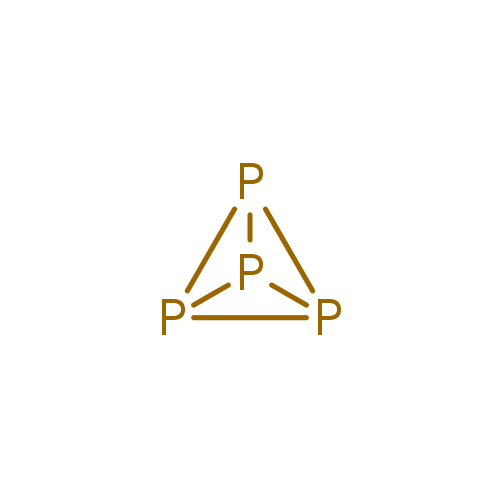
| Chemical Structure | |
|---|
| Synonyms | | Synonym | | Phosphorus | | Tetraphosphorus | | White phosphorus | | Willie Pete | | Willy Pete | | WP | | Yellow phosphorus |
|
|---|
| Chemical Formula | P4 |
|---|
| Average Molecular Mass | 123.895 g/mol |
|---|
| Monoisotopic Mass | 123.895 g/mol |
|---|
| CAS Registry Number | 12185-10-3 |
|---|
| IUPAC Name | tricyclo[1.1.0.0²,⁴]tetraphosphane |
|---|
| Traditional Name | phosphorus |
|---|
| SMILES | P12P3P1P23 |
|---|
| InChI Identifier | InChI=1S/P4/c1-2-3(1)4(1)2 |
|---|
| InChI Key | InChIKey=OBSZRRSYVTXPNB-UHFFFAOYSA-N |
|---|
| Chemical Taxonomy |
|---|
| Description | belongs to the class of inorganic compounds known as homogeneous other non-metal compounds. These are inorganic non-metallic compounds in which the largest atom belongs to the class of 'other non-metals'. |
|---|
| Kingdom | Inorganic compounds |
|---|
| Super Class | Homogeneous non-metal compounds |
|---|
| Class | Homogeneous other non-metal compounds |
|---|
| Sub Class | Not Available |
|---|
| Direct Parent | Homogeneous other non-metal compounds |
|---|
| Alternative Parents | Not Available |
|---|
| Substituents | - Homogeneous other non metal
|
|---|
| Molecular Framework | Not Available |
|---|
| External Descriptors | |
|---|
| Biological Properties |
|---|
| Status | Detected and Not Quantified |
|---|
| Origin | Exogenous |
|---|
| Cellular Locations | - Mitochondria
- Rough endoplasmic reticulum
|
|---|
| Biofluid Locations | Not Available |
|---|
| Tissue Locations | - Heart
- Intestine
- Kidney
- Liver
- Lung
- Skin
|
|---|
| Pathways | Not Available |
|---|
| Applications | |
|---|
| Biological Roles | Not Available |
|---|
| Chemical Roles | Not Available |
|---|
| Physical Properties |
|---|
| State | Solid |
|---|
| Appearance | Translucent waxy solid that quickly becomes yellow when exposed to light. Glows greenish in the dark when exposed to oxygen. |
|---|
| Experimental Properties | | Property | Value |
|---|
| Melting Point | 44.15°C | | Boiling Point | 280°C | | Solubility | 0.0033 mg/mL at 15°C [KIRK-OTHMER; on-line (2005)] | | LogP | Not Available |
|
|---|
| Predicted Properties | |
|---|
| Spectra |
|---|
| Spectra | | Spectrum Type | Description | Splash Key | Deposition Date | View |
|---|
| Predicted GC-MS | Predicted GC-MS Spectrum - GC-MS (Non-derivatized) - 70eV, Positive | splash10-00di-0900000000-28572b58b528d5280e99 | 2021-09-23 | View Spectrum | | Predicted GC-MS | Predicted GC-MS Spectrum - GC-MS (Non-derivatized) - 70eV, Positive | Not Available | 2021-10-12 | View Spectrum | | Predicted LC-MS/MS | Predicted LC-MS/MS Spectrum - 10V, Positive | splash10-00di-0900000000-554ba802daa412f7566b | 2016-08-03 | View Spectrum | | Predicted LC-MS/MS | Predicted LC-MS/MS Spectrum - 20V, Positive | splash10-00di-0900000000-554ba802daa412f7566b | 2016-08-03 | View Spectrum | | Predicted LC-MS/MS | Predicted LC-MS/MS Spectrum - 40V, Positive | splash10-00di-0900000000-554ba802daa412f7566b | 2016-08-03 | View Spectrum | | Predicted LC-MS/MS | Predicted LC-MS/MS Spectrum - 10V, Negative | splash10-00di-0900000000-ed7439d5980f85d06aba | 2016-08-03 | View Spectrum | | Predicted LC-MS/MS | Predicted LC-MS/MS Spectrum - 20V, Negative | splash10-00di-0900000000-ed7439d5980f85d06aba | 2016-08-03 | View Spectrum | | Predicted LC-MS/MS | Predicted LC-MS/MS Spectrum - 40V, Negative | splash10-00di-0900000000-ed7439d5980f85d06aba | 2016-08-03 | View Spectrum |
|
|---|
| Toxicity Profile |
|---|
| Route of Exposure | Inhalation; dermal; ingestion. (2) |
|---|
| Mechanism of Toxicity | Exposure to white phosphorus has been shown to damage the rough endoplasmic reticulum and cause a disaggregation of polyribosomes. This damage results in impairment of protein synthesis, in particular, a decrease in the synthesis of the apolipoprotein portion of very low density lipoproteins (VLDL), which are required for the transport of triglycerides. This causes an accumulation of triglycerides in the liver, resulting in steatosis and fibrosis. White phosphorus also damages the mitochondia, impairing a cell’s ability to produce ATP and resulting in necrosis. The mitochondrial damage may also inhibit fatty acid oxidation, which could result in an accumulation of fat in the organs. (2) |
|---|
| Metabolism | Since white phosphorus is highly reactive in the presence of oxygen, it is likely rapidly converted to its oxidation products prior to absorption into the body. Little is known about the metabolism of white phosphorus in the body, although the oxo acids of phophorus are known to be found in the bloodstream. |
|---|
| Toxicity Values | LD50 Rat (Charles-River, female) oral 3.03 mg/kg (2)
LD50 Rat (Charles-River, male) oral 3.76 mg/kg (2)
LD50 Mouse (Swiss, female) oral 4.82 mg/kg (2)
LD50 Mouse (Swiss, male) oral 4.85 mg/kg (2) |
|---|
| Lethal Dose | 1 mg/kg body weight (5) |
|---|
| Carcinogenicity (IARC Classification) | No indication of carcinogenicity to humans (not listed by IARC). |
|---|
| Uses/Sources | White phosphorus does not occur naturally, but is manufactured from phosphate rocks. White phosphorus is used in many military applications, especially in smokescreens, bombs, artillery, and mortars. It is also used by industry to produce phosphoric acid and other chemicals for use in fertilizers, food additives, and cleaning compounds. Small amounts of white phosphorus were used in the past in pesticides and fireworks. (2) |
|---|
| Minimum Risk Level | Acute Inhalation: 0.02 mg/m3 (4)
Intermediate Oral: 0.0002 mg/kg/day (4) |
|---|
| Health Effects | Exposure to white phosphorus may cause liver, heart, or kidney damage. It can also result in death. Breathing white phosphorus for long periods may cause a condition known as 'phossy jaw', which involves poor wound healing of the mouth and breakdown of the jaw bone. Anemia and leukopenia in people chronically exposed to airborne white phosphorus. (2) |
|---|
| Symptoms | Breathing white phosphorus for short periods may cause coughing and irritation of the throat and lungs. Eating or drinking small amounts of white phosphorus may cause stomach cramps, or drowsiness. (2) |
|---|
| Treatment | Ingestion of white phosphorus can be treated with gastric lavage. Otherwise, treatment is mainly symptomatic. (2) |
|---|
| Normal Concentrations |
|---|
| Not Available |
|---|
| Abnormal Concentrations |
|---|
| Not Available |
|---|
| External Links |
|---|
| DrugBank ID | Not Available |
|---|
| HMDB ID | Not Available |
|---|
| PubChem Compound ID | Not Available |
|---|
| ChEMBL ID | Not Available |
|---|
| ChemSpider ID | 109894 |
|---|
| KEGG ID | Not Available |
|---|
| UniProt ID | Not Available |
|---|
| OMIM ID | |
|---|
| ChEBI ID | 35895 |
|---|
| BioCyc ID | Not Available |
|---|
| CTD ID | Not Available |
|---|
| Stitch ID | Phosphorus, white |
|---|
| PDB ID | Not Available |
|---|
| ACToR ID | Not Available |
|---|
| Wikipedia Link | Allotropes_of_phosphorus#White_phosphorus |
|---|
| References |
|---|
| Synthesis Reference | Not Available |
|---|
| MSDS | T3D0019.pdf |
|---|
| General References | - Doyle ME, Jan de Beur SM: The skeleton: endocrine regulator of phosphate homeostasis. Curr Osteoporos Rep. 2008 Dec;6(4):134-41. [19032923 ]
- ATSDR - Agency for Toxic Substances and Disease Registry (1997). Toxicological profile for white phosphorus. U.S. Public Health Service in collaboration with U.S. Environmental Protection Agency (EPA). [Link]
- Wikipedia. Allotropes of phosphorus. Last Updated 30 March 2009. [Link]
- ATSDR - Agency for Toxic Substances and Disease Registry (2001). Minimal Risk Levels (MRLs) for Hazardous Substances. U.S. Public Health Service in collaboration with U.S. Environmental Protection Agency (EPA). [Link]
- HSDB: Hazardous Substances Data Bank. National Library of Medicine (2001). [Link]
- ATSDR - Agency for Toxic Substances and Disease Registry (1997). ToxFAQ for white phosphorus. [Link]
|
|---|
| Gene Regulation |
|---|
| Up-Regulated Genes | Not Available |
|---|
| Down-Regulated Genes | Not Available |
|---|